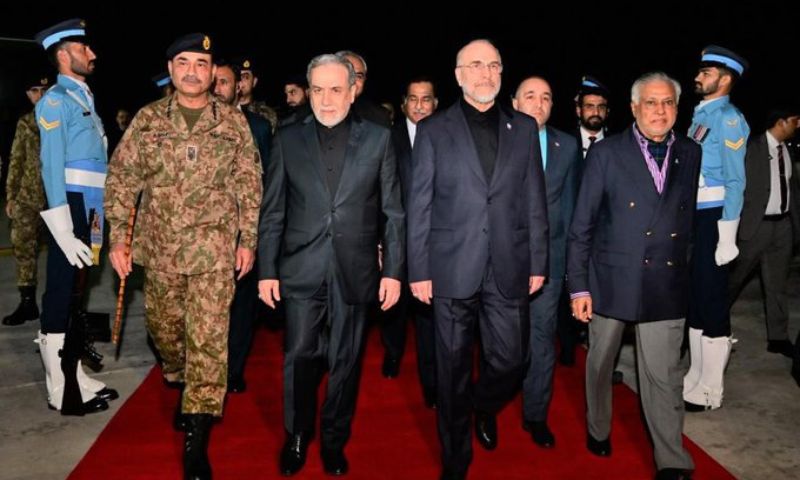
ISLAMABAD: Iran’s ambassador to Pakistan Reza Amiri said on Sunday that the Pakistan-mediated US–Iran talks in Islamabad have laid the foundation for a broader diplomatic process, stressing that continued engagement could lead to a stable and inclusive framework for all parties.
The remarks come after Pakistan-hosted talks between the United States and Iran concluded on Sunday with both sides signalling willingness to continue diplomatic engagement.
The US delegation was led by Vice President JD Vance and included Jared Kushner and special envoy Steve Witkoff, while the Iranian delegation was headed by Parliament Speaker Mohammad Bagher Ghalibaf and Foreign Minister Abbas Araghchi.
Describing the high-stakes Islamabad Talks as the beginning of a longer journey, the Iranian envoy said the Islamabad Talks were “not an event but a process,” adding that their success would depend on building trust and political will.
Ambassador Amiri said the negotiations created an initial pathway for diplomacy that, if strengthened, could evolve into a sustainable arrangement addressing the interests of all sides.
He noted that continued dialogue and mutual confidence would be essential to advance the process and translate discussions into meaningful outcomes.
The Islamabad Talks is "not an event but a process."
The Islamabad Talks laid the foundation for a diplomatic process that, if trust and will are strengthened, can create a sustainable framework for the interests of all parties.I would like to express my gratitude to the… pic.twitter.com/qzCb1xYzPh
— Reza Amiri Moghadam (@IranAmbPak) April 12, 2026
Appreciates Pakistan’s role
The Iranian envoy expressed appreciation for Pakistan’s role in hosting and facilitating the talks, particularly acknowledging Prime Minister Shehbaz Sharif and Chief of Army Staff Field Marshal Asim Munir.
He thanked Pakistan for its “initiative of goodwill and good offices,” which enabled the high-level engagement between Washington and Tehran.
Amiri also commended the coordinated efforts of Pakistan’s institutions, including the government, military, police and security agencies, for ensuring the talks were conducted smoothly.
The Iranian envoy said that the negotiations were held in a “calm, orderly and secure environment,” with equal logistical arrangements provided to both delegations.
He said the Iranian negotiating team participated with “dignity and self-confidence,” focusing on safeguarding national interests and the legitimate rights of the Iranian people.
Trump says Islamabad Talks ‘went well’
US President Donald Trump said on Sunday that the Islamabad Talks between the US and Iran “went well” and saw agreement on most issues, but stressed that no progress was made on the nuclear question.
The US President said he had been fully debriefed by the US team on the meeting held in Islamabad, which he said took place under the leadership of Pakistan’s Prime Minister Shehbaz Sharif and Chief of Defence Forces and Chief of Army Staff Field Marshal Syed Asim Munir.
Trump said “most points were agreed to” during intensive talks lasting nearly 20 hours, but added that the “only point that really mattered, NUCLEAR, was not.”
The US president said the main obstacle to an agreement remained Iran’s nuclear programme, adding that Tehran was unwilling to abandon what he called its “nuclear ambitions.”
He said that progress had been made on most issues.
He said the Iranian officials, Mohammad Bagher Ghalibaf, Abbas Araghchi and Ali Bagheri, remained “unyielding” on what he described as the most important issue — Tehran’s nuclear programme.
Trump praised the Pakistani leadership’s role in facilitating the high-stakes talks.
He referred to Pakistan’s leadership, naming Prime Minister Shehbaz Sharif and Chief of Defence Forces and Chief of Army Staff Field Marshal Syed Asim Munir, describing them as “extraordinary men” and commending their role in enabling the diplomatic process.
Pakistan urges continued dialogue
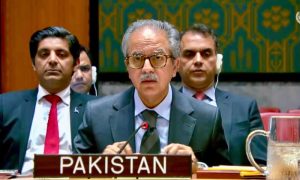
Pakistan, which hosted and facilitated the talks, emphasised the need to maintain momentum and stability on the ground.
“It is imperative that the parties continue to uphold their commitment to the ceasefire,” said Pakistan’s Deputy Prime Minister and Foreign Minister Ishaq Dar.
He reaffirmed Islamabad’s commitment to mediation, adding: “Pakistan has been and will continue to play its role to facilitate engagement and dialogue between the Islamic Republic of Iran and the United States of America in the days to come.”
Officials in Islamabad have described the talks as an “important first step” in a broader process, stressing that issues of such complexity cannot be resolved in a single round.
US, Iran acknowledge progress
On the US side, Vice President JD Vance said the discussions were substantive but fell short of a breakthrough, noting that Washington had presented what it called a “final and best offer”.
He said the core issue remained Iran’s nuclear programme, adding that the United States had not yet seen a firm commitment from Tehran to forgo nuclear weapons ambitions.
US President Donald Trump also described the talks as productive overall, saying “most points were agreed to” but that the nuclear issue remained unresolved.
He warned of possible naval measures in the Strait of Hormuz while maintaining that diplomacy had covered significant ground.
From Tehran, Parliament Speaker Mohammad Bagher Ghalibaf struck a cautious tone, saying Iran had engaged in good faith but deep mistrust remained due to past experiences.
He added that the process had yet to build sufficient confidence, while signalling openness to continued diplomacy.
Europe urges diplomacy, praises Pakistan
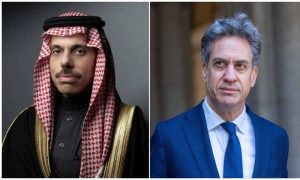
The European Union stressed that diplomacy remains the only viable path forward.
“Diplomacy is essential,” EU foreign affairs spokesman Anouar El Anouni said, noting the outcome of the Islamabad talks.
He praised Pakistan’s role, saying “we salute Pakistan for its mediation efforts,” and added that the bloc stands ready to support further efforts in coordination with partners.
Russia offers mediation
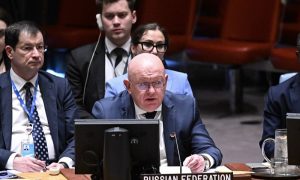
Russia also signalled readiness to support the diplomatic track.
President Vladimir Putin told his Iranian counterpart Masoud Pezeshkian that Moscow was prepared to facilitate a political and diplomatic settlement, according to a Kremlin readout.
Putin emphasised efforts to achieve a “just and lasting peace” in the Middle East.