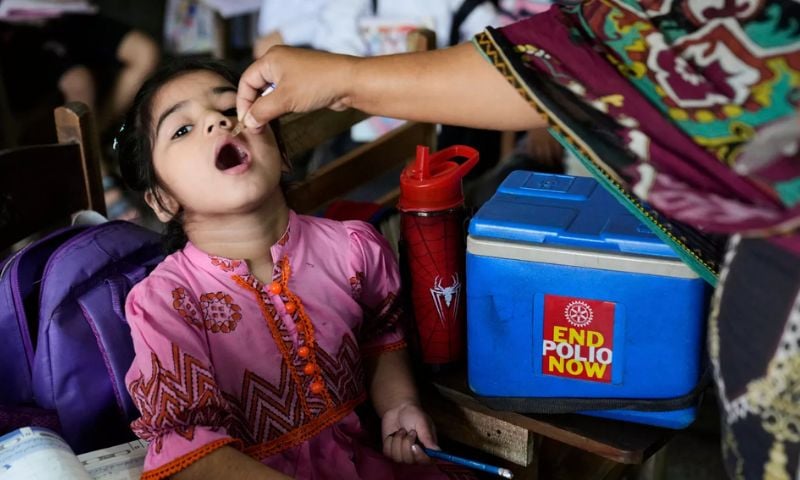
ISLAMABAD: Pakistan on Monday launched its second nationwide polio vaccination campaign of 2026, aiming to immunise more than 45 million children under the age of five in a renewed effort to eliminate the disease from one of its last global strongholds.
The campaign, which runs until April 19, mobilises over 400,000 frontline health workers who are going door to door across all provinces and regions, including remote and high-risk areas. Alongside polio drops, children will also receive Vitamin A supplements to boost overall immunity and health.
The initiative is being carried out in close coordination with neighbouring Afghanistan, reflecting ongoing cross-border efforts to curb the transmission of the virus, which continues to circulate between the two countries.
Officials say the campaign comes at a pivotal moment, with encouraging signs of progress. According to Anwarul Haq, head of Pakistan’s polio programme, the virus has been detected in 23 out of 87 districts so far in 2026, a sharp decline from 82 districts in 2025. Environmental samples testing positive for poliovirus have also fallen significantly, from 651 last year to just 40 this year.
Despite these gains, authorities warn that the threat is not yet over. Pakistan recorded 31 polio cases in 2025, and one case has already been confirmed in 2026, reported from Sujawal in Sindh province. Health experts stress that even a single case signals ongoing risk, particularly in areas with low immunisation coverage.
Ayesha Raza Farooq, the Prime Minister’s focal person on polio eradication, described the current phase as both promising and critical. “Pakistan is closer than ever to ending polio,” she said, while cautioning that the final stages of eradication require sustained vigilance. She reiterated that polio, while incurable, is entirely preventable through timely vaccination.
The campaign aims to close remaining immunity gaps by ensuring every eligible child receives the standard two-dose oral vaccine during each round. Public support remains central to the effort. Authorities have urged parents and caregivers to cooperate fully with vaccination teams, emphasising that universal participation is key to stopping transmission.
Adding to the call for action, Pakistan’s First Lady Aseefa Bhutto Zardari recently appealed to communities nationwide to support the campaign. She described the current moment as a “critical juncture”, noting that years of sustained effort have brought Pakistan to the brink of eradication, with the final phase dependent on reaching every last child.
Global health organisations have long identified Pakistan and Afghanistan as the final frontiers in the fight against polio. Success in the current campaign could bring the country a decisive step closer to consigning the disease to history.
What is polio and how does it spread?
Polio, or poliomyelitis, is a highly infectious viral disease caused by the poliovirus that primarily affects young children and can lead to paralysis or even death in severe cases. The virus enters the body through the mouth, multiplies in the intestines, and can invade the nervous system, damaging the brain and spinal cord.
It spreads mainly from person to person through the faecal–oral route, meaning it is transmitted when food or water contaminated with an infected person’s faeces is ingested. Less commonly, it can spread through respiratory droplets from coughing or sneezing or by contact with contaminated surfaces.
Because many infected individuals show no symptoms yet can still shed the virus, polio can spread silently, particularly in areas with poor sanitation and low vaccination coverage.