Key Points
- Merchandise exports rose to $8.5 billion in July-September, compared with $7.9 billion a year earlier
Combined exports of goods and services surged 11 per cent to $11.2 billion, on strong services growth - Imports climb 14.3 per cent to $17.8 billion, highlighting the challenge of narrowing the trade gap
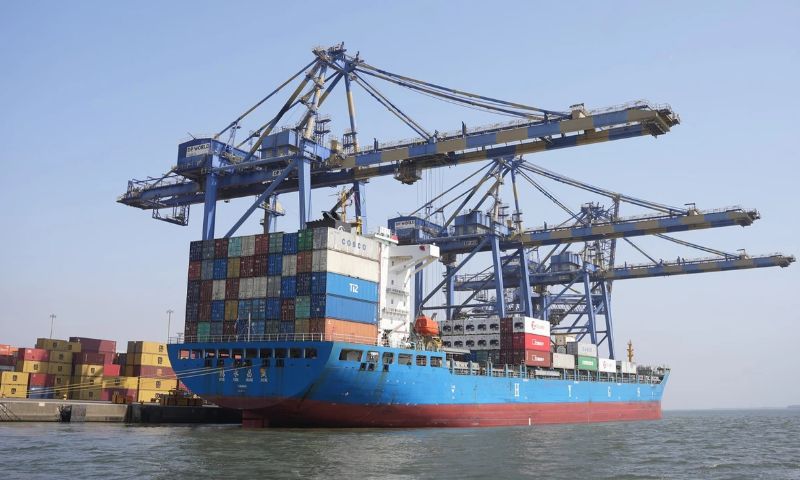
ISLAMABAD: Pakistan’s merchandise exports grew 7.7 per cent to $8.5 billion in the first quarter of the current fiscal year, as the government targets export competitiveness, production base diversification and sustained economic growth.
Federal Minister for Planning, Development and Special Initiatives Ahsan Iqbal presented the figures while reviewing the country’s economic and development performance for July-September 2026. Exports stood at $7.9 billion during the corresponding period last year.
According to the Planning Ministry, combined exports of goods and services increased by 11 per cent to $11.2 billion, supported by a 22.8 per cent expansion in services exports.
Information and communications technology (ICT) exports reached $1.2 billion, while food exports increased by 17.1 per cent. Petroleum products exports grew 44.5 per cent, engineering goods 4.9 per cent and textiles 2.5 per cent.
The minister said Pakistan needed to develop an export-oriented economic structure rather than depending on remittances and external financing to meet its foreign exchange requirements.
He said the government was encouraging provinces to identify products and industries having export potential and establish provincial export boards.
Proposed district-level export development plans would also identify opportunities in agriculture, handicrafts, engineering and technology.
The initiatives aim to strengthen domestic value chains, improve production capacity, and connect local businesses with international markets.
Imports and external account pressures
Despite export growth, the country’s import bill grew faster.
Goods imports rose 14.3 per cent to $17.8 billion in the first quarter, while combined imports of goods and services increased by 14.6 per cent to $21.3 billion.
Machinery imports surged 10.7 per cent, and raw material imports 28 per cent, reflecting higher demand for industrial inputs and production capacity.
READ ALSO: Pakistan Exports Rise 18% in September, Up 11% in First Quarter
Faster import growth widened the current account deficit to $874 million in July-September from $755 million in the same period last year.
The minister said higher imports needed to translate into increased domestic production, value addition and export earnings to support sustainable economic expansion.
Workers’ remittances provided additional support to the external account, rising 14 per cent to $10.9 billion from $9.5 billion a year earlier. Saudi Arabia contributed $2.6 billion, the United Arab Emirates $2.2 billion, the United Kingdom $1.6 billion and the United States approximately $931 million.
Growth and industrial performance
Pakistan’s economy grew by 3.7 per cent during FY2025-26, while the government set a 4 per cent target for the current fiscal year.
Large-scale manufacturing grew 1.9 per cent in the first two months of FY2026-27, with 12 of 22 industrial groups registering positive growth.
Preliminary estimates for the Kharif season showed maize production rising by 12.1 per cent, sugarcane by 8.8 per cent and rice by 1.8 per cent.
Federal Board of Revenue tax collection rose by 7 per cent to Rs3.086 trillion in the first quarter. The minister said Pakistan needed sustained annual economic growth of 5-6 per cent to generate sufficient employment opportunities for new entrants into the labour market.
He cautioned that growth driven primarily by consumption and imports would remain vulnerable unless accompanied by stronger exports, higher productivity, domestic revenue mobilisation and energy-sector reforms.
The government is pursuing these objectives under its URAAN Pakistan economic transformation programme, which identifies exports, digital development, environmental sustainability, energy and infrastructure, and equity and empowerment as its five priority areas.
Iqbal said the transition from economic stabilisation to sustainable growth required greater private investment, export diversification and stronger industrial competitiveness.