Key Points
- Pakistan possesses Buddhist, Hindu, Sikh and Islamic religious heritage.
- Gandhara remains one of the world’s historic Buddhist centres.
- Taxila, Takht-i-Bahi and Swat offer major tourism opportunities.
- Katas Raj and Hinglaj attract Hindu pilgrims.
- Pakistan has six UNESCO World Heritage properties.
PESHAWAR, Pakistan: From the ancient Buddhist monasteries of Gandhara to centuries-old Hindu temples scattered across Khyber Pakhtunkhwa, Punjab, Sindh and Balochistan, Pakistan possesses a remarkable religious heritage that could become a significant source of tourism revenue, foreign exchange and employment.
Yet, despite being home to some of the most historically important religious landmarks in South Asia, the country has barely tapped its potential to attract international pilgrims, religious scholars and heritage enthusiasts. The remains of the Gandhara civilisation, which flourished across present-day Khyber Pakhtunkhwa and northern Punjab, hold particular significance for millions of Buddhists in China, Japan, South Korea, Thailand, Myanmar and other countries.
Similarly, Hindu temples, sacred lakes and pilgrimage destinations across Pakistan have the potential to attract visitors from India and the wider Hindu diaspora. The opportunity is not restricted to religious pilgrimages. Properly developed religious tourism can stimulate the hospitality industry, transport, restaurants, handicrafts, tour operations and other businesses while creating employment opportunities for communities surrounding historic sites.
According to Pakistan’s Ministry of Foreign Affairs, the country has 480 tourist destinations, including 120 religious sites. The ministry identifies Pakistan as a destination for followers of Islam, Hinduism, Buddhism and Sikhism. However, the absence of a comprehensive religious tourism strategy, inadequate infrastructure, limited international promotion and security concerns have prevented the country from converting this heritage into a sustainable economic opportunity.
Gandhara’s global appeal
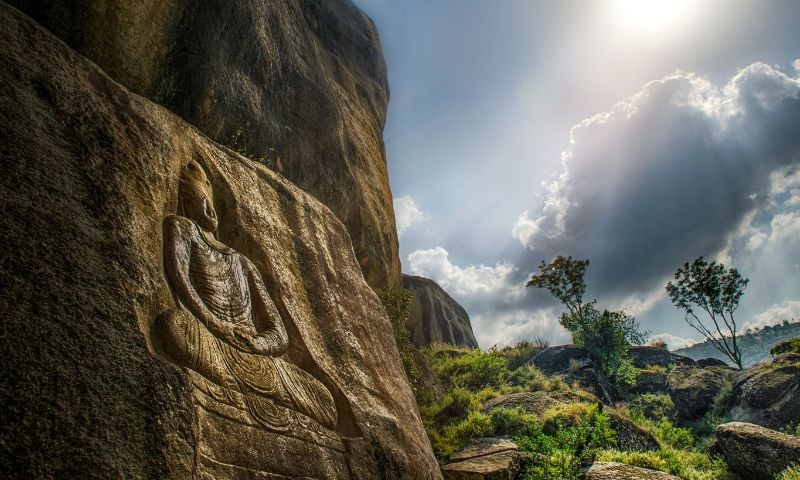
One of Pakistan’s greatest advantages is its association with Gandhara, an ancient civilisation that played a significant role in the development and spread of Buddhism across Asia. The region, encompassing present-day Peshawar, Mardan, Swat, Taxila and surrounding areas, became an important centre of Buddhist learning, philosophy, sculpture and architecture.
Its historical importance extends far beyond Pakistan’s borders. Buddhist monks, scholars and pilgrims from East and Southeast Asia have a particular interest in visiting the places where Buddhist traditions flourished and spread towards Central and East Asia.
The archaeological remains at Taxila, a UNESCO World Heritage property, provide a remarkable illustration of this history. According to UNESCO, Taxila was an important Buddhist centre of learning between the fifth century BC and the second century AD. Its archaeological landscape includes ancient settlements, monasteries and other historical structures reflecting centuries of cultural interaction.
Another major attraction is Takht-i-Bahi, the Buddhist monastic complex near Mardan. Founded in the early first century AD, the complex is considered one of the most impressive Buddhist archaeological remains in the Gandhara region. Its hilltop location helped protect it from successive invasions, leaving much of the complex remarkably well preserved.
Both Taxila and Takht-i-Bahi were inscribed on UNESCO’s World Heritage List in 1980.
Khyber Pakhtunkhwa offers several additional attractions, particularly in the Swat Valley, which was once a major centre of Buddhist civilisation. The archaeological remains at Butkara, Saidu Sharif, Barikot, and other locations offer opportunities to develop an integrated Buddhist heritage circuit. The Jaulian monastery near Taxila, the Bhamala Buddhist complex in Haripur and the remains at Rani Ghat in Buner could also be incorporated into organised pilgrimage and archaeological tours.
Hindu pilgrimage opportunities
Apart from its Buddhist heritage, Pakistan possesses numerous Hindu religious sites that could become important destinations for international pilgrims.
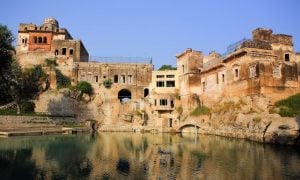
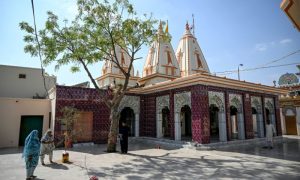
One of the most prominent is Katas Raj temples, a historic temple complex in the Chakwal district of Punjab. The complex, also known as Qila Katas, comprises several temples built around a sacred pond that holds religious significance for Hindus.
According to Hindu tradition, the pond is associated with Lord Shiva’s tears following the death of his wife, Sati. The site has consequently remained an important place of pilgrimage for Hindus. Its architectural heritage, religious significance and location near other historical attractions make it a potential anchor for a broader tourism circuit in northern Punjab.
Another major destination is Hinglaj Mata Temple in Balochistan’s Hingol National Park. Located in a mountainous landscape along the Makran coastal region, the shrine is among the most revered Hindu pilgrimage destinations in Pakistan. The annual Hinglaj Yatra attracts large numbers of Hindu pilgrims from different parts of the country and abroad. The pilgrimage also provides an opportunity to promote Balochistan’s natural landscape and cultural heritage.
In June 2025, the Balochistan government announced plans to declare the historic temple a world tourism site and discussed infrastructure development and renovation to facilitate visitors. The provincial government also highlighted the shrine’s potential to promote minority religious tourism and improve the international image of Balochistan.
Sindh also possesses several Hindu religious landmarks with considerable pilgrimage potential.
The Shiv Mandir in Umerkot and Ramdev Temple are among the religious sites identified by Pakistan’s Foreign Office as attractions for Hindu visitors. The Hanuman Mandir and other historic temples across the province could also be incorporated into religious and cultural tourism itineraries.
A comprehensive strategy could connect these destinations with archaeological sites, traditional settlements and other cultural attractions, encouraging visitors to spend several days in the country rather than limiting their trips to individual shrines.
Sikh heritage
Pakistan occupies a particularly important place in Sikh religious history as the birthplace of Baba Guru Nanak, the founder of Sikhism, and home to several of the religion’s most revered historical shrines.
The most important destination is Gurdwara Janam Asthan, located at the site traditionally recognised as the birthplace of Guru Nanak in 1469. The shrine is among the holiest places in Sikhism and attracts pilgrims from India and Sikh communities across the world, particularly during the annual celebrations marking Guru Nanak’s birth anniversary.

Another major attraction is Gurdwara Darbar Sahib in Kartarpur, where Guru Nanak spent the final years of his life and is believed to have passed away in 1539. The opening of the Kartarpur Corridor in November 2019 created a new opportunity for Sikh pilgrims from India to visit one of their most sacred religious destinations without obtaining a conventional Pakistani visa, subject to the applicable corridor arrangements.
Similarly, Gurdwara Panja Sahib in Hassan Abdal is another important pilgrimage destination associated with Guru Nanak. Its sacred rock bearing what devotees believe to be the imprint of his hand attracts Sikh pilgrims, particularly during religious festivals.
Peshawar’s forgotten gurdwaras
Peshawar also possesses an important collection of historic Sikh religious sites that could become part of a dedicated heritage tourism circuit in Khyber Pakhtunkhwa. Among the most prominent are Gurdwara Bhai Joga Singh and Gurdwara Bhai Beba Singh.
According to the Directorate of Archaeology and Museums, Khyber Pakhtunkhwa, Gurdwara Bhai Joga Singh dates from the Sikh Kingdom period (1799–1849). It was founded by Hari Singh Nalwa, a general of Maharaja Ranjit Singh, and is situated in the Jogan Shah area.
The gurdwara is named after Bhai Joga Singh, a Sikh devotee associated with Guru Gobind Singh. Its architectural features make it an important part of Peshawar’s Sikh-era heritage. These historic places of worship offer an opportunity to develop a dedicated Sikh heritage trail in Peshawar, connecting the gurdwaras with the city’s old bazaars, historic neighbourhoods and other landmarks associated with its Sikh-era history.
Lessons from global leaders
Several countries have demonstrated how religious tourism can develop into a major economic sector, generating income for hotels, airlines, transport operators, restaurants, retailers and local communities.
Saudi Arabia provides perhaps the most prominent example of a country developing religious tourism as part of its national economic strategy. According to Saudi Arabia’s Pilgrim Experience Programme, the Kingdom welcomed more than 18.5 million Hajj pilgrims and Umrah performers in 2024.
Nepal provides a particularly relevant example for Pakistan’s Buddhist tourism ambitions. The country has successfully positioned Lumbini, the birthplace of Gautama Buddha, as an international Buddhist pilgrimage and cultural destination. According to the Lumbini Development Trust, the site attracted 1,172,304 visitors in 2024, including 300,889 visitors from India and 111,425 international visitors from other countries.
The figures demonstrate the potential of a single religious destination to attract visitors from different parts of the world. For Pakistan, which possesses several important Buddhist monasteries and archaeological remains associated with the history of Buddhism, Nepal’s experience offers an especially relevant model.
Thailand has adopted another approach by integrating Buddhist religious traditions with its broader tourism industry. Its temples, monasteries, sacred sites and religious festivals form an important part of the country’s cultural tourism offering. The Thai government’s tourism promotion material identifies faith-based tourism as an emerging economic opportunity.
A Ministry of Commerce forecast cited by the government estimated that merit-making activities alone could generate up to 10.8 billion baht in circulating income, based on the 2019 tourism market.
The country’s approach also demonstrates that religious tourism is not limited to visiting shrines. It involves accommodation, food, local products, cultural experiences and travel to surrounding destinations.
Economic opportunities
The international examples demonstrate that religious tourism can generate economic benefits extending well beyond the immediate pilgrimage destination.
For Pakistan, the potential is particularly significant because many Buddhist and Hindu sites are located in areas that could benefit from additional economic activity. Mardan, Swat, Haripur and Taxila could benefit from Buddhist heritage circuits, while Chakwal, Umerkot, Tando Allahyar and Hingol could become important destinations for Hindu religious and cultural tourism.
Pakistan also has an opportunity to attract international conferences, Buddhist research delegations, religious scholars and heritage conservation organisations. Universities and archaeological institutions could collaborate with international Buddhist organisations to organise academic exchanges, exhibitions and annual conferences on Gandhara civilisation.
Such activities would help establish Pakistan as an international centre for Buddhist heritage research rather than merely a country with ancient archaeological remains.
A national strategy
Pakistan needs a comprehensive religious tourism policy that brings together federal and provincial governments, archaeology departments, tourism authorities, minority religious communities and the private sector.
The first step should be to prepare a national inventory of religious heritage sites, documenting their historical significance, present condition, accessibility and tourism potential. The government could subsequently develop dedicated Buddhist and Hindu tourism circuits with clear itineraries, visitor facilities, trained guides and international promotional campaigns.
For Buddhist tourism, an integrated Gandhara circuit could connect Taxila, Jaulian, Bhamala, Peshawar, Takht-i-Bahi and the archaeological sites of Swat.
Similarly, a Hindu pilgrimage circuit could connect Katas Raj in Punjab with Hinglaj in Balochistan and important temples in Sindh. These circuits should be developed in consultation with religious communities to ensure that pilgrimage activities are conducted respectfully and that visitors have access to appropriate facilities. There is also a need to involve local communities in tourism planning so that the economic benefits reach people living around these heritage locations.
The federal government has also recently reiterated its commitment to preserving Gandhara heritage and facilitating Buddhist pilgrims. In September 2026, the Ministry of National Heritage and Culture discussed plans for a facility to respectfully preserve and display sacred Buddhist relics, as well as improving access to important collections.