
Key points
- Hormuz traffic remains severely disrupted
- OPEC+ holds October production policy unchanged
ISLAMABAD: Oil prices moved closer to $100 a barrel on Tuesday as renewed attacks on Saudi energy infrastructure added to already severe disruptions to crude shipments through the Strait of Hormuz.
The latest attacks raised concerns that the Middle East conflict could keep global supplies constrained for longer.
Brent crude rose above $98 a barrel, its highest level in several weeks, after attacks on energy facilities in southern Saudi Arabia.
US West Texas Intermediate also advanced sharply. Oil registered gains after its prices had already rallied on Monday since Iran threatened further attacks on energy infrastructure across the region.
The latest attacks have introduced another layer of supply risk.
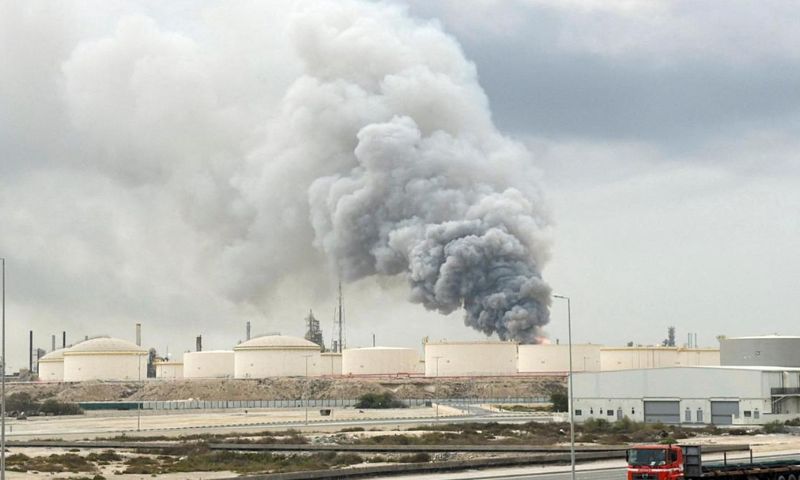
The Jizan area, close to Yemen, hosts a major Saudi refinery, and renewed attacks have affected energy facilities in the region.
The escalation has also revived concerns over the security of the Red Sea and Bab el-Mandeb, another important route for oil and petroleum products.
The bigger concern for the global oil market remains the Strait of Hormuz. Ship traffic through the waterway has fallen drastically since the conflict escalated, disrupting the movement of crude and refined products.
READ ALSO: Oil Prices Near $97 As Hormuz Disruption Deepens Supply Fears
The strait normally carries a substantial share of global oil and liquefied natural gas trade, making any prolonged disruption particularly damaging to importing economies.
The International Energy Agency has already lowered its global oil supply estimates for 2026, citing disruptions in the Middle East and Russia.
It expects global supply to fall by 4.3 million barrels per day this year to around 102 million barrels per day. It has also cut its demand outlook as higher fuel prices and supply-chain disruptions weigh on consumption.
OPEC+ has provided little immediate relief. The producer group kept its October output policy unchanged at its September 6 meeting, leaving the market with limited additional supply from the group as geopolitical risks intensify.
Despite the disruptions, Brent has not decisively crossed $100. Continued flows through parts of the Gulf, alternative export routes used by some producers, rising output from non-OPEC producers and weaker demand have helped contain the price surge.
China’s oil inventories have also provided an additional buffer. For Pakistan, the renewed rise in crude prices presents a direct external-sector risk. Sustained oil prices near or above $100 could increase the import bill, put pressure on the rupee and raise domestic fuel and transport costs.
The impact would be more significant if the disruption persists through the coming months rather than remaining a short-lived geopolitical shock.
The latest move therefore represents more than another daily oil-price spike: the market is increasingly pricing the possibility that disrupted Gulf energy flows could become a prolonged feature of the global oil market.
Oil market volatility
Oil markets have experienced exceptional volatility in 2026 as geopolitical tensions repeatedly disrupted expectations for global supply. Prices surged above $100 a barrel earlier in the year during the direct US-Iran conflict, before retreating as markets anticipated de-escalation and stronger supply from producers outside the Middle East.
The subsequent escalation around the Strait of Hormuz reversed that trend, with traders again attaching a risk premium to crude prices.
The waterway is critical to global energy trade, carrying a large share of seaborne oil and liquefied natural gas shipments from Gulf producers to international markets.
Any sustained restriction can therefore tighten physical supplies and raise freight and insurance costs.
At the same time, relatively resilient non-OPEC production, concerns over global economic growth and softer oil demand have prevented prices from rising as sharply as the supply disruptions might otherwise suggest.
The market is now balancing these opposing forces as investors assess whether the latest disruptions will prove temporary or develop into a prolonged supply shock.