
Key points
- Brent approaches $97 as supply fears intensify
- WTI rises above $92 amid Hormuz disruption
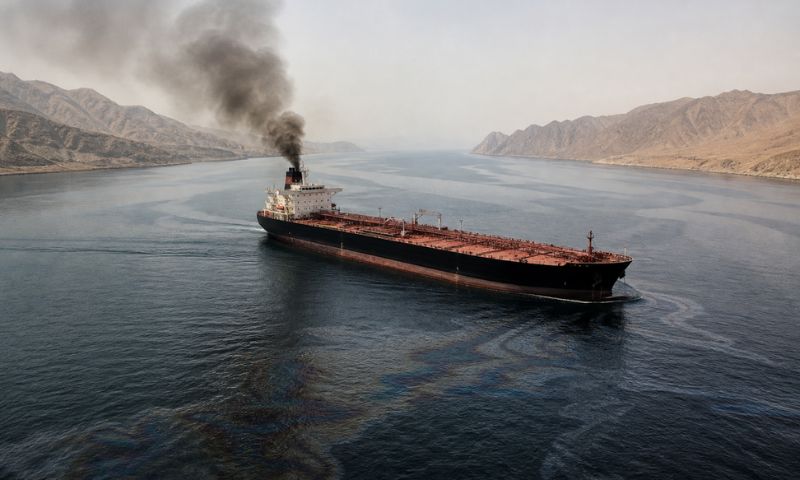
SINGAPORE: Oil prices extended gains on Monday as fresh US-Iran attacks on tankers in the Strait of Hormuz heightened fears of prolonged disruption to crude supplies from the Middle East.
Brent crude futures rose to around $97 per barrel, while US West Texas Intermediate (WTI) crude climbed above $92 per barrel.
The latest gains came after Brent surged 7.8 per cent last week and WTI gained nearly 10 per cent as renewed hostilities sharply reduced oil flows through the strategic waterway.
The latest market move reflects growing concern that the disruption could persist rather than being a temporary interruption.
The Strait of Hormuz has traditionally carried around one-fifth of global oil supplies, making any sustained restriction on shipping a major threat to international energy markets.
US forces struck three Iranian oil tankers on Saturday, including one near Kharg Island, a major Iranian oil export hub, according to US Central Command.
Iran subsequently said its forces had targeted tankers using what it described as unauthorised routes through the strait.
READ ALSO: Oil Prices Set for Over 6% Weekly Gain amid Renewed US-Iran Tensions
The attacks mark a significant escalation in the maritime confrontation and have raised concerns among traders about tanker security and the availability of Middle Eastern crude.
Iran has also indicated that it plans to declare a restricted zone near the Strait of Hormuz, adding another layer of uncertainty for shipping and energy markets.
At the latest reported level, Brent crude was up about 0.8 per cent to $97.07 a barrel. Likewise, WTI was around $92.28.
Earlier market readings had shown Brent at $96.80 and WTI at $92.14, underscoring the continuing volatility in early trading.
Oil supply disruption drives market
The oil market has already priced in a substantial geopolitical risk premium after the latest escalation.
However, analysts say a further deterioration in shipping conditions or a sustained reduction in actual crude supplies could push prices considerably higher.
Brent’s 7.8 per cent rise last week was its strongest weekly advance in the latest phase of the conflict, and WTI’s gain of almost 10 per cent reflected growing concern over the potential duration of the disruption.
OPEC+ has opted to maintain current production levels for October, limiting the immediate prospect of additional supply from the producer group.
At the same time, analysts expect Middle Eastern oil exports to remain constrained if shipping through the Strait of Hormuz continues to deteriorate.
The market is therefore watching both military developments and tanker traffic in the Strait of Hormuz.
Any evidence of a closure or further attacks on commercial vessels could send crude prices towards the $100-a-barrel threshold, whereas a restoration of safe shipping could ease some of the risk premium.
For now, the combination of military escalation, restricted tanker movements and uncertainty over the duration of the disruption is keeping oil prices firmly elevated.
Oil’s wild swings since Iran war began
The US-Iran war, which began on February 28, triggered one of the sharpest oil-market shocks in years as attacks and disruptions around the Strait of Hormuz threatened a major global supply route.
Brent crude stood at about $72.48 a barrel before the conflict but surged towards $120 by late April, with West Texas Intermediate (WTI) reaching about $113.
Prices subsequently swung sharply as ceasefire hopes, diplomatic efforts and changing assessments of the disruption alternately eased and revived supply fears.
Brent briefly fell below its pre-war level in late June before climbing to about $105 on July 23.
A temporary pause in US-Iran attacks in late July then pushed Brent down below $93 and WTI below $85. Renewed fighting in late August and early September lifted prices again, with Brent moving towards $97.