
Key Points
- Brent remains above $95 a barrel amid price volatility
- Hormuz shipping remains notably below normal levels
ISLAMABAD: Oil prices edged lower on Thursday as investors assessed the risk of further disruption to global crude supplies amid US-Iran hints of ending the war.
Statements from both the US and Iran indicating the possibility of an early end to the six-month war despite the latest exchange of strikes enabled the latest price correction.
Brent crude futures fell 43 cents, or 0.45 per cent, to $95.20 a barrel, while US West Texas Intermediate (WTI) crude declined 24 cents, or 0.26 per cent, to $90.77 a barrel in early trading.
The benchmarks had gained about 1 per cent in the previous session after a volatile trading day and roughly four per cent in the preceding week.
Other market reports broadly confirmed the move, with Brent trading around $95.33 and WTI near $90.88 in Thursday morning trading in Asia.
The benchmarks had risen sharply earlier in the week after renewed US-Iran fighting revived concerns over oil supplies from the Middle East.
The latest price movement does not indicate that supply risks have disappeared.
Instead, traders are balancing the possibility of further military escalation against expectations that the latest confrontation could remain contained.
A statement from Pakistan, the lead mediator between the US and Iran, about hopes of an early peace deal also reinforced traders’ sentiment of ease for now.
The United States has carried out fresh strikes against Iranian military and maritime targets near the Strait of Hormuz. The Strait is a strategically important waterway through which a substantial share of globally traded oil normally passes.
Iran has responded with missile and drone attacks against US allies in the Arabian Gulf, including Kuwait and Bahrain, raising concerns that the conflict could spread across the region.
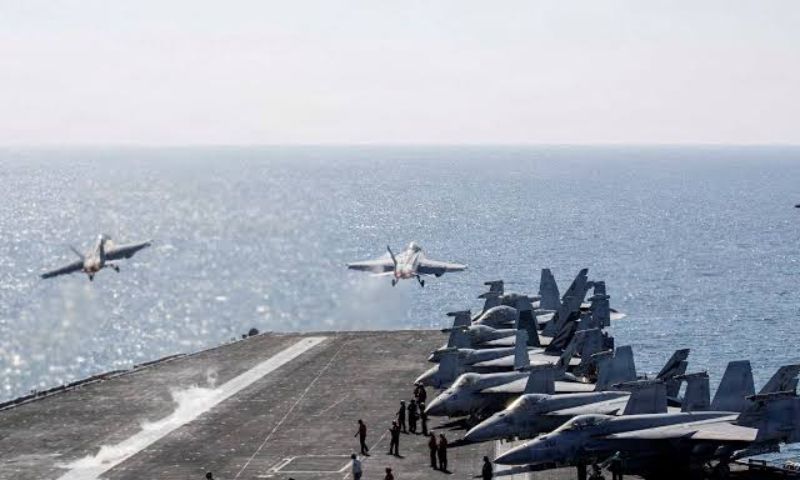
The Strait of Hormuz remains the central focus for energy markets. Preliminary shipping data showed only four commodity vessels passed through the waterway on Wednesday, compared with a 10-day average of about 13.
The sharp reduction highlights the continuing difficulty for commercial shipping despite US claims that a record 17 million barrels of oil moved through the strait on Monday.
Oil market volatility
Financial Times reporting also showed the extent of market volatility. Brent briefly climbed above $97 a barrel before retreating to around $95.55, demonstrating how quickly prices have been responding to developments in the conflict.
The latest escalation follows a significant rebound in crude prices earlier this week. On September 1, Brent jumped $4.16, or 4.6 per cent, to settle at $94.65 a barrel, while WTI gained $4.46, or 5.2 per cent, to $90.22 as traders assessed the threat of further supply disruptions.
READ ALSO: Oil Prices Jump More Than 2% as Hormuz Tensions Escalate
The renewed conflict is also complicating the outlook for inflation and interest rates.
Higher energy costs can feed directly into transport and production expenses, increasing pressure on consumer prices at a time when financial markets are already watching central banks closely.
US Treasury yields have recently risen amid concerns about inflation and monetary policy.
A sustained oil price shock could make it more difficult for central banks to ease monetary policy, particularly if higher fuel costs begin feeding into broader inflation expectations.
For oil markets, however, the immediate question remains whether the renewed fighting will materially reduce physical supplies or merely increase geopolitical risk premiums.
Some flows have continued despite the disruption, and alternative export routes and additional supplies from other producers could help cushion the impact.
Iraq has been increasing oil exports, while the Organisation of the Petroleum Exporting Countries and its allies, known as OPEC+, are expected to maintain current production levels in October.
US crude inventories also fell by 4.5 million barrels last week, adding another supportive factor for prices.
The combination of constrained shipping, lower inventories and the possibility of further attacks leaves the market highly sensitive to developments around Hormuz.