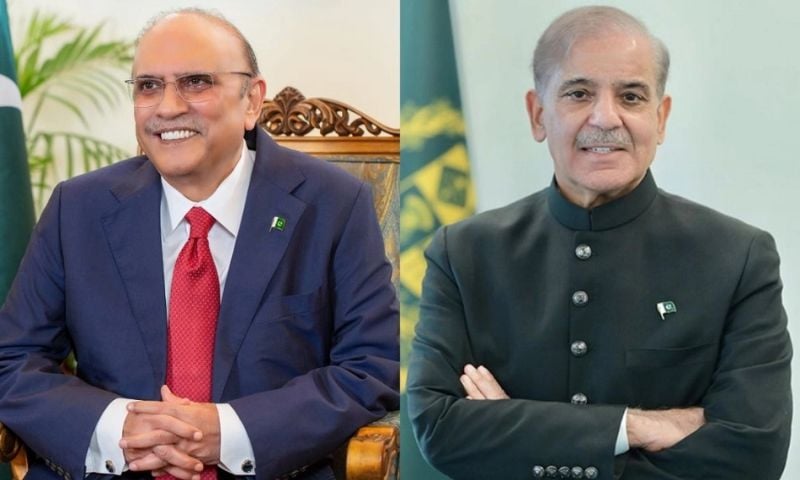



ISLAMABAD: Pakistan President Asif Ali Zardari and Prime Minister Shehbaz Sharif on Sunday paid tribute to the armed forces, martyrs and veterans on Defence and Martyrs’ Day, while highlighting Pakistan’s expanding role in promoting regional security, peace and collective defence.
The nation observed Defence and Martyrs’ Day on September 6 with military ceremonies and tributes commemorating the sacrifices made during the 1965 war with India.
The day began with a 31-gun salute in Islamabad and 21-gun salutes at the provincial capitals. A change-of-guard ceremony was also held at the mausoleum of Quaid-i-Azam Muhammad Ali Jinnah in Karachi, where 64 male and eight female cadets from the Pakistan Air Force Academy participated.
President stresses national unity
President Asif Ali Zardari, in his message, paid tribute to the martyrs, veterans and their families, saying September 6 had an enduring place in Pakistan’s national history. He said the sacrifices made during the 1965 war demonstrated the courage, determination and patriotism of the Pakistani people and armed forces.
Message of President Asif Ali Zardari on Defence and Martyrs Day
6th September holds a memorable place in our national history, reminding us of the great sacrifices made to safeguard our freedom, sovereignty and national security. Defence and Martyrs’ Day provides us with an… pic.twitter.com/VH3YGZX4Ii
— The President of Pakistan (@PresOfPakistan) September 5, 2026
President Zardari said the unity displayed by the nation during the 1965 conflict remained a reminder that a united country could withstand major challenges to its sovereignty and security.
He also linked the legacy of September 6 with Marka-i-Haq and Operation Bunyanum Marsoos, describing the latter as a demonstration of the armed forces’ professionalism and the longstanding bond between the military and the people.
President Zardari highlighted Pakistan’s expanding role in regional security. He said Pakistan had increasingly emerged as a “net regional security provider”, contributing to peace, stability and collective security beyond its borders.
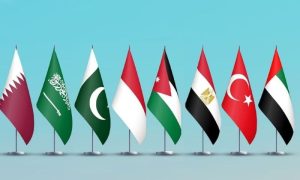
He said the Makkah Joint Defence Agreement reflected Pakistan’s commitment to regional security and its emergence as a dependable partner in efforts to promote peace and stability. At the same time, he stressed that Pakistan would not compromise on its sovereignty, territorial integrity or national security.
The president also accused India of supporting terrorism through proxies and referred to what he described as foreign support for militant groups operating against Pakistan.
Call for stronger Pakistan
The president said military preparedness alone could not guarantee Pakistan’s long-term strength, stressing the importance of economic stability, political tolerance, national unity, education and development.
He urged the nation to work collectively towards building a secure, democratic, prosperous and developed Pakistan in line with the vision of Quaid-i-Azam Muhammad Ali Jinnah.
PM pays tribute to armed forces, families
Prime Minister Shehbaz Sharif, in his Defence Day message, paid tribute to the armed forces and their families, saying September 6 represented a defining chapter in Pakistan’s history and reflected the resolve, unity and sacrifices displayed during the 1965 conflict.
Prime Minister Muhammad Shehbaz Sharif’s Message on Defence & Martyrs Day, 6 September 2026.
6 September is a glorious chapter in our national history, reminding us of the unparalleled resolve, unity and sacrifices demonstrated by our Armed Forces and the nation in defence of…
— Prime Minister’s Office (@PakPMO) September 6, 2026
He said the armed forces had demonstrated professionalism and courage in defending the country despite what he described as India’s numerical superiority and aggression.
Shehbaz Sharif also praised the armed forces for their response during last year’s four-day conflict with India, referring to it as Marka-i-Haq and saying that Operation Bunyanum Marsoos had added another chapter to Pakistan’s military history.
He credited Chief of Defence Forces and Chief of Army Staff Field Marshal Syed Asim Munir, Chief of the Air Staff Air Chief Marshal Zaheer Ahmed Babar Sidhu and Chief of the Naval Staff Admiral Naveed Ashraf with providing professional leadership during the confrontation.
READ ALSO: Pakistan President, PM Vow No Compromise on Defence as Forces Respond to Afghan Taliban ‘Aggression’
The prime minister said Pakistan faced multiple security challenges, including what the government describes as Fitna-al-Khawarij and Fitna-al-Hindustan, and vowed that attempts to destabilise the country through terrorism and hybrid warfare would be defeated.
He, however, stressed that national strength depended on more than military capability, identifying economic development, political stability, education, poverty reduction and national unity as essential to Pakistan’s long-term security.
“Our true strength lies not only in our defence capabilities but also in a united, peaceful, stable and economically strong nation,” he said.
Pakistan’s regional role
Prime Minister Shehbaz Sharif said Pakistan would continue to play an active and constructive role in promoting peace and stability at regional and international levels.
He described Pakistan as a “net security stabiliser”, saying the country was contributing to collective security beyond its borders. He cited the Makkah Joint Defence Agreement as evidence of Pakistan’s growing role in regional security and its commitment to collective defence and cooperation with friendly countries.
The prime minister said Pakistan remained committed to dialogue and cooperation as the preferred means of resolving regional disputes.
He also called on the international community to recognise that durable peace in South Asia could not be achieved without resolving the Kashmir dispute in accordance with relevant United Nations Security Council resolutions and the aspirations of the Kashmiri people.
Shehbaz reiterated Pakistan’s position that India’s policies towards Kashmir remained a major obstacle to peace, development and prosperity in the region.
The president and prime minister both called for national unity while reaffirming the government’s commitment to strengthening Pakistan’s defence capabilities and pursuing peace and dialogue.
Defence and Martyrs’ Day is observed annually on September 6 to commemorate Pakistan’s defence during the 1965 war with India and to honour those who sacrificed their lives in the country’s defence.