Key Points
- Entire national electricity grid suffers fresh collapse.
- Millions left without power across the island.
- Authorities race to restore critical services.
- Repeated outages underscore worsening energy crisis.
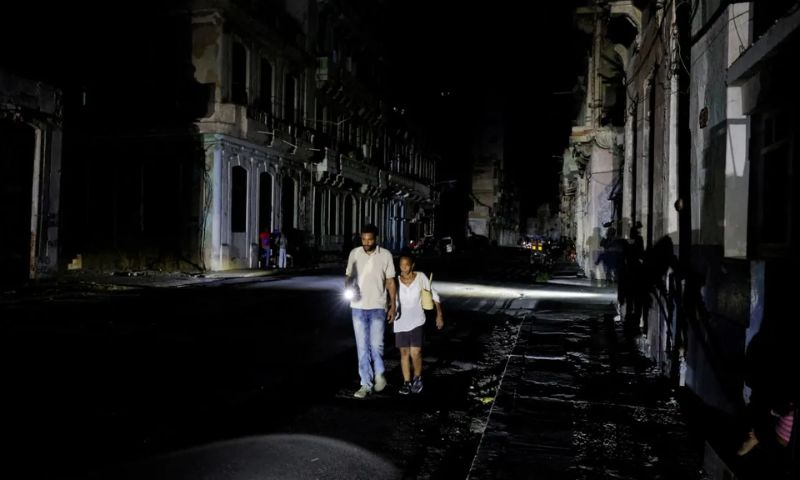
ISLAMABAD: Cuba was plunged into darkness once again after its national electricity grid suffered a fresh nationwide collapse late Sunday, leaving nearly 10 million people without power and highlighting the deepening energy crisis facing the Caribbean island.
The state-run electricity company, Unión Eléctrica (UNE), said the National Electricity System experienced a “total disconnection”, causing a nationwide blackout, including in Havana.
The blackout came only hours after electricity had been restored in parts of western Cuba following previous outages.
Engineers were working to identify the cause and gradually restart the grid, although no timetable for full restoration was immediately provided.
The latest collapse marks the fourth nationwide blackout in recent weeks and the latest in a string of major failures that have repeatedly crippled Cuba’s power system since late 2024.
Hospitals, water pumping stations and other essential services switched to emergency generation where possible. But millions of Cubans were left without electricity during the peak of the summer heat, according to Reuters.
Cuba’s energy crisis
The recurring blackouts stem from a combination of ageing thermal power plants, chronic fuel shortages and a fragile transmission network that has become increasingly vulnerable to cascading failures.
Several of Cuba’s largest power stations are more than three decades old and have suffered years of deferred maintenance due to financial constraints and difficulties obtaining equipment and spare parts, according to AP News.
The energy crisis has intensified in 2026 following a sharp reduction in imported fuel supplies. Cuban authorities attribute the shortages largely to tightened US restrictions.
ALSO READ: US Imposes New Sanctions On Cuban President, Castro Family
The US sanctions have disrupted oil shipments from traditional suppliers, including Venezuela and Mexico. They have significantly reduced the fuel available for electricity generation. Cuba produces only about 40 per cent of the oil it consumes, making the island heavily dependent on imports.
The prolonged electricity shortages have had far-reaching consequences for the economy and daily life.
Many provinces have endured scheduled outages lasting more than 12 hours a day, with some eastern regions experiencing blackouts exceeding 20 hours.
Public transport has been disrupted, surgeries postponed, businesses forced to close, and food refrigeration interrupted, compounding shortages of medicines and essential goods.
Faced with mounting public frustration, the Cuban government has begun introducing limited reforms to attract foreign participation in the energy sector.
Authorities have approved the country’s first foreign-backed fuel import project and authorised nearly 200 domestic businesses to engage in wholesale fuel distribution, measures intended to ease supply bottlenecks without abandoning state control of the electricity system.
The latest nationwide outage is expected to renew pressure on the government as it struggles to stabilise the electricity network amid one of Cuba’s most severe economic crises in decades.
Power restoration is likely to proceed gradually through isolated generating units before reconnecting regional grids into the national system, a process that has taken many hours during previous nationwide collapses.