


Key Points
- No confirmed fatalities, several treated for minor injuries
- Cause under investigation, rapid spread linked to housing conditions
- Incident underscores vulnerability of informal coastal settlements
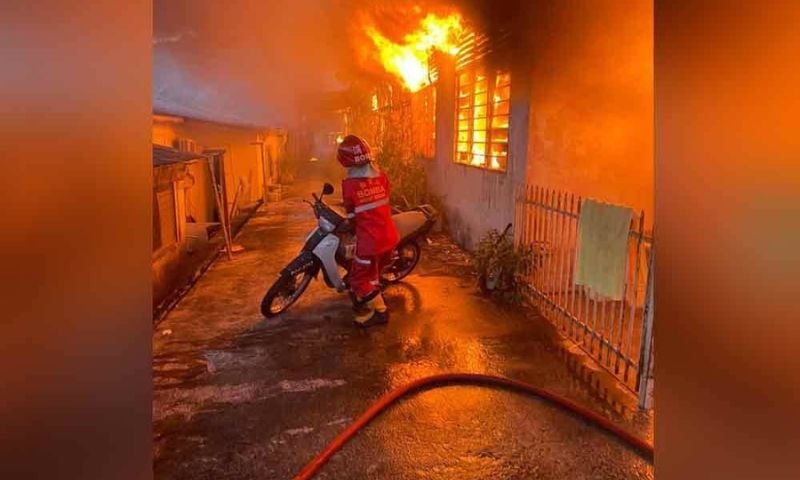
ISLAMABAD: A huge fire in the eastern Malaysian state of Sabah has destroyed about 200 homes and displaced hundreds of residents, prompting an emergency response and renewed concern over fire risks in densely populated settlements.
Sabah lies on the northern part of Borneo, one of the world’s largest islands, shared by Malaysia, Indonesia and Brunei.
The blaze erupted in a tightly packed coastal community, where many homes are constructed from wood and other combustible materials.
The fire spread quickly, leaving residents little time to gather belongings before entire rows of houses were engulfed, officials told the media.
Firefighters and rescue teams worked for several hours to contain the flames. Authorities reported no immediate fatalities, though many people were treated for minor injuries and smoke inhalation.
Local authorities have established temporary shelters, providing displaced families with food, water and basic medical care. Damage assessments are underway as officials begin planning for recovery and rehabilitation.
The cause of the fire has not yet been confirmed. However, such incidents are often associated with electrical faults or domestic accidents in areas where housing is closely spaced, and fire safety infrastructure is limited.
Urban planners and community representatives say the incident reflects broader structural challenges, including rapid population growth, informal housing expansion and gaps in safety enforcement in vulnerable coastal areas.
The fire adds to a pattern of similar incidents reported in parts of Sabah, raising questions about long-term planning. It has also highlighted the need for more resilient housing solutions in regions exposed to recurring fire hazards.