ISLAMABAD: Islamabad is at the centre of global attention as high-stakes talks between the United States and Iran are set to begin on Saturday, with Pakistan hosting negotiations aimed at reinforcing a two-week ceasefire and working towards a broader agreement.
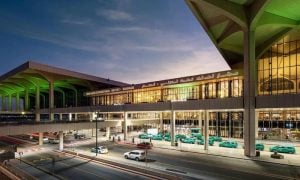
Pakistan has eased entry requirements for participants of the Islamabad Talks, allowing travellers to board flights without visas and receive visas on arrival.
The move, announced by Foreign Minister Ishaq Dar, aims to ensure smooth access for delegates, journalists, and officials attending the talks.
Authorities say the step reflects Pakistan’s effort to maximise global participation and facilitate a well-organised diplomatic engagement.
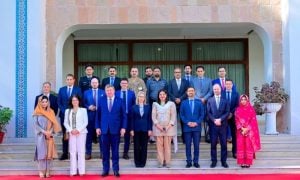
Pakistan’s leadership, including Prime Minister Muhammad Shehbaz Sharif and the country’s top military leadership, remained actively engaged throughout the week, holding consultations with key stakeholders and maintaining close contact with world leaders.
Prime Minister Shehbaz Sharif received telephone calls from several prominent international leaders, including the Amir of Qatar, the King of Bahrain, the Prime Minister of Lebanon, French President Emmanuel Macron, Austrian Chancellor Karl Nehammer, German Chancellor Olaf Scholz, Italian Prime Minister Giorgia Meloni, and Iranian President Masoud Pezeshkian.
During these engagements, Deputy Prime Minister and Foreign Minister Ishaq Dar maintained close contact with his counterparts across the Middle East and Europe as part of Pakistan’s diplomatic outreach.
The world leaders congratulated the Pakistani leadership on Pakistan’s successful diplomatic efforts, which helped pave the way for dialogue between the two sides.
In Pakistan, authorities locked down Islamabad ahead of US–Iran peace talks. A two-day public holiday was also declared in the capital to implement strict security measures. Read more: https://t.co/WYDlpQCiIc pic.twitter.com/08zNEz0Ivw
— Reuters Asia (@ReutersAsia) April 9, 2026
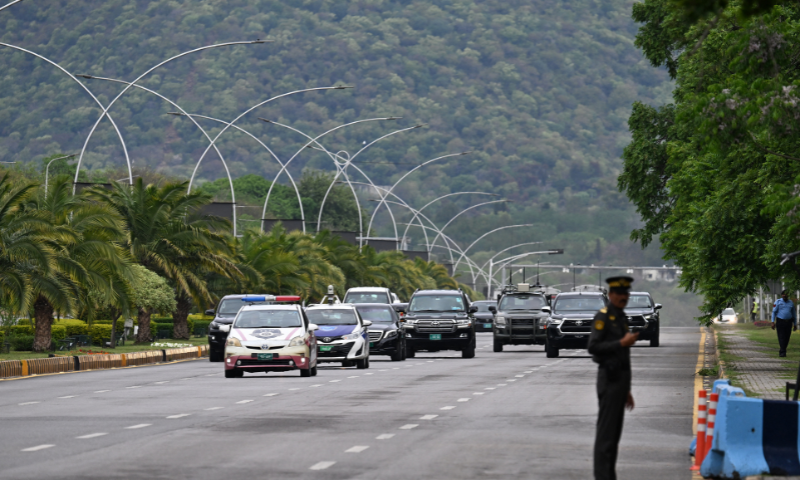
The capital has been placed under extraordinary security arrangements, and authorities have effectively locked down Islamabad’s Red Zone, with key arteries including D-Chowk, Constitution Avenue, and routes leading to the Serena Hotel — the expected venue of the talks — sealed off or heavily restricted.
Only authorised vehicles are being allowed with limited access, while thousands of security personnel have been deployed across sensitive locations.
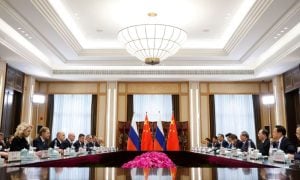
Delegations are expected to arrive in Islamabad on Friday, with formal negotiations scheduled for Saturday.
Initial advance teams from both countries, including security officials, have already arrived in Islamabad. Additional members of the delegations are expected to land in phases. Formal negotiations are likely to begin soon after all delegations are in place.
The United States delegation will be led by Vice President JD Vance, underscoring the significance Washington attaches to the Islamabad talks. According to White House Press Secretary Karoline Leavitt, the delegation will also include Special Envoy for the Middle East Steve Witkoff and senior adviser Jared Kushner.
Pakistani government sources said Deputy Prime Minister and Foreign Minister Ishaq Dar will represent Pakistan in the negotiations.
The Iranian side will be represented by Parliament Speaker Mohammad Bagher Ghalibaf and Foreign Minister Abbas Araghchi, signalling Tehran’s serious engagement in what is being seen as a decisive diplomatic opening.
The city’s central administrative district — home to the Parliament House, Presidency, Supreme Court, and the Ministry of Foreign Affairs — has effectively turned into a fortified zone. Multiple checkpoints, barricades, and roadblocks have been set up, while media access to key areas remains restricted.
Officials say the arrangements reflect the significance of the talks, which are aimed at consolidating the ceasefire and moving towards a broader agreement.
Despite the ceasefire, tensions remain visible. Statements from both sides indicate a cautious approach, with the United States maintaining military readiness in the region while Iran has warned it remains prepared to respond to any escalation.
Diplomatic sources indicate that both sides are bringing detailed proposals to the table. Iran is expected to push for compensation for war-related losses, guarantees against future attacks, and recognition of its rights under international frameworks. The United States, meanwhile, is focused on limiting Iran’s nuclear programme, including uranium-related concerns.
However, fresh regional developments — particularly Israel’s attacks against Lebanon — have emerged as a potential complication. Iranian officials have raised concerns that such actions could undermine the ceasefire framework and derail the talks.
While optimism surrounds the talks, officials caution that significant challenges remain. With multiple contentious issues still unresolved, the talks are expected to be complex, with outcomes dependent on sustained diplomatic engagement.
For now, Islamabad stands at the centre of global attention — not as a political capital alone, but as a potential venue for a breakthrough that could reshape regional stability.