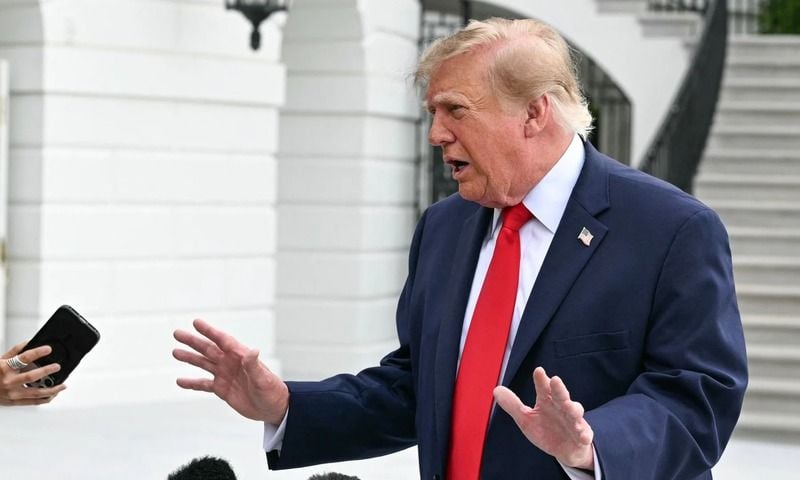
WASHINGTON: US President Donald Trump said on Saturday that he had rejected a proposal from Iran conveyed during indirect negotiations this week, as Tehran awaited a US response to a plan to reopen the Strait of Hormuz and halt fighting.
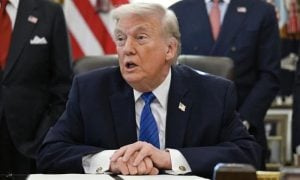
“They made a proposal, but I rejected it,” Trump told reporters before departing the White House for Knoxville, Tennessee.
Trump on Iran:
They made a proposal, but I rejected it. pic.twitter.com/HIY06XhRXS
— Clash Report (@clashreport) September 26, 2026
“I’m rejecting their deal. They want to make a deal where they open the Strait immediately because they’re losing so badly,” Trump told reporters.
“They want to make a deal, and I think that’s fine. I like making a deal, too, but that deal would not be acceptable.”
Reporter: Will you strike Iran after the midterms?
Trump: I’m rejecting their deal. They want to make a deal where they open the Strait immediately because they’re losing so badly.
They want to make a deal, and I think that’s fine. I like making a deal, too, but that deal would… pic.twitter.com/87rKbDySLN
— Clash Report (@clashreport) September 26, 2026
The remarks came after Iranian officials said Tehran had presented a seven-day plan through mediators that could lead to the reopening of the strategic waterway and a halt to hostilities, according to Reuters.
Iranian Foreign Minister Abbas Araghchi told reporters at the United Nations on Friday that Tehran had conveyed its proposal to US officials through mediators.
Under the plan, a seven-day countdown would begin towards reopening the Strait of Hormuz and pausing fighting if Washington agreed to the conditions, Araghchi said.
“If there is seriousness on the US side to come to a deal and reopen the Strait of Hormuz, everything is now prepared,” he said.
Araghchi said the plan would halt hostilities on all fronts, including in Lebanon. In return, he said, the United States would have to lift its blockade on Iranian ports, release Iran’s frozen funds and waive oil sanctions.
He said the agreement could then open the way for broader negotiations on issues agreed by both sides, potentially including Iran’s nuclear programme.
Indirect US-Iran Talks
US envoys Steve Witkoff and Jared Kushner held a new round of indirect talks with Araghchi on the sidelines of the UN General Assembly in New York this week, Axios reported.
Trump says he rejected the latest Iranian proposal https://t.co/oKm43eLTEk
— Axios (@axios) September 26, 2026
According to Axios, Araghchi conveyed Iran’s conditions for reopening the Strait of Hormuz and resuming nuclear talks to Witkoff and Kushner.
Iran proposed reopening the strait and resuming nuclear negotiations within a week if the United States lifted its naval blockade, removed sanctions on Iranian oil sales and reinstated a regional ceasefire, Axios reported.
Also Read: US, Iran Explore Deal To Reopen Strait Of Hormuz, Ease Economic Restrictions
The US negotiators made clear during Tuesday’s talks that Iran did not control the Strait of Hormuz and therefore could not make demands concerning its reopening, a source told Axios.
A US official cited by Axios said discussions between the two sides through mediators remained “positive and constructive”, including on nuclear issues.
Nuclear Programme and Strait of Hormuz
The Strait of Hormuz, a vital global energy route, has remained at the centre of the diplomatic efforts.
Dozens of oil tankers are transiting the waterway each day under US protection, carrying millions of barrels of oil to global markets, Axios reported. Volumes remain well below pre-war levels but have eased some pressure on international energy supplies.
US officials claimed that about 60 million barrels of oil had passed through the strait over the previous 72 hours, according to Axios.
The nuclear issue remains another major point of disagreement.
Trump has repeatedly said Iran must not acquire a nuclear weapon. A senior Iranian official told Reuters that Tehran would not show flexibility over its nuclear programme even if Washington accepted its proposed peace deal.
The official said Iran would make no concessions on what it considers its rights, including uranium enrichment or shipping its highly enriched uranium out of the country, Reuters reported.
Iranian President Masoud Pezeshkian, speaking to CBS programme “Face the Nation”, said Tehran was prepared to negotiate over its nuclear programme and other issues but would not accept what he described as “bullying or coercion”.
“Iran is not seeking war, but will defend itself against pressure, threats and attacks,” Pezeshkian said.
He added that Iran had already agreed that it was “not supposed to develop nuclear weapons”.
Tehran Awaits US Response
Iran was awaiting a US response on Saturday after the Wall Street Journal reported that Trump had rejected Tehran’s proposal.
The diplomatic initiative was raised at the UN General Assembly in New York and conveyed to the United States through mediators, Reuters reported.
Araghchi said that if Washington agreed to the proposal, wider talks could begin on mutually agreed subjects, including potentially the nuclear issue.