
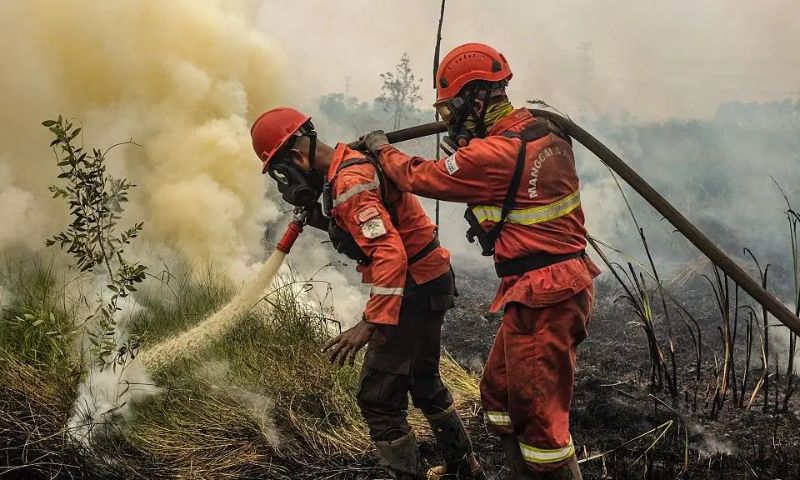
JAKARTA: Indonesia is battling widespread land and forest fires that have burned for weeks, exposing millions of people to toxic haze and sending smoke across neighbouring Malaysia, Singapore and the Philippines.
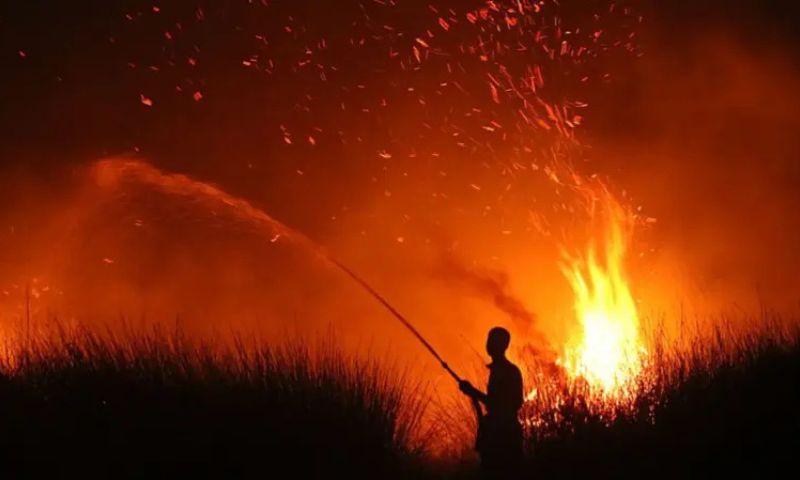
The fires have been particularly severe in Kalimantan, the Indonesian portion of Borneo, where thousands of hotspots have been detected, and large areas of peatland continue to smoulder beneath the surface.
More than 50,000 people have been hospitalised with respiratory infections, while authorities have reported worsening air quality in several affected regions.
Fires Disrupt Daily Life
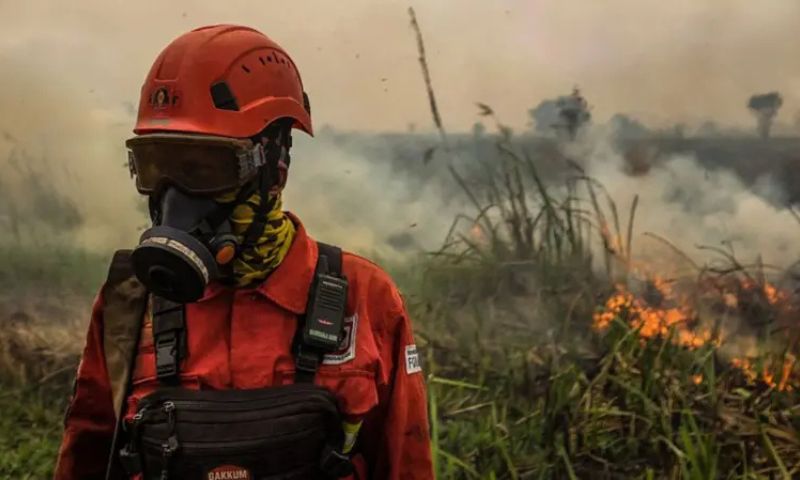
In Banjarbaru, South Kalimantan, about 1,263 hectares (3,120 acres) have burned over the past two months, including areas near the city’s international airport and protected forests.
Residents describe thick smoke reducing visibility and penetrating homes despite closed doors and windows.
Rizma Nur Fatimah, a 19-year-old teaching assistant at a kindergarten in Banjarbaru, said conditions had become so severe that people could barely see through the smoke.
“Even inside the house, with everything closed, the haze still got in,” she said.
Classes at the kindergarten were suspended for up to two weeks before resuming this week. Rizma said many children and their parents had since suffered respiratory illnesses.
“We’ve been living with this since I was born. It’s the same every year, so we’ve almost become resigned to it,” she said.
“But this year is worse because the winds are stronger.”
Firefighter Dies
The worsening crisis has also taken the life of a volunteer firefighter in Central Kalimantan.
Akhmad Rijani, who led the Serbu Api firefighting team in Palangka Village, Palangka Raya, collapsed while inspecting a wildfire site on Rungan Road.
He was treated at Betang Pambelum Hospital for six days before dying.
Authorities in Palangka Raya have since ordered health screenings for wildfire volunteers and firefighting personnel before daily operations.
Haze Reaches Neighbouring Countries
The smoke has crossed national borders, with parts of Sarawak in Malaysia reporting unhealthy air pollution levels.
Face-to-face classes have been suspended in several areas, including Kuching, Samarahan, Serian, Sri Aman and Betong, as smoke from Kalimantan thickens.
In Singapore, memories of severe haze episodes in 2013 and 2015 have prompted authorities and retailers to prepare N95 masks and contingency measures.
Schools are preparing to limit outdoor activities, while organisers of the Formula 1 Grand Prix in October have also drawn up plans to protect spectators and provide medical assistance if air quality deteriorates.
Indonesia is burning, and the smoke knows no borders.
Weeks-long wildfires across Sumatra and Kalimantan have poisoned the air, sickened tens of thousands and sent a choking haze into Malaysia, Singapore and the Philippines.
Even firefighters are paying the ultimate price.… pic.twitter.com/0qGYgRjfij— Sajjad Tarakzai (@SajjadTarakzai) September 3, 2026
In the Philippines, residents of Palawan have reported a burnt smell, itchy eyes and throats and mild headaches, with haze increasingly visible over parts of the island.
Firefighting Hampered By Haze
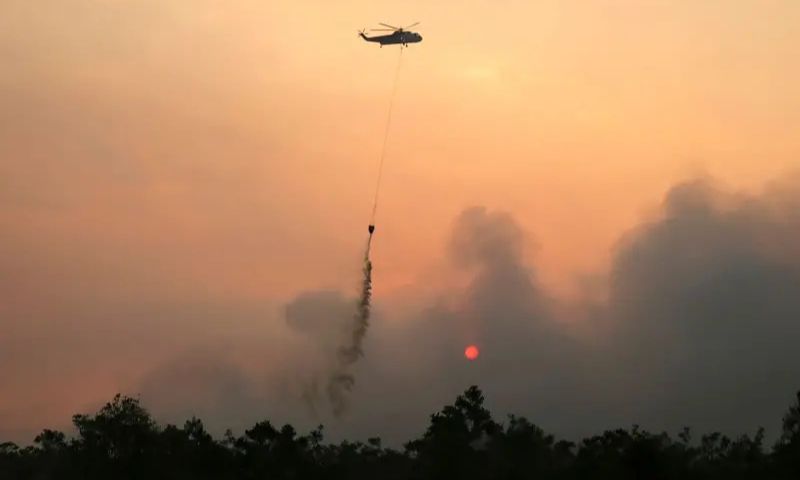
Thick smoke is also complicating efforts to contain the fires. Cloud-seeding operations and firefighting aircraft have been affected by poor visibility, while some peatland areas continue to smoulder underground.
Central Kalimantan has recorded 8,572 hotspots, followed by West Kalimantan with 7,617 and South Kalimantan with 1,450.
The scale of the fires and the movement of smoke across borders have once again highlighted the persistent regional threat posed by Indonesia’s annual land and forest fires.
Indonesia, meanwhile, faces growing pressure to contain the fires as hazardous air spreads across Southeast Asia.