
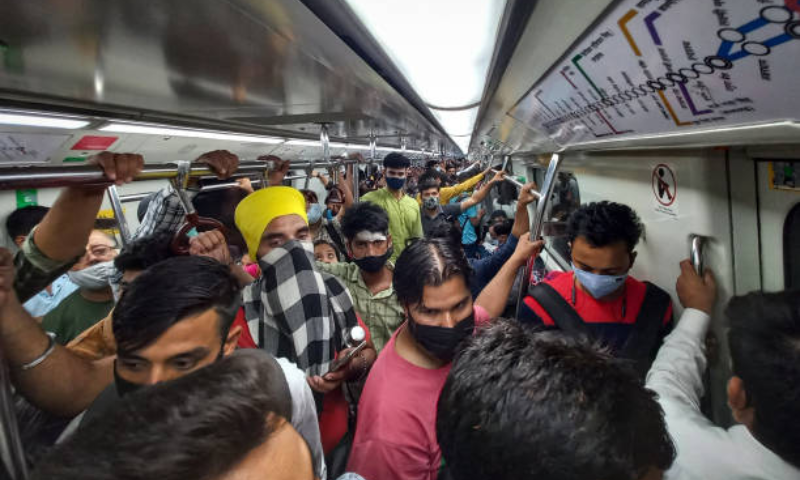



NEW DELHI, India: India’s rapid expansion of metro rail networks is facing growing scrutiny, as low passenger numbers across several cities highlight weaknesses in planning, affordability, and integration.
The government has invested more than $26 billion in metro projects across nearly two dozen cities since 2014, expanding the network to over 1,000 kilometres. However, actual ridership in many corridors remains far below projections, raising questions about the effectiveness of the strategy.
In Mumbai, for instance, the Aqua Line — a major underground corridor — was expected to carry around 1.5 million passengers daily, but current usage is estimated at only a fraction of that.
Similar trends have been observed in other cities, where ridership has reached just 20 to 50 per cent of projected levels, according to various studies.
Infrastructure challenges
Experts say one of the key issues lies in overestimated demand forecasts. Projections are often based on ideal operating conditions that are not realised in practice, leading to gaps between expected and actual usage.
Cost is another major barrier. Metro travel remains relatively expensive for lower-income commuters, with fares consuming a significant share of monthly income compared to global benchmarks. Reduced subsidies in recent years have further limited accessibility.
Weak last-mile connectivity and poor coordination between transport systems have also affected ridership. Limited feeder services, long transfer times and inadequate station access discourage commuters from using metro services.
Analysts say fragmented management structures, where multiple agencies operate independently, have hindered integrated transport planning.