



KEY POINTS
- New crew-rest rules expose the airline’s planning failures
- More than 1,600 flights cancelled in a single day, stranding thousands
- Global agencies warn of heavy financial losses and long-term reputational damage
- Airlines in the Gulf and Europe flag spillover delays on connecting routes
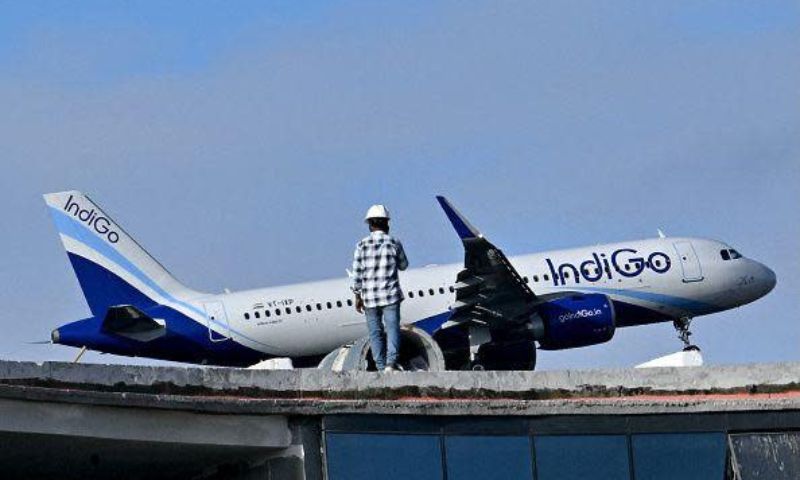
ISLAMABAD: India’s dominant airline, IndiGo, which carries more passengers than all domestic rivals combined, has plunged into the worst operational meltdown the country’s aviation industry has witnessed in more than a decade
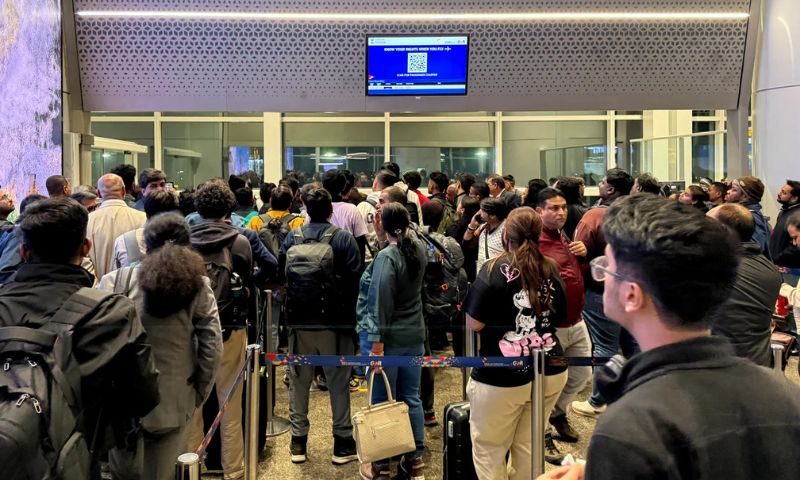
The IndiGo meltdown has left families stranded at airports, disrupted funerals and weddings, and triggered regulatory action.
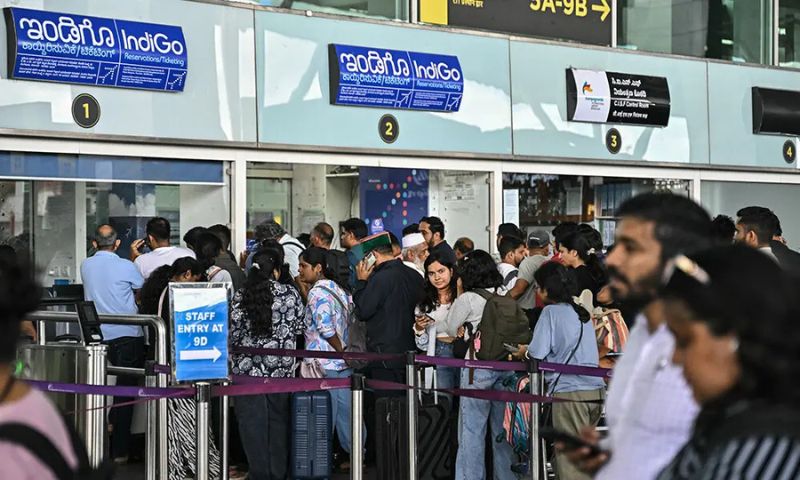
The light cancellations surged abruptly on December 5, when more than 1,000 flights were grounded by the evening, and the figure rose to nearly 1,600 by nightfall.
One grieving woman, who arrived with her husband’s coffin to fly to Kolkata for the last rites, waited for hours before the airline scrapped the service. Thousands of others faced similar ordeals across India’s congested airport terminals.
IndiGo, once celebrated as the textbook model for low-cost aviation in Asia, controls nearly 60 per cent of India’s domestic market and operates about 2,000 daily flights.
The airline now faces what credit rating agency Moody’s describes as a substantial financial hit due to mass refunds, compensation liabilities, and possible penalties linked to operational collapse.
Aviation analysts told BBC Urdu that the crisis stems from recently enforced crew-rostering rules that expand pilots’ weekly rest requirements from 36 to 48 hours and sharply reduce the number of night landings allowed.
India’s aviation regulator drafted these rules two years ago after long-running fatigue complaints from pilots.
Major airlines, including Air India, have already complied, but IndiGo admitted it failed to prepare for the transition.
Experts say the delayed compliance forced the airline to ground more than half its active fleet at peak travel hours. Aviation consultant Mark Martin said rival carriers had adapted months earlier.
However, IndiGo resisted the shift because full compliance needed hiring hundreds of additional pilots and expanding crew reserves, raising costs in a business built on razor-thin margins.
Pilots who spoke anonymously to the BBC expressed that the recent meltdown highlights a deeper issue of cost-cutting that has overlooked persistent warnings about fatigue.
One senior captain emphasised that aviation is a safety-critical industry, where the effects of exhaustion are often only recognised when it’s too late.
Analysts abroad have voiced similar concerns. Reuters reported that the new Indian fatigue rules were broadly aligned with global norms, and that airlines in Europe and the Middle East had faced similar adjustments years earlier without such widespread failures.
Bloomberg wrote that IndiGo’s rapid international expansion, which added a wave of medium-haul routes to the Gulf and Southeast Asia, may have overstretched its crew planning systems.
Gulf News reported onward delays for Dubai-bound passengers over the weekend because IndiGo’s connecting flights from Indian cities did not arrive.
Air Deccan founder G R Gopinath argued in a widely cited column that IndiGo’s near-monopoly had weakened its institutional alertness.
With smaller carriers like Jet Airways, Kingfisher, and Go First already gone, IndiGo had filled the vacuum, carrying 100 million passengers a year.
Gopinath said market dominance sometimes breeds complacency that eventually shows up in safety-related decision-making.
Moody’s warned that IndiGo’s low-cost operating model, normally an advantage, lacked the flexibility required for a system-wide reset once the regulator enforced new fatigue rules.
Analysts say this rigidity, combined with the airline’s aggressive flight scheduling, created a domino effect that paralysed operations on December 5.
IndiGo has since secured a limited, one-time exemption from the rules until February and claims operations will stabilise between December 10 and 15.
But the Pilots Association of India has opposed any relaxation, telling the regulator that it undermines the purpose of fatigue-mitigation standards and risks flight safety.
Indian lawmakers discussed the crisis in Parliament on Monday. The aviation minister warned the airline of strict action.
The regulator has issued a show-cause notice, highlighting serious failures in planning and oversight, and has reportedly ordered IndiGo to reduce its flight schedule by five per cent to prevent further disruption.
Financial markets have reacted quickly. IndiGo’s shares have fallen in Mumbai trading as investors factor in rising staff costs and heavy compensation payouts.
According to public feedback platform LocalCircles, over half of passengers who flew with IndiGo in the past year reported problems linked with punctuality. On-time performance fell from 84 per cent in October to 68 per cent in November.
Analysts say regaining passenger trust will be IndiGo’s biggest challenge. Other Indian carriers, including Air India and SpiceJet, have already launched hundreds of additional flights to absorb stranded travellers.
Experts say pilot recruitment could also become difficult for IndiGo, given reports of fatigue and stretched schedules.
Aviation specialist Ameya Joshi said the crisis offers the regulator a rare opportunity to enforce discipline in a market long dominated by a single player.
With public patience exhausted and millions of journeys disrupted, he added, all eyes are now on how firmly the regulator responds.