NEW DELHI: A court in India’s Madhya Pradesh state has ruled that the historic Kamal Maula mosque in Dhar is a Hindu temple site, intensifying concerns among Muslim groups over growing disputes surrounding religious monuments under Prime Minister Narendra Modi’s rule.
The Madhya Pradesh High Court declared the medieval Bhojshala complex a temple dedicated to the Hindu goddess Vagdevi, allowing Hindu worship at the site while dismissing claims by the Muslim community.
The ruling follows years of legal disputes over the monument, where Muslims had offered prayers for decades under a shared arrangement supervised by India’s Archaeological Survey.
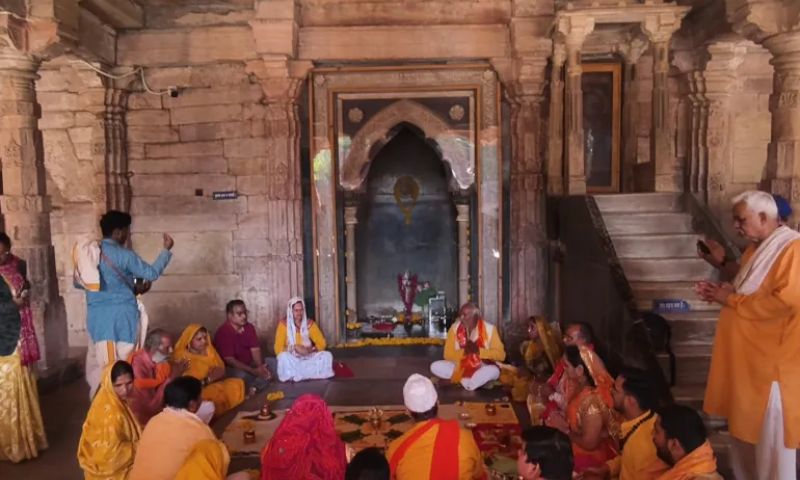
Following the judgement, Hindu worshippers gathered at the site carrying saffron flags associated with the Hindutva movement, while temporary idols were installed amid heavy police deployment.
For local Muslims, the decision marked the loss of a place of worship with deep historical significance.
Mohammad Rafiq, a 78-year-old muezzin who served at the mosque for nearly five decades, said the ruling was devastating.
“Until last Friday, our mosque was ours; today it is not,” he said.
Long-running religious dispute
The Bhojshala complex has remained contested for decades, with Hindu nationalist groups claiming a temple existed there before the mosque was built.
Under a 2003 arrangement with the Archaeological Survey of India, Hindus were allowed access on Tuesdays while Muslims prayed there on Fridays.
The court relied heavily on a recent ASI survey in reaching its verdict.
Muslim leaders and legal representatives have criticised the ruling and pledged to challenge it in India’s Supreme Court.
Lawyer Ashhar Warsi argued that historical records clearly identified the site as a mosque and accused authorities of disregarding legal protections.
Critics also pointed to India’s Places of Worship Act of 1991, which prohibits altering the religious character of places of worship as they existed at independence in 1947.
Wider pattern of mosque-temple disputes
The judgement comes amid a growing number of disputes involving Mughal-era mosques and claims by Hindu nationalist groups that temples existed beneath them.
Analysts and opposition figures say such cases have increased significantly since Modi’s rise to power in 2014.
The controversy echoes earlier disputes including the demolition of the Babri Mosque and ongoing legal battles involving the Gyanvapi Mosque in Varanasi and the Shahi Eidgah mosque in Mathura.
Critics warn the latest ruling could deepen religious tensions in India and fuel further challenges against Islamic-era monuments.