
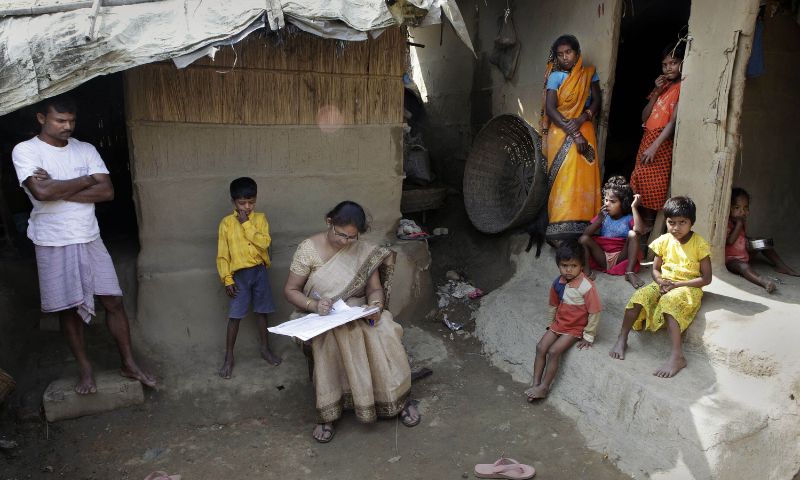
NEW DELHI: India is set to record caste data in its national census for the first time since 1931, a move expected to influence future debates on social justice, welfare distribution and political representation across the country.
The nationwide census, covering an estimated 1.4 billion people, comes after years of delay caused by the COVID-19 pandemic and administrative challenges.
More than three million census workers are expected to conduct door-to-door data collection across India’s cities, towns and nearly 640,000 villages.
India’s last full census took place in 2011, when the country’s population stood at just over 1.2 billion. The United Nations now estimates that India has surpassed China to become the world’s most populous nation.
Officially documenting caste identities
The inclusion of caste data is considered one of the most politically sensitive aspects of the exercise. Supporters argue updated figures are necessary to ensure fair distribution of government jobs, education quotas and welfare benefits for historically disadvantaged communities.
Critics, however, warn that officially documenting caste identities could deepen social divisions in an already polarised society.
The census will be conducted in two stages, beginning with data on housing, sanitation, internet access and household assets. A second phase scheduled for February 2027 will collect information on demographics, education, migration and income.
For the first time, census information will also be submitted digitally through a mobile application.