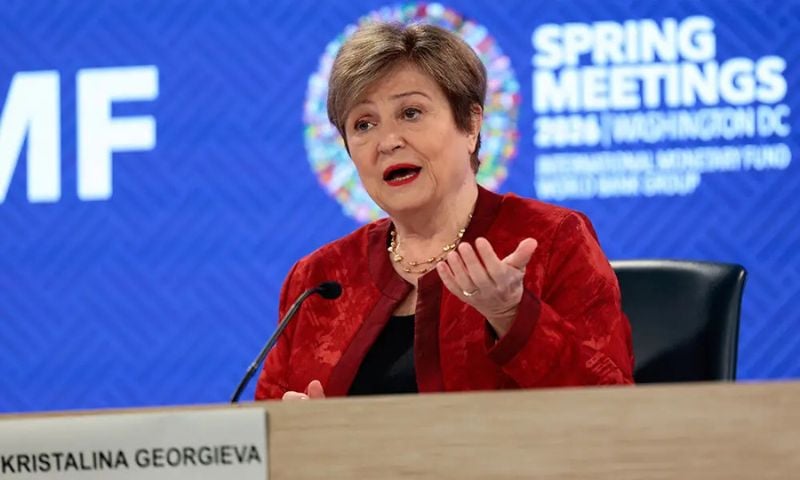
WASHINGTON: The head of the International Monetary Fund (IMF) has warned that the global economy could face “tough times” if the Iran war continues and oil prices remain high, cautioning that inflation pressures could spread into food markets.
IMF Managing Director Kristalina Georgieva said the world must prepare for worsening conditions if the conflict drags on.
“We must brace for tough times ahead,” she told reporters on Wednesday during a press briefing at the IMF and World Bank spring meetings in Washington.
The annual gathering has brought finance ministers and central bank governors to the US capital this week, as policymakers assess risks of economic spillovers from the Iran war.
Georgieva said US-Israeli strikes launched against Iran on February 28 triggered Tehran’s retaliation, which “virtually closed” the Strait of Hormuz — a key global route for oil and fertiliser shipments.
Energy prices have since surged, putting pressure on global markets and hitting economies dependent on imported fuel or regional exports.
“We are concerned about risks for inflation, moving into food prices should the delivery of fertilisers at a reasonable price not be restarted soon,” she said.
She warned that prolonged disruptions could deepen global food insecurity, particularly in vulnerable economies.
Georgieva urged central banks to adopt a cautious approach amid heightened uncertainty, advising them to “wait and see” before adjusting interest rates where possible.
She said this was especially relevant in economies where inflation expectations remain “well-anchored”.
“If we are to move faster out of the war, it may not be necessary to take action,” she said, adding that policy responses should depend on the pace of de-escalation.
However, she noted that countries where central banks lack credibility may need to take stronger steps to maintain stability.
Georgieva said the IMF remained prepared to assist member countries facing economic pressure from the crisis.
“For now, we are still at a time when a faster resolution of hostilities is possible,” she said, urging continued diplomatic engagement.
She also encouraged countries in need to seek assistance quickly.
“If you need help financially, don’t hesitate. Move fast, because the sooner we act, the more we would protect the economy and the people,” she said.
She said the IMF currently has 39 active programmes and is seeing prospective demand from at least a dozen more countries, including several in sub-Saharan Africa.
Georgieva also cautioned governments against broad or poorly targeted fiscal measures, warning that such steps could worsen long-term economic strain.
She said “untargeted measures, export controls or broad-based tax cuts” risked prolonging the impact of high prices.