
Key Points
- Oil rebounds more than 5 per cent after last week’s 9 per cent losses
- United States seizure of Iranian-linked vessel escalates Gulf tensions
- Shipping through Strait of Hormuz remains heavily disrupted
- Markets reprice geopolitical risk ahead of Iran–US talks’ second round in Islamabad
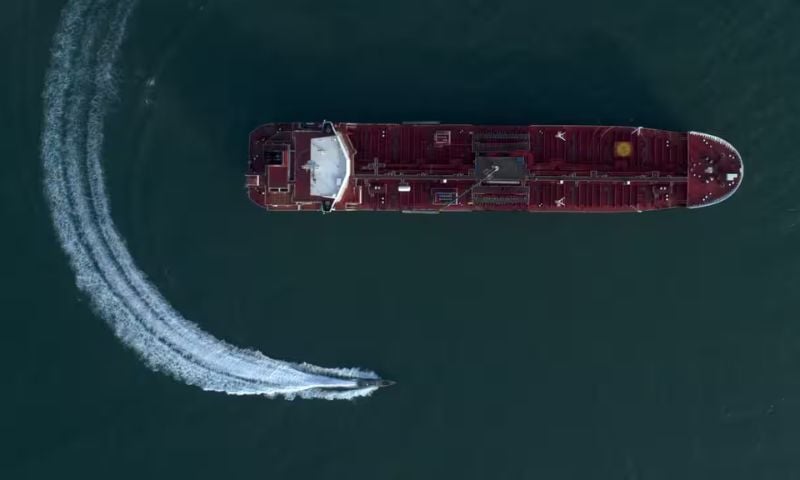
ISLAMABAD: Oil prices rebounded sharply on Monday, recovering from last week’s steep decline as tensions flared again in the Gulf following the seizure of an Iranian-flagged cargo vessel by United States forces.
The incident that Iran termed a ceasefire violation, following the Israeli breaches of the Lebanon ceasefire, prompted Iran to reclose the Strait of Hormuz after reopening it on Friday. Reemerging tensions not only threatened the second round of the talks in Islamabad, which both sides have confirmed, but also raised risk factors and prices.
Partial recovery
Brent crude futures rose 5.08 dollars, or 5.62 per cent, to 95.46 dollars a barrel in early Monday trade in Asian markets. West Texas Intermediate gained 5.01 dollars, or 5.97 per cent, to 88.86 dollars a barrel. The recovery was still partial compared with a sharp over 9 per cent sell-off at the end of last week when prices had dropped after the Iranian announcement of opening the Strait of Hormuz, which US President Donald Trump had thanked them for.
Short-lived optimism
The rebound followed reports that United States forces intercepted and seized an Iranian-linked cargo vessel over the weekend after it attempted to breach restricted waters, a move that sharply escalated geopolitical tensions in the Gulf.
Shipping through Strait of Hormuz
Shipping through the Strait of Hormuz has remained largely disrupted for over 50 days, sustaining concerns over global supply flows. The waterway is a critical artery for global energy trade, carrying over 20 per cent share of the world’s seaborne oil shipments.
Market sentiment shifted quickly from optimism to scepticism about potential diplomatic progress, with traders reintroducing a geopolitical premium as uncertainty returned to the region.
Volatility returns with talks
Analysts said the latest developments have effectively reversed last week’s narrative of easing tensions. Volatility returns as markets await clarity on both maritime security and the status of the upcoming Iran-US engagement in Pakistan’s federal capital, Islamabad.
Energy markets remain highly sensitive to any developments in the Gulf, with thin trading conditions amplifying price movements and leaving crude benchmarks vulnerable to rapid swings on geopolitical headlines.
Swing sentiment
The Trump administration, igniting tension after halting an Iranian ship while hinting at high hopes of a peace deal, has kept traders and analysts on their toes and the oil market in a swing sentiment.