Key Points
- Iran war exposes Gulf energy exports to disruption through the Strait of Hormuz.
- HSBC chief Georges Elhedery expects investment in alternative routes to reshape regional logistics.
- Business leaders and institutional investors continue to view the Gulf as an attractive investment destination.
DUBAI: The Strait of Hormuz could become redundant within five years as Gulf countries invest in alternative energy export routes to reduce vulnerability to the Iran war, said HSBC Group Chief Executive Georges Elhedery.
HSBC (Hong Kong and Shanghai Banking Corporation) is a London-based global banking and financial services group, operating in 56 countries and territories under parent company HSBC Holdings plc.
The conflict has highlighted the global economy’s dependence on the strategic waterway, through which around one-fifth of global oil and liquefied natural gas trade passed before the war.
Gulf states are now being pushed to accelerate investment in energy pipelines linking production centres to ports outside the Strait of Hormuz, potentially reducing their exposure to disruptions along the critical shipping route.
“We do see this region being able to recover and then continue growing. It will mean a lot of investment,” Elhedery said at the HSBC Future Forum in Dubai.
“Of course, we do wish and hope to see a resolution to the conflict … But Hormuz, probably in five years, may become redundant,” he added.
Elhedery’s remarks point to the fear of a long-term shift in Gulf energy infrastructure, as governments seek to protect exports and maintain access to international markets even if shipping through the strait is disrupted.
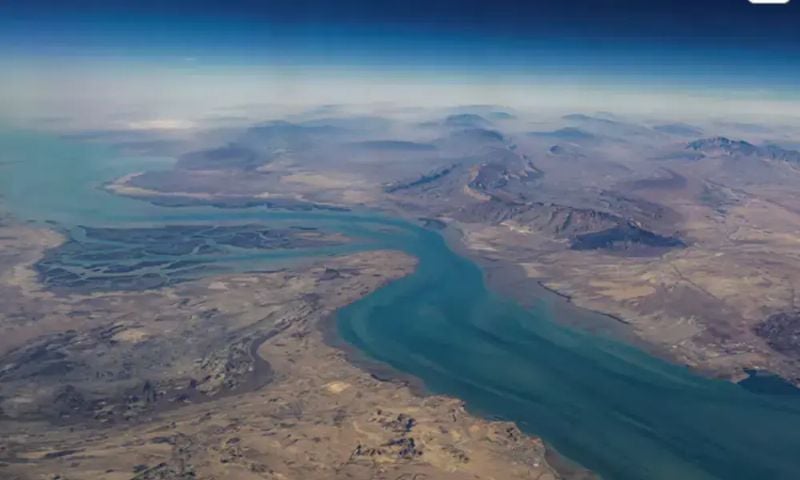
The Strait of Hormuz
The waterway, located between Iran and Oman, connects the Arabian Gulf with the Gulf of Oman and the Arabian Sea.
It has long been a critical route for shipping crude oil, petroleum products and liquefied natural gas to major Asian markets and other destinations.
READ ALSO: Iran’s Offer to Open Strait of Hormuz Not Enough: Trump
Alternative pipelines and export terminals could afford Gulf producers greater flexibility, although replacing the strait’s capacity would require substantial investment, infrastructure development and time.
Meanwhile, a recent HSBC survey of more than 1,600 business leaders and around 820 global institutional investors found that respondents continued to regard the Gulf as an attractive investment destination despite the regional conflict.
The findings suggest that the war has not eliminated investor interest in the region, even as businesses and governments confront heightened geopolitical uncertainty and the potential costs of securing energy supplies.
The extent to which alternative routes can reduce dependence on Hormuz will depend on the scale of new infrastructure, the capacity of existing pipelines and the security of ports and shipping corridors beyond the strait.