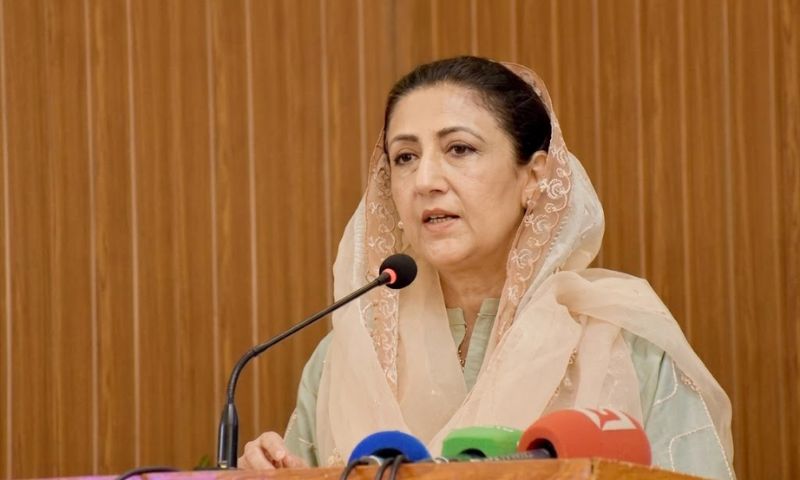
ISLAMABAD, Pakistan: Pakistan requires an estimated $565 billion in investment by 2035 to fulfil its climate commitments, State Minister for Climate Change Dr Shezra Mansab Ali Khan Kharal said on Wednesday, highlighting financial constraints and inadequate international support as major obstacles.
Addressing a pre-COP31 multistakeholder consultation in Islamabad, the minister called for a coordinated negotiating strategy focusing on adaptation finance, loss and damage, and climate threats facing mountainous regions.
Pakistan is preparing to participate in the 31st United Nations Climate Change Conference (COP31), scheduled to take place in Antalya, Türkiye.
Under its third Nationally Determined Contribution (NDC), submitted in September 2025, Pakistan has committed to reducing projected greenhouse gas emissions by 50% by 2035.
The target includes an unconditional 17% reduction, while the remaining 33% depends on international financial and technical support.
Kharal said more than 60% of government revenues were being spent on debt servicing, leaving limited resources for climate action.
The minister highlighted uncertainty surrounding an international commitment to triple adaptation finance by 2035, noting that the agreed language did not clearly establish the baseline for calculating the increase.
She said global adaptation finance stood at $26 billion in 2023, compared with an annual requirement estimated at $310 billion.
Kharal also raised concerns about the limited resources available through the Fund for Responding to Loss and Damage.
According to the minister, the fund had received 176 eligible proposals from 119 countries seeking $2.8 billion, while only $342 million was available for its pilot phase.
ALSO READ: Climate Change Threatens Pakistan’s Agriculture Sector
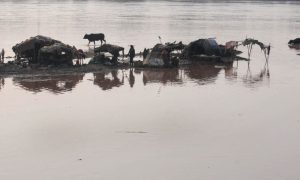
Pakistan has submitted three funding requests totalling $58 million, covering agricultural recovery, climate-resilient healthcare in Balochistan and the rehabilitation of flood-damaged fisheries in Khyber Pakhtunkhwa.
No funding allocation had yet been made for Pakistan’s proposals, she said, with initial decisions expected in December.
Pakistan Highlights Growing Glacier Risks
The minister identified accelerating glacier melt as another major concern, citing projections in Pakistan’s NDC that flows in the Indus River system could decline by 20% to 30% by 2050.
She said mountain communities in Gilgit-Baltistan and Chitral faced climate risks that were not adequately recognised under existing international climate frameworks.
Kharal stressed that glacial lake outburst floods presented particular challenges because they could cause sudden disasters following years of gradual environmental change.
She called for greater recognition of mountain-related vulnerabilities in international climate negotiations to improve access to adaptation and disaster-related financing.
Minister Calls for Greater Youth Representation
Kharal also urged participants to propose practical measures for increasing youth participation in Pakistan’s COP31 delegation.
She said recommendations should specify the number of young delegates, selection procedures and their formal roles rather than rely on general commitments to inclusion.
The minister acknowledged that Pakistan lacked a formal mechanism for incorporating recommendations from provincial institutions, universities, youth organisations and climate-affected communities into its negotiating position.
She said the consultation provided an opportunity to contribute evidence before the government’s negotiating brief was finalised.
Although the recommendations would not automatically become official policy, Kharal assured participants that their proposals would be reviewed and forwarded to the Ministry of Foreign Affairs.
She emphasised that precise language in international climate agreements was essential to ensuring financial commitments translated into practical support for vulnerable countries.