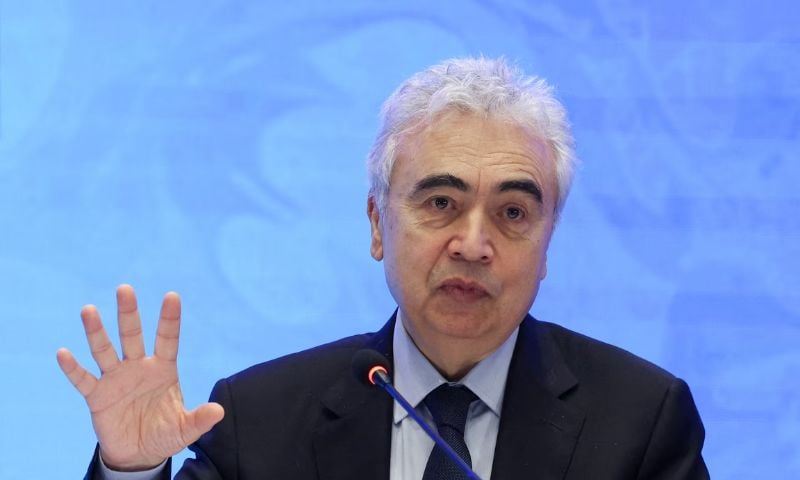



WASHINGTON: Global energy security could face serious risks if oil shipments through the Strait of Hormuz do not resume within the next few weeks, International Energy Agency (IEA) Executive Director Fatih Birol has warned.
Birol said the ongoing disruption to one of the world’s most important energy routes had created a critical situation, with the global economy increasingly vulnerable to prolonged supply shortages.
“Oil security is still a critical issue. We should be worried, and I am worried, if the situation does not improve in the next few weeks,” Birol said while speaking at an event hosted by the Council on Foreign Relations.
The Strait of Hormuz, a narrow waterway between Iran and Oman, normally handles around one-fifth of global energy shipments. However, oil flows through the route have been severely restricted since the conflict between the United States, Israel and Iran began on February 28.
Although energy prices have risen sharply, Birol said several temporary measures had helped limit further increases. These included China’s large oil reserves, reduced fuel consumption through greater use of electric vehicles and public transport, and an emergency release of up to 400 million barrels of oil coordinated by the IEA.
However, he warned that these measures could not continue indefinitely. “Those factors cannot last forever,” Birol said, adding that the conflict had caused what he described as the worst energy disruption in history.
The IEA chief also pointed to increased US oil production as a factor that has helped stabilise supplies, but said Washington’s ability to raise output had limits.
“The US increase in production is very good. The US increased one million, two million barrels per day, but it cannot increase 10 million barrels per day,” he said.
Birol said the impact of the energy crisis had been uneven across the world, with Asian economies facing the greatest pressure because many countries in the region relied heavily on supplies passing through the Strait of Hormuz.
“Asia was getting 80 to 90 percent of this energy from the Strait of Hormuz,” he said, noting that countries including Japan, South Korea, Pakistan, Bangladesh and India had been among the hardest hit.
He also warned of wider humanitarian consequences, particularly in developing countries where rising fuel prices have forced some households to turn to traditional cooking fuels such as wood and animal waste, increasing exposure to harmful emissions.
Birol said the IEA’s emergency oil release in March helped ease market pressure, with crude prices falling by around $20 a barrel afterwards. However, he stressed that the organisation still had significant reserves available if the situation deteriorated further.
“Even though it was huge, it was only 20 percent of the stocks we have. Eighty percent is still in the pocket,” he said. The IEA chief’s warning comes as governments and energy markets continue to monitor developments around the Strait of Hormuz, a key global route for oil and gas supplies.