UNITED NATIONS: The full scale of the multiple earthquake disaster in Türkiye and Syria was still unfolding, the United Nations humanitarians warned on Tuesday, as they stressed the need to ramp up search and rescue efforts for victims and ensure that life-saving aid reaches all those in need.
The deadly 7.8 magnitude quakes have claimed thousands of lives in both countries so far as the death toll neared 9000 on Wednesday with workers struggling against times in harsh winters to save survivors out of the debris of collapsed buildings.
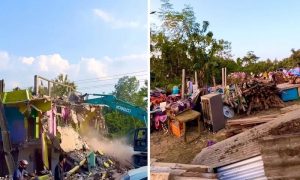
Almost 6,000 buildings reportedly collapsed in the country, too, said Jens Laerke, spokesperson for the UN Office for the Coordination of Humanitarian Affairs (OCHA).
Syria’s needs are massive, the OCHA spokesperson added, as he cited information from the country’s health authorities.
In line with the UN Secretary-General’s global appeal to support all those “already in dire need of humanitarian aid”, Laerke also issued a heartfelt appeal for help. He said, “It is imperative that everybody views this…for what it is: a humanitarian crisis where lives are at stake.” He urged not to politicise the ongoing situation, saying, “let’s get the aid out to the people who so desperately need it.”
Syria experienced over 200 aftershocks following initial quake
After enduring the initial massive tremor, traumatized communities in Syria also faced more than 200 aftershocks.
“The earthquake of course came at the worst possible time for many, many vulnerable children in those areas who already required humanitarian support,” said James Elder, the UN Children’s Fund (UNICEF) spokesperson.
“They went to bed as normal, they were woken by the screams of their neighbours, by breaking glass and by the terrifying sound of crumbling concrete.”
There was already an emergency situation across northwest Syria where four million people required humanitarian support. “Communities there were grappling with the cholera outbreak, a brutal winter and of course, ongoing conflict,” Elder explained.
Echoing those concerns, the United Nations High Commissioner for Refugees said that the situation was tragic in the 10 Turkish provinces that were impacted by the earthquakes.
In some of the affected provinces in Türkiye, 50 percent of people were refugees, while in Syria, UNHCR spokesperson Matthew Saltmarsh said the earthquake emergency was a “hammer blow” for displaced masses who have no work and whose savings had been exhausted. “We’re in the depths of winter, we have been seeing snowstorms and of course, you know, the war has been ongoing for more than a decade,” he said.
As international search and rescue workers arrive in the region, coordinated by OCHA, Laerke, the spokesperson, stressed that there was a window of about seven days to find alive survivors. “It could happen later, but it is really critical that these teams reach there as soon as possible,” he said.
Rescuers search for survivors under rubble
Apart from the material damage to roads and public infrastructure which has made it highly difficult for emergency teams to carry out rescue work, Syria’s dire economic conditions have also slowed the relief effort.
“Search and rescue efforts are currently being halted by lack of equipment to remove debris,” said Tommaso Della Longa, spokesman for the International Federation of Red Cross and Red Crescent Societies (IFRC). He added operational heavy machinery, transport of personnel and emergency ambulance services have been hampered amid a severe lack of fuel all over Syria.
In a special briefing during the World Health Organization’s (WHO) executive board session, the global health body’s chief Tedros Adhanom Ghebreyesus, said there was “a race against time” to rescue as many survivors as possible. He added that three charter flights would fly to both the affected countries, with medical supplies including major surgical trauma kits, from WHO’s logistics cell in Dubai.
He said the WHO would work closely with all partners to support authorities in both countries, in the critical hours and days ahead, as well as in later on as both countries recover and rebuild.
“To our sisters and brothers from Türkiye and the Syrian Arab Republic, all of us stand with you in this moment of unspeakable grief,” he said.
The UN Relief and Works Agency (UNRWA) said that about 90 per cent of the Palestinian refugee families in Syria were in need of humanitarian assistance after the earthquakes.
Some 438,000 Palestinian refugees reside in Syria’s 12 refugee camps with northern Syria hosting 62,000 Palestine refugees in Latakia, Neirab, Ein-el Tal and Hama.