Key Points
- Pakistan and China are negotiating the third phase of their free trade agreement
- Pakistan wants tariff treatment closer to that enjoyed by China’s other major trading partners
- Pakistani exports to China rose 48.7 per cent to more than $1.55 billion in January-May 2026
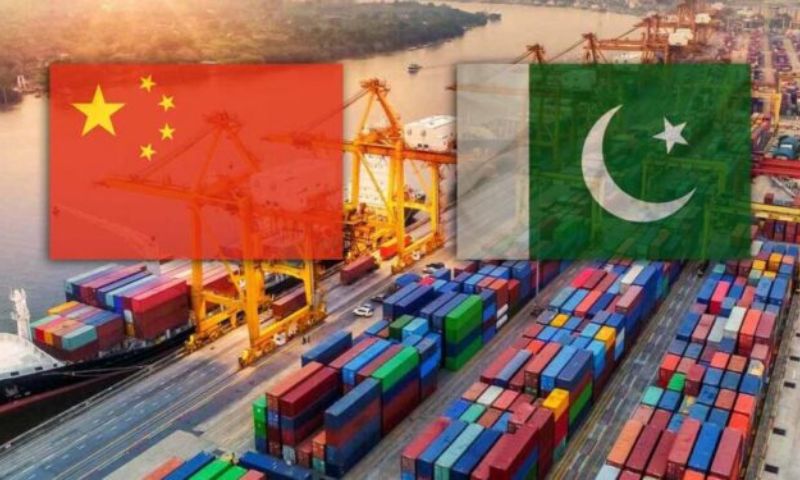
ISLAMABAD: Pakistan and China are negotiating a third phase of their free trade agreement, with Islamabad seeking tariff concessions on nearly 700 additional products to expand exports of textiles, minerals, meat and other value-added goods to the Chinese market.
The China-Pakistan Free Trade Agreement (CPFTA), signed in November 2006 and implemented in July 2007, has already provided preferential access for a range of Pakistani products.
The new negotiations aim to expand that access as Pakistan seeks to increase exports and narrow the trade imbalance with China.
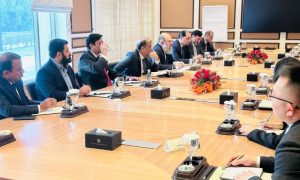
Pakistan’s Commerce Minister Jam Kamal Khan has led engagement on the negotiations, including talks with Chinese Ambassador Jiang Zaidong. Commerce Secretary Jawad Paul has also participated in discussions.
The sectors receiving particular attention include textiles, minerals and meat. Pakistani officials see substantial export potential in meat, with the sector estimated to generate as much as $5 billion in exports if market access and other constraints are addressed.
Pakistan is also seeking greater tariff parity with other countries and trading blocs that have preferential access to China.
Officials argue that concessions secured under earlier phases of the CPFTA have lost some of their competitive value as China has subsequently concluded or expanded trade arrangements with other partners.
China granted unilateral zero-tariff access to 53 African countries from May 2026, while members of the Association of Southeast Asian Nations (ASEAN) also benefit from extensive preferential access to the Chinese market.
Pakistan is seeking treatment that would allow its exporters to compete more effectively.
Negotiators have already made progress on trade-related barriers beyond tariffs. More than a dozen sanitary and phytosanitary protocols have been signed, covering health and safety requirements for traded agricultural and food products.
Discussions on technical trade barriers have also advanced, potentially reducing regulatory obstacles that can restrict commerce even when tariffs are low.
Pakistan has additionally proposed establishing a Green Channel at the Sust-Khunjerab border crossing to speed customs clearance.
The crossing provides a key land link between Pakistan and China’s Xinjiang region and is important for trade in minerals and other goods.
The negotiations coincide with Pakistan’s exports to China have already accelerated. Exports exceeded $1.55 billion in January-May 2026, up 48.7 per cent from the same period a year earlier.
Copper products were among the main contributors to the increase, while rice and sesame also recorded strong export performance.
Pakistan exported goods worth $2.375 billion to China in fiscal year 2024-25, with $2.16 billion of that trade conducted under CPFTA preferences, according to Pakistani officials.
The two sides are also seeking to change the composition of bilateral trade by encouraging more processed and higher-value Pakistani exports.
READ ALSO: Pakistan-China Forum Secures Five Trade, Investment Deals
Pakistan currently ships significant quantities of raw materials, including copper ore and raw cotton, while policymakers want a greater share of finished textiles, processed minerals and higher-value meat products.
The trade negotiations are part of broader economic engagement between Pakistan and China during 2026, including investment, infrastructure, industrial and agricultural cooperation.
Business forums and technical exchanges have produced new initiatives involving sectors such as electric vehicles, construction materials and agricultural exports.
No final agreement on CPFTA Phase III has yet been announced. Discussions are underway. The outcome would determine the extent of additional tariff access available to Pakistani exporters in the Chinese market.
For Pakistan, expanded concessions would provide an opportunity to turn rising trade volumes into sustained export growth.