Key Points
- Five MoUs target manufacturing, trade and services
- Pakistan’s exports to China rose 50.3 per cent
- Guangdong-Pakistan trade reaches billions of dollars
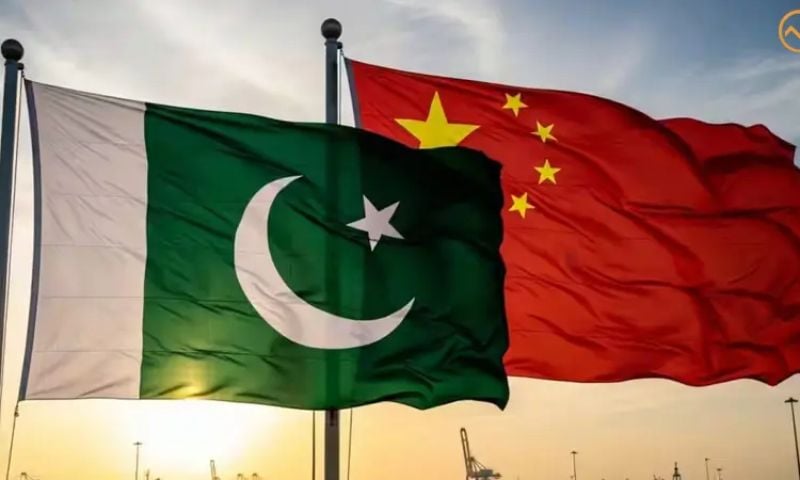
ISLAMABAD: Pakistan and China have signed five memorandums of understanding (MoUs) covering electric vehicles, battery manufacturing, building materials, pine nut procurement and medical tourism.
The MoUs were signed at a business forum in Guangzhou, reinforcing efforts to expand bilateral trade and investment and marking 75 years of Pakistan-China diplomatic relations.
The 5th Pakistan Investment & Business Environment Exchange Forum brought together more than 160 government officials, business leaders and trade representatives through online and in-person participation, according to Pakistani state media.
The agreements cover an electric-vehicle joint venture, development of a battery factory, cooperation in building materials and furniture, procurement of Pakistani pine nuts, and international medical and business tourism.
The forum was held to deepen economic cooperation as Pakistan and China mark the 75th anniversary of their diplomatic relations.
Hosted by the Guangzhou International Cooperation Centre and the Consulate General of Pakistan in Guangzhou, the event was organised by Mera PC Solution (Guangzhou) and the Rawalpindi Chamber of Commerce and Industry.
It featured policy presentations, investment project roadshows, industrial signing ceremonies, business-to-business matchmaking and presentations on new-energy solutions, e-commerce, home furnishings, building materials and food processing.
Pakistani mangoes were also showcased to promote agricultural trade between the two countries.
Pakistan’s Federal Minister for National Food Security and Research Rana Tanveer Hussain said China was important for Pakistani agricultural products, particularly mangoes.
READ ALSO: Pakistan, China Review CPEC, Trade, Regional Issues at High-Level Talks
“Mango is one of Pakistan’s most unique treasures,” he said in a video address, adding that Pakistan wanted to establish a reliable and sustainable supply relationship between Pakistani exporters and Chinese buyers rather than increasing export volumes.
Pakistan’s exports to China
China’s Minister-Counsellor of the Economic and Commercial Office of the Chinese Embassy in Pakistan, Yang Guangyuan, said Pakistan’s exports to China reached $1.87 billion in the first half of 2026, registering a 50.3 per cent year-on-year increase.
He encouraged businesses from both countries to use the forum to explore new commercial opportunities and strengthen bilateral economic cooperation.
Pakistan’s Trade and Investment Counsellor in Guangzhou, Muhammad Imran, said Pakistani exports to Guangdong province rose to $227.73 million in January-June 2026 from $188.57 million in the same period a year earlier, an increase of about 21 per cent.
The growth was driven mainly by copper anodes and a substantial rise in broken rice shipments, he said.
Guangdong exported goods worth $3.352 billion to Pakistan in 2025, highlighting the scale and complementarity of trade between the Chinese province and Pakistan.
Tu Hongzhe, a deputy director general-level official at the Guangzhou Foreign Affairs Office, said Guangzhou and Lahore had maintained close exchanges as sister cities.
The two cities are strengthening cooperation in light manufacturing, agricultural trade, transit trade, information technology, leather and footwear.
He said there was considerable scope for further expansion in these sectors.
Muzammil Zia, Director General of the China-Pakistan Economic Corridor (CPEC) Secretariat at Pakistan’s Ministry of Planning, Development and Special Initiatives, outlined the corridor’s role in supporting industrial and infrastructure cooperation.
Uzair Iqbal, representing the Rawalpindi Chamber of Commerce and Industry, highlighted the private sector’s interest in developing long-term partnerships with Chinese businesses.
Chinese business representatives James Yu, General Manager of the Corporate Business Division at SGMW Overseas Department, and Leo Lee of Farshine Medical Technology shared their experiences of cross-border investment and trade.
Mandy Guo, Director of the Guangzhou International Cooperation Centre, reaffirmed the centre’s commitment to building a platform for sustained government-business cooperation between Guangdong and Pakistan.
The new agreements add to the efforts by Pakistan and China to expand economic ties beyond infrastructure into manufacturing, agriculture, technology, e-commerce and services.
Pakistan and China established diplomatic relations in May 1951. Their relationship has since expanded into extensive cooperation in trade, infrastructure, energy and investment.
The China-Pakistan Economic Corridor, launched in 2013 as a flagship component of China’s Belt and Road Initiative, has provided a framework for Chinese investment in Pakistan’s energy, transport and industrial infrastructure.
Both countries are now seeking to increase private-sector participation and diversify bilateral economic cooperation through investment, industrial partnerships and greater market access.