BRUSSELS: The European Parliament has signalled its willingness to support efforts to advance the recognition of gender apartheid in Afghanistan, as international pressure mounts over the Taliban regime’s systematic repression and exclusion of women and girls from public life.
The Secretariat of the European Parliament’s Delegation for Relations with Afghanistan conveyed its support in a letter to former Afghan parliamentarian Baktash Siawash, acknowledging his petition calling for the recognition of gender apartheid. It also noted that discussions on a new convention on crimes against humanity were ongoing.
According to Afghanistan International, which quoted a copy of the letter, Raquel García Hermida-van der Walle, chair of the European Parliament’s Delegation for Relations with Afghanistan, expressed appreciation for Siawash’s initiative.
The delegation’s secretariat said it would, where appropriate and within its mandate, cooperate in advancing consideration of the codification of gender apartheid within the European Parliament.
The development comes as the European Parliament’s Committee on Petitions has informed Siawash in writing that it will examine the issue of recognising gender apartheid in Afghanistan on November 5 in Brussels.
Afghan women’s rights activists and human rights defenders have intensified their campaign across European cities, including Brussels, Strasbourg and Geneva, staging sit-in protests and collecting thousands of signatures to demand stronger international action against the Taliban’s systematic restrictions on women.
Siawash previously said that he had been in contact with European Union representatives and had submitted a petition carrying more than 5,000 signatures.
He warned that demonstrations would continue and intensify unless the demands of Afghan women and the wider Afghan population were taken seriously.
The campaign comes against the backdrop of increasingly severe restrictions imposed by the Taliban since their return to power in August 2021.
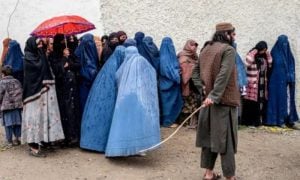
Afghan women and girls have been barred from secondary and higher education, excluded from numerous workplaces and prevented from participating in many areas of public and social life.
The European Union has also voiced concern over Afghanistan’s deteriorating human rights situation during the Third Committee of the 81st session of the United Nations General Assembly, strongly condemning what it described as severe and institutionalised gender-based discrimination and repression against women and girls.
READ ALSO: European Parliamentary Committee to Discuss Gender Apartheid in Afghanistan
In its statement, the EU warned that the systematic violations of women’s and girls’ rights in Afghanistan could constitute gender-based persecution and a crime against humanity.
In May 2026, the European Parliament adopted a resolution on Afghanistan’s human rights situation, condemning the Taliban’s criminal procedure code for courts and demanding an end to public floggings and executions. It also called for sanctions against Taliban leaders.
The growing calls for international recognition of gender apartheid reflect mounting efforts to hold the Taliban leadership accountable for policies that have systematically stripped Afghan women and girls of fundamental rights, freedoms and opportunities.