ISLAMABAD: The death toll from a major landslide at a copper-cobalt mine in the Democratic Republic of the Congo’s Lualaba province has climbed to at least 70, with some local sources warning it could exceed 100 or even 130 victims, international media reported.
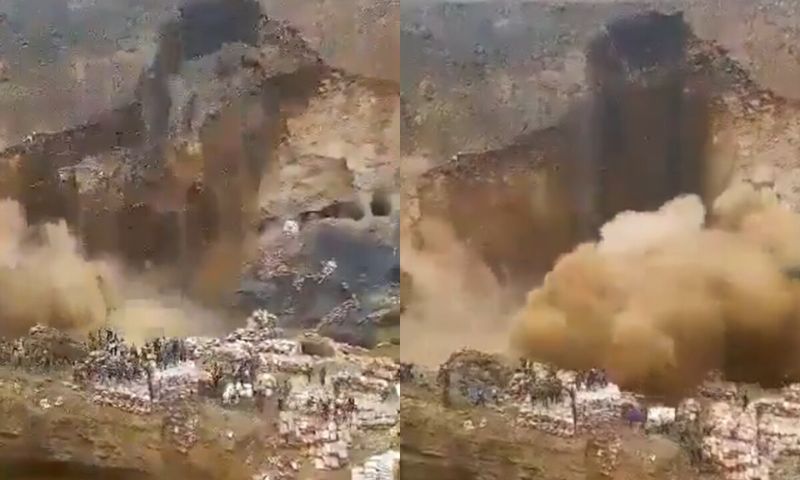
The collapse occurred on Saturday at the Kalando mine in Mulondo, where authorities had formally banned access due to heavy rains and the high risk of landslides. But thousands of informal miners continued to enter the area, defying multiple warnings.
According to Lualaba’s interior minister, Roy Kaumba Mayonde, the situation turned deadly when soldiers reportedly opened fire, triggering panic among the miners. As hundreds fled toward the narrow wooden bridge, it gave way under their weight.
Artisanal mines in the DRC are typically unregulated and prone to fatal disasters due to weak infrastructure, hazardous tunnels, and a near-total absence of safety oversight.
A report by SAEMAPE, the government’s Artisanal and Small-Scale Mining Support and Guidance Service, said miners “piled on top of each other” in the rush, causing the structural failure. While officials have confirmed retrieving 32 bodies, SAEMAPE warned the toll could rise.
Human rights officials say the scale of operations at Kalando—where more than 10,000 ‘wildcat’ miners are believed to work—made disaster almost inevitable.
Arthur Kabulo, provincial coordinator for the National Human Rights Commission, told AFP that the chaotic conditions and military presence had long created tensions in the area.
Following the tragedy, provincial authorities ordered an immediate suspension of all mining operations at the site.
Rights groups, including the Initiative for the Protection of Human Rights, have demanded an independent investigation into the military’s involvement, saying the presence of armed soldiers was “central” to events leading up to the collapse.
The disaster has once again exposed deep structural problems within the DRC’s artisanal cobalt sector — a critical source of minerals for electric vehicle batteries and global electronics. The country, the world’s largest producer of cobalt, faces longstanding criticism over dangerous working conditions, lack of oversight, and corruption in mining regions.