ISLAMABAD: Counter-drone preparedness is becoming an important part of Pakistan’s national security planning as the growing availability of low-cost unmanned aerial vehicles (UAVs) creates new challenges for militaries and security agencies worldwide.
For Pakistan, the priority is to build on its existing air-defence capabilities through technological innovation, improved surveillance and stronger coordination among security agencies.
The objective is not merely to intercept individual aircraft, but to maintain an effective response as drone technology becomes more accessible to state and non-state actors.
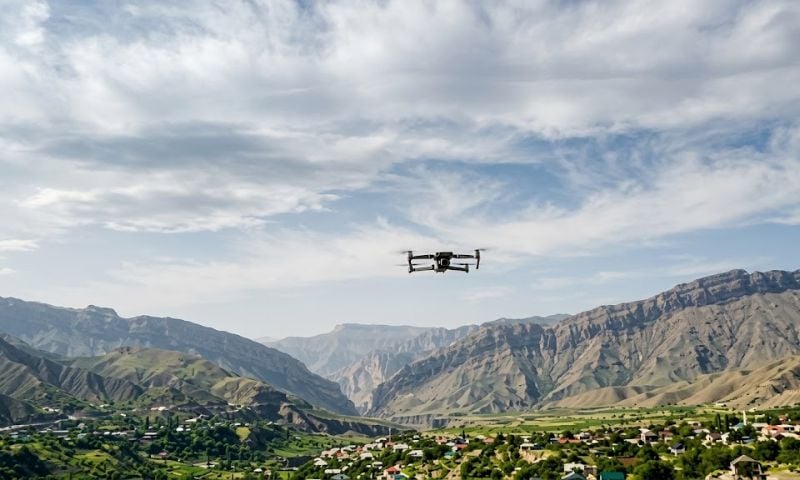
Small drones can conduct surveillance, identify security positions and, in some cases, carry explosive payloads. Their relatively low cost and adaptability enable operators to use them without the resources required to manufacture conventional military aircraft.
The Afghan Taliban’s use of drones has added a new dimension to Pakistan’s security concerns along its western frontier. Reports of drone attacks have highlighted the need to monitor how these capabilities are developing and whether similar technology could reach militant groups operating from Afghan territory.
The concern extends to the Tehreek-e-Taliban Pakistan (TTP) and other armed groups that could potentially adapt commercially available systems for surveillance or attacks against security personnel and infrastructure.
The challenge is therefore not limited to the aircraft themselves. Identifying their operators, supply networks, and technical support is equally important to preventing further incidents.
Strengthening defences
An effective counter-drone strategy requires multiple layers of protection. Short-range radar, electro-optical and infrared sensors, and radio-frequency monitoring can help detect small aircraft that may be difficult to track using conventional systems alone.
Detection must be supported by appropriate response capabilities. Depending on the type of aircraft and the circumstances, these may include electronic countermeasures or physical interception. No single system can address every drone threat, making an integrated approach essential.
Pakistan can further strengthen coordination between military units, intelligence agencies and civilian authorities to improve information-sharing and ensure timely responses to suspicious aerial activity.
Artificial intelligence and data analysis could also help identify recurring flight patterns and other indicators of potential threats, allowing security agencies to assess risks more efficiently.
Indigenous anti-drone technology
Domestic defence production is another important element of Pakistan’s long-term preparedness.
Pakistan’s armed forces and defence industry have experience with unmanned systems for surveillance, reconnaissance and other military applications. Building on this foundation could support the development of locally adapted detection systems, electronic countermeasures and other defensive technologies.
Indigenous production can also reduce reliance on foreign suppliers and improve the ability to maintain, repair and upgrade equipment as operational requirements change.
Investment in research, technical expertise and cooperation between relevant institutions would help establish a sustainable domestic capability.
Protecting Critical Assets
Counter-drone preparedness must extend beyond military installations. Airports, power stations, government buildings, oil facilities and communications infrastructure also require appropriate protection against unauthorised aerial activity.
READ ALSO: Pakistan Shot Down Eight Drones Launched From Afghanistan
Along the western frontier, surveillance technology can complement existing border management measures, particularly in difficult terrain. Better integration of ground-based monitoring, aerial surveillance and rapid-response units would help security agencies build a clearer picture of potential threats.
These measures should be part of long-term planning rather than responses to individual incidents.
Engagement With Kabul
Pakistan’s defensive preparations must be accompanied by sustained diplomatic engagement with the Afghan Taliban authorities.
Islamabad has repeatedly urged Kabul to prevent Afghan territory from being used by militant groups targeting Pakistan. The possibility that drone technology could become more accessible to such groups reinforces the importance of credible investigations and verifiable action against cross-border militant networks.
Direct communication between the two sides can help establish facts surrounding incidents, address security concerns and reduce the risk of escalation.
Preparedness is key
The spread of low-cost drones is changing modern security planning. For Pakistan, the priority is to strengthen existing capabilities through better detection, layered defences, indigenous technology and intelligence integration.
A sustained strategy combining technological development with effective border management and diplomatic engagement will help Pakistan respond to evolving aerial threats while protecting its personnel, infrastructure and citizens.