



BEIJING: As India voices concerns over China’s massive new hydropower project on the Brahmaputra’s upper reaches, analysts point to a striking irony: New Delhi is seeking from Beijing the same assurances on transparency, consultation and downstream water rights that Pakistan says it has long demanded under the Indus Waters Treaty.
China has formally launched construction of what is expected to become the world’s largest hydropower project on the lower reaches of the Yarlung Tsangpo River in Tibet, close to the Indian border, a development that has renewed concerns in India over the possible implications for downstream regions linked to the Brahmaputra river system.
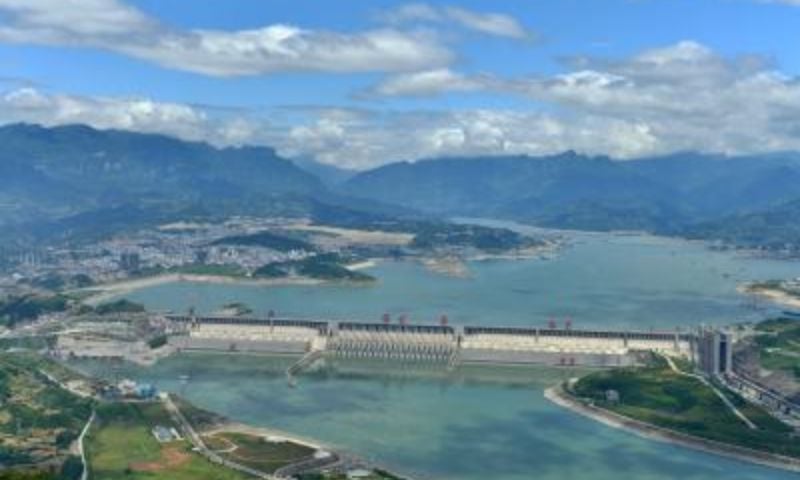
Chinese Premier Li Qiang attended the groundbreaking ceremony for the ambitious project, which is expected to generate around 300 billion kilowatt-hours of electricity annually—more than three times the output of the Three Gorges Dam.
Beijing has described the initiative as a major component of its clean energy strategy and regional development plans.
The Yarlung Tsangpo originates on the Tibetan Plateau and flows into India, where it becomes the Brahmaputra River before entering Bangladesh, making it one of South Asia’s most important transboundary waterways.
Indian media reports, citing intelligence assessments and satellite imagery, said construction activities have accelerated despite New Delhi’s long-standing reservations regarding the project.
Indian officials have repeatedly sought greater transparency from Beijing and stressed the importance of protecting the interests of downstream states.
China has officially commenced the construction of the world’s largest dam on the lower reaches of the Yarlung Tsangpo river in #Tibet, located just 50 kilometres from the Indian border. The infrastructural development has triggered significant concerns regarding its potential… pic.twitter.com/lrUqgH5FoN
— IndiaToday (@IndiaToday) June 17, 2026
New Delhi fears that large-scale infrastructure on the upper reaches of the river could potentially affect water flows, sediment transport and ecological conditions in Arunachal Pradesh and other downstream regions.
Some experts have also highlighted concerns regarding the dam’s location in a seismically active area and the possible consequences for millions of people dependent on the Brahmaputra basin.
China, however, has rejected suggestions that the project could be used to the detriment of neighbouring countries.
Chinese officials have maintained that the hydropower station is a run-of-the-river project designed primarily for electricity generation and have said ecological protection and the interests of downstream nations will be taken into account.
Beijing has also stated that it would not pursue development “at the expense of its neighbours”.
Pakistan’s Perspective
The development has also drawn attention in Pakistan, where officials and analysts have frequently accused India of attempting to leverage its upstream position on the Indus river system for political purposes.
Observers note that New Delhi’s concerns over China’s dam project come at a time when India itself faces criticism for its approach to the decades-old Indus Waters Treaty (IWT), brokered by the World Bank in 1960.
Pakistan has repeatedly expressed concern over India’s construction of hydroelectric projects on western rivers allocated to Pakistan under the treaty and has opposed any move that could alter water flows or undermine the agreement’s dispute-resolution mechanisms.
In recent years, tensions over the treaty have intensified, with Islamabad accusing New Delhi of seeking to unilaterally reinterpret or suspend aspects of the accord.
Pakistan argues that any attempt to restrict or manipulate water flows would violate both the spirit and the legal framework of one of the world’s most enduring water-sharing agreements.
Analysts say India’s objections to China’s Yarlung Tsangpo project underscore a broader reality facing South Asia: all downstream states seek transparency, data sharing and guarantees from upstream neighbours regarding major river infrastructure projects.
For many in Pakistan, India’s concerns over the Brahmaputra mirror Islamabad’s own long-standing concerns regarding the management of shared rivers in the Indus basin.
They argue that the principles New Delhi seeks from Beijing — transparency, prior consultation and protection of downstream interests — are the same principles Pakistan has consistently advocated under the Indus Waters Treaty framework.
The development nevertheless highlights the growing importance of water security and cross-border river management in South Asia, where climate change, rising energy demands and competing developmental priorities are increasingly shaping regional geopolitics.