Key Points
- China calls Strait of Hormuz a “vital waterway” for global trade and energy supplies
- Beijing says stability of maritime routes is a “common interest of the international community”
- Chinese Foreign Ministry links regional disruption to historical conflict and urges ceasefire
ISLAMABAD: China has called for restraint and continued dialogue following rising tensions in the Strait of Hormuz, after US President Donald Trump reportedly threatened a blockade of the shipping route that transits a fifth of the world’s crude and Iranian ports.
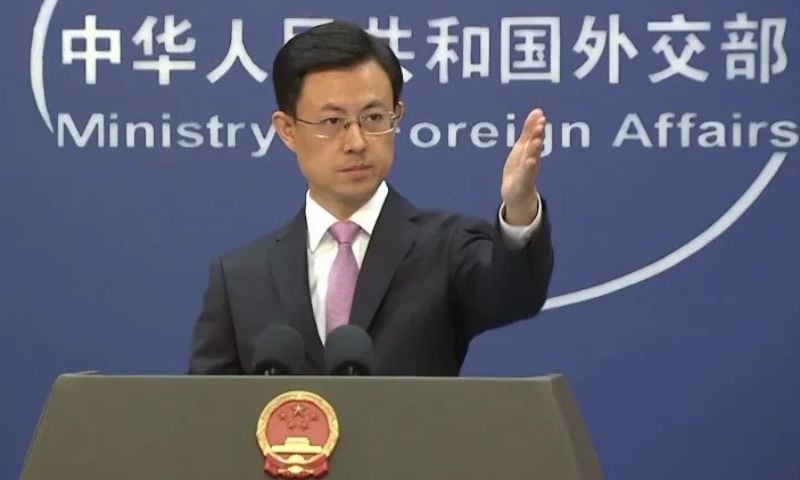
Chinese Foreign Ministry spokesperson Guo Jiakun said the Strait of Hormuz remains a vital artery for global trade and energy flows, adding that maintaining maritime security is essential for the international community.
He said disruptions in navigation in the region have historical roots dating back to the Iran-Iraq War, adding that the long-term solution lies in an immediate ceasefire and sustained regional stability.
The remarks come in the immediate aftermath of high-level United States-Iran talks held in Islamabad over the weekend, which ended without agreement. Both sides acknowledged that they had substantive discussions on a range of issues between Iran and the US, including nuclear concerns, sanctions relief and broader regional security arrangements.
Diplomatic sources described the Islamabad engagement as one of the most significant direct contacts between Washington and Tehran in years. They insist that Islamabad, backed by the world’s key capitals, was still in contact with Washington and Tehran to bring them back to the table before Pakistan’s mediated ceasefire ends on April 22.
Following the end of the Islamabad round of talks without a conclusion or deal, Trump’s remarks on tightening maritime restrictions in the Strait of Hormuz further heightened tensions in a region already on edge due to stalled diplomacy.
Beijing urged all parties to exercise calm and avoid escalation, reiterating that dialogue and political settlement remain the only viable path forward.