DHAKA, Bangladesh: Bangladesh has recorded 227 child deaths since March in one of the worst measles outbreaks in decades, with nearly 35,000 suspected cases reported nationwide, according to government data released on Wednesday.
Health officials said the outbreak has largely affected children aged between six months and five years, raising alarm over gaps in vaccination coverage in remote and marginalised communities.
One of the hardest-hit regions is Kurukpata in the Chittagong Hill Tracts, a remote area bordering Myanmar, where access to healthcare remains limited.
“The most affected area of Chittagong Hill Tracts is Kurukpata, one of the remotest parts of Bangladesh,” district health chief Sheikh Fazle Rabbi said, adding that more than 80 children had been treated for measles in the area.
Local council head Kratpung Mro said the number of infections was unusually high and highlighted the challenges faced by residents in accessing medical care.
“Communication from Kurukpata is difficult,” he said. “People, mostly farmers, are among the poorest and cannot afford even boat or motorcycle fares to reach the hospital.”
He urged authorities to expand outreach efforts.
“The government should launch awareness programmes and bring Indigenous communities under vaccination coverage,” he added.
Health experts say children in rural and Indigenous communities are often left out of routine immunisation programmes.
In some cases, families avoid vaccination due to fear or misinformation.
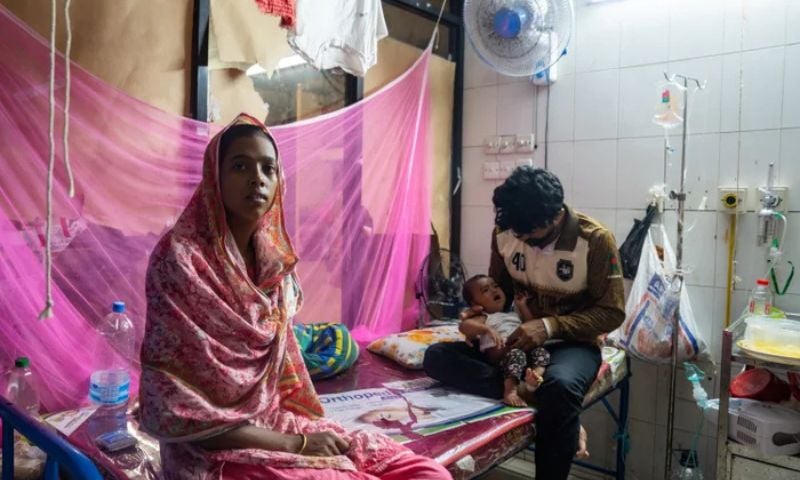
The impact of these barriers is evident in individual cases. Ngangoi Mro, a 30-year-old farmer, said he had to travel long distances to seek treatment for his two-year-old son, who showed symptoms of measles.
“We walked four kilometres and then took a vehicle to the hospital from our village, as my boy became very weak,” he told AFP, referring to his son who suffered from high fever, cough and diarrhoea.
Measles is among the most contagious diseases globally, according to the World Health Organization (WHO).
It spreads through coughs and sneezes and can lead to serious complications, including brain swelling and severe respiratory illness.
Bangladesh’s health authorities, with support from the United Nations children’s agency, WHO, have stepped up efforts to contain the outbreak.
An emergency nationwide measles-rubella vaccination campaign was launched at the beginning of April. The government lowered the age for the first vaccine dose to six months in an effort to protect younger children.
Officials have also strengthened disease surveillance and infection control measures.
These include setting up dedicated isolation wards, expanding intensive care facilities and streamlining vaccine procurement.
Since March 15, suspected measles cases have reached 34,980 across the country, officials said.