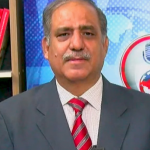
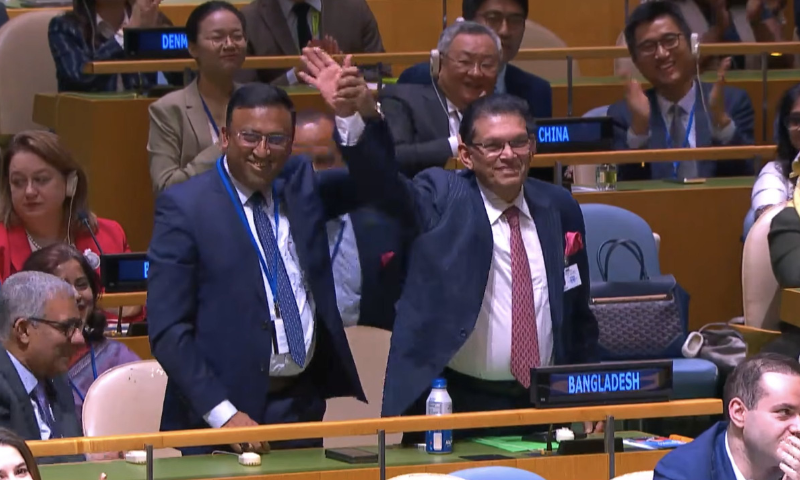
UNITED NATIONS: Bangladesh’s Foreign Minister Khalilur Rahman has been elected president of the United Nations General Assembly (UNGA) for its 81st session, after defeating Cyprus’s candidate Andreas S. Kakouris in a closely contested vote.
Mr Rahman secured 99 votes in the 193-member assembly on Tuesday, while Mr Kakouris received 91. A simple majority of 96 votes was required for victory.
The election, conducted by secret ballot, reflected an unusually competitive race for a role that is often decided through regional consensus.
The UN General Assembly has elected Bangladesh’s Khalilur Rahman as its next president.
The veteran diplomat will lead the Assembly’s 81st session during a year expected to feature major reform efforts alongside pressing global challenges.https://t.co/88hc7yK4cx pic.twitter.com/2C32iO4yHr
— UN News (@UN_News_Centre) June 3, 2026
Under the UN’s long-standing system of geographical rotation, the presidency alternates among regional groups each year.
UN Secretary-General António Guterres congratulated Bangladesh’s Dr Khalilur Rahman on his election as president of the 81st session of the UN General Assembly, praising his “remarkable political and diplomatic experience”.
Guterres said the United Nations would benefit enormously from Rahman’s leadership during the upcoming session.
Congratulations to Dr. Khalilur Rahman of Bangladesh on his election as President of the 81st #UNGA session. We will benefit enormously from his remarkable political & diplomatic experience.
I thank the current @UN_PGA Annalena Baerbock of Germany for her outstanding leadership,…
— António Guterres (@antonioguterres) June 2, 2026
For the 81st session, the Asia-Pacific Group was entitled to nominate candidates, leading to the contest between Bangladesh and Cyprus-backed rivals.
The president of the General Assembly serves a one-year term and oversees plenary meetings, guides debates and facilitates negotiations among member states on issues including international peace, development, climate change and UN reform.
Although the position does not carry executive authority, it is regarded as one of the most visible diplomatic posts within the United Nations system.
Analysts say the narrow margin — 99 votes to 91 — points to an increasingly competitive diplomatic environment at the UN, where coalition-building and regional alignments are playing a greater role.
Bangladesh’s victory is also being viewed as a sign of the country’s growing profile in multilateral diplomacy.
Mr Rahman will formally assume office at the opening of the 81st UNGA session in September 2026.
Heartiest felicitations to my dear brother, H.E. Dr. Khalilur Rahman, Foreign Minister of Bangladesh on his election as President of the 81st Session of the UN General Assembly.
Having had closely engaged with him, I am confident that his vast diplomatic experience and steadfast…
— Ishaq Dar (@MIshaqDar50) June 2, 2026
Pakistan’s Deputy Prime Minister and Foreign Minister Ishaq Dar congratulated his Bangladeshi counterpart following the result.
In a message posted on X, Mr Dar said he was confident that Mr Rahman’s “vast diplomatic experience and steadfast commitment to multilateralism” would guide the assembly effectively.
He added that he looked forward to continued cooperation at the United Nations on “dialogue, peace and sustainable development”.