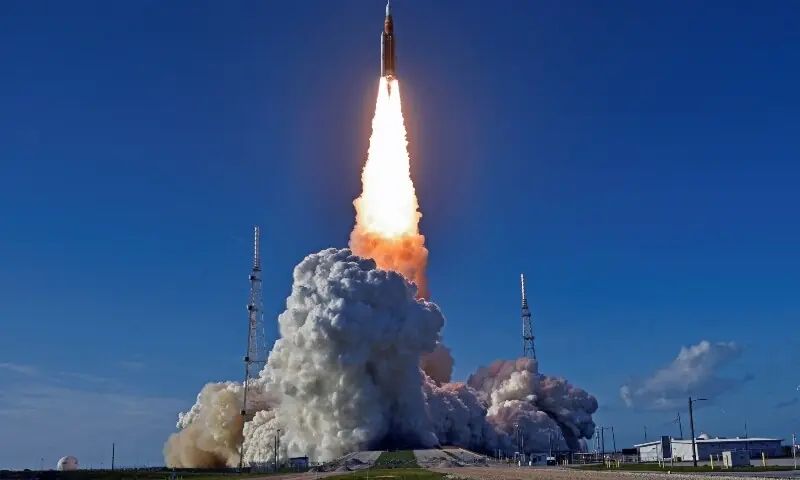
CAPE CANAVERAL, FLORIDA: Four astronauts aboard NASA’s Artemis II mission are now firmly on course for the Moon after a crucial engine firing placed their spacecraft on a precise trajectory for a historic lunar flyby.
The manoeuvre, described by NASA as “flawless”, lasted just under six minutes and delivered the thrust needed to propel the Orion capsule into a free-return orbit.
This path will carry the crew around the far side of the Moon before naturally guiding them back to Earth — a technique relying entirely on gravitational forces rather than additional propulsion.
The mission, launched earlier this week from Kennedy Space Center in Florida aboard the powerful Space Launch System (SLS) rocket, marks humanity’s first crewed journey towards the Moon since the Apollo era, according to AFP.
Leaving Earth orbit, ✅. Next up: Finalizing the Moon observation plan.
Artemis II is both a test flight and a science mission. Astronauts, flight controllers, & science teams are working together to squeeze as much knowledge as possible out of the crew’s lunar flyby. ⬇️ (1/6) pic.twitter.com/0rdwBZ2KYE
— NASA Science (@NASAScience_) April 3, 2026
Speaking from orbit, Canadian astronaut Jeremy Hansen reflected on the moment, saying it demonstrated “what humanity is capable of”. His crewmates — Americans Reid Wiseman, Victor Glover and Christina Koch — shared their awe as they observed Earth and the Moon from space.
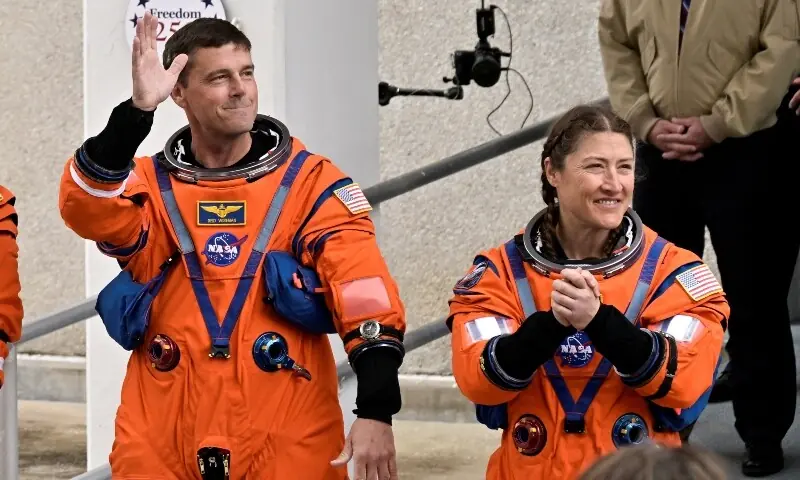
“There’s nothing that prepares you for the breathtaking sight of Earth shining brightly while the Moon glows against the darkness,” said Koch.
Despite minor technical challenges early in the mission — including a temporary communication glitch and a malfunctioning toilet — the crew reported that all systems are now functioning normally. Koch jokingly referred to herself as the “space plumber” after helping resolve the issue.
The astronauts are also adapting to life in microgravity, undertaking daily 30-minute exercise sessions to counter muscle and bone loss. Their specialised suits double as emergency survival systems, capable of sustaining them for several days in the unlikely event of cabin depressurisation.
“I’m the space plumber, I’m proud to call myself the space plumber.”
Mission specialists like @Astro_Christina train for all roles so they can jump in wherever they’re needed. Sometimes that means fixing vital machinery, like the spacecraft toilet. pic.twitter.com/RGBWkwRgX7
— NASA (@NASA) April 3, 2026
Artemis II represents a milestone not only in space exploration but also in diversity and international collaboration. The crew includes the first woman, the first person of colour, and the first non-American to travel on a lunar mission.
If successful, the astronauts could travel farther from Earth than any human in history, reaching distances of approximately 250,000 miles. Commander Reid Wiseman described the mission as a “Herculean effort”, underscoring the magnitude of sending humans so far into space.
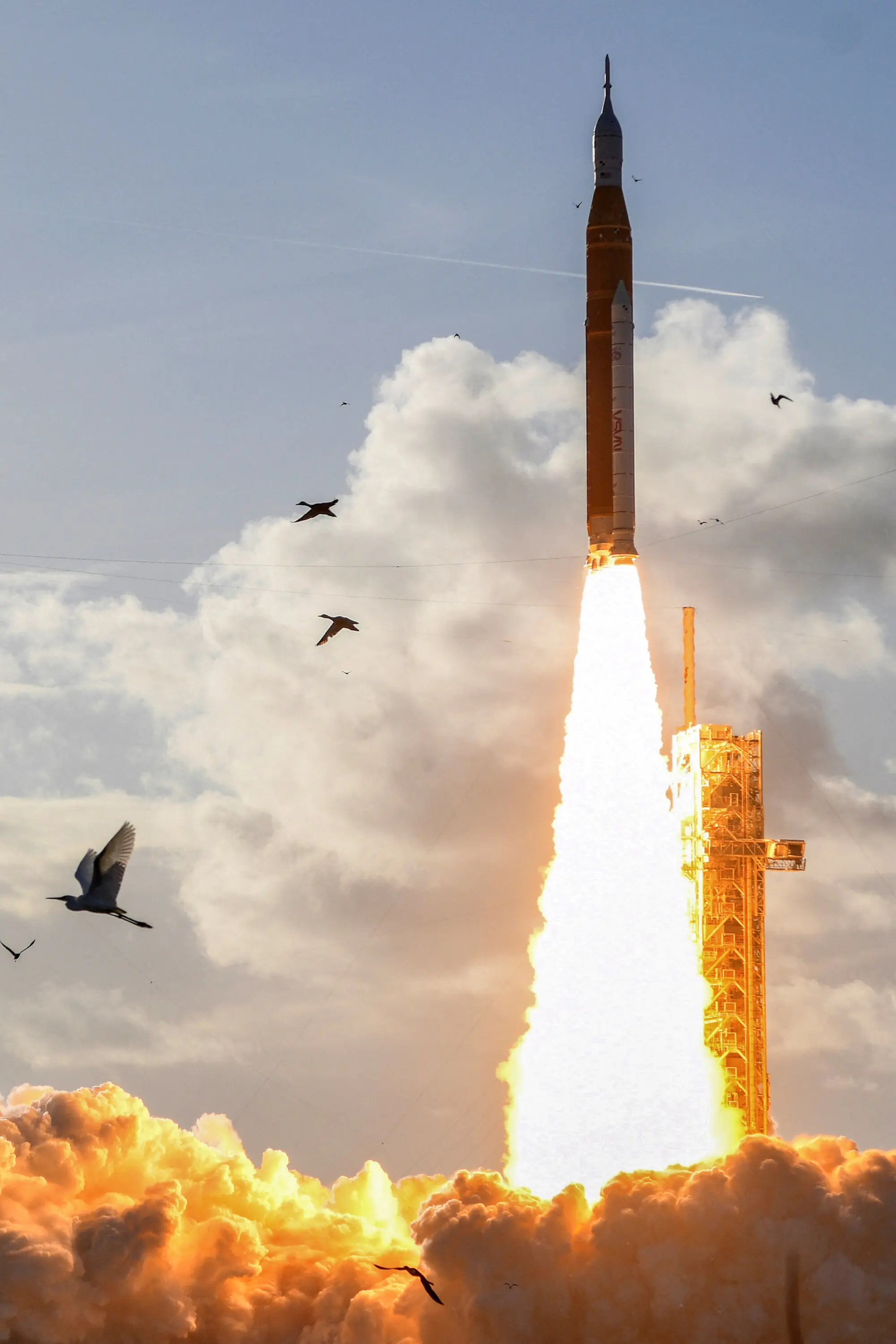
The 10-day mission is a critical step in NASA’s broader Artemis programme, which aims to return humans to the lunar surface by 2028 and eventually establish a sustained presence on the Moon. Such ambitions are also seen within the context of growing global competition, particularly with China’s plans for a crewed lunar landing by 2030.
LIVE: Agency leaders answer media questions and provide updates on our Artemis II mission around the Moon. https://t.co/Kxvg15mTUn
— NASA (@NASA) April 3, 2026
From their vantage point in space, however, the crew offered a unifying perspective. “From up here, you look beautiful,” said Victor Glover, referring to Earth. “We’re all one people.”