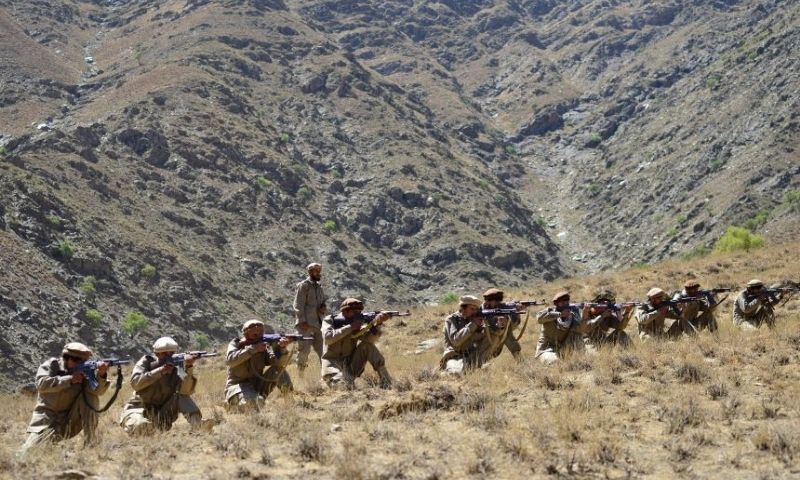
KABUL: Armed resistance groups opposed to the Taliban regime in Afghanistan claimed more than twice as many attacks in October as in the previous month, signalling an escalation in opposition activity against the hardline rulers, according to a report published by FDD’s Long War Journal.
The resistance groups claimed a total of 82 attacks during October, compared with September’s figure, with the reported operations including improvised explosive device (IED) blasts, ambushes, indirect fire and targeted assassinations.
The groups claimed that their attacks killed 122 Taliban members and wounded another 68.
The Afghan United Front (AUF), led by former 215th Helmand Corps commander Lieutenant General Sami Sadat, emerged as the most active resistance organisation, claiming responsibility for 36 operations – more than three times the number attributed to the next most active group.
Most of the AUF’s reported attacks took place in Kandahar and Helmand, two southern provinces considered important Taliban strongholds. On October 26, the group claimed seven attacks across six provinces within 24 hours, including Ghor, Badakhshan, Ghazni, Zabul, Kandahar and Parwan.
The National Resistance Front (NRF), led by Ahmad Massoud, claimed 11 attacks in Badakhshan, Baghlan, Panjshir, Herat, Kandahar and Wardak. The figure also included operations attributed to its affiliated Martyr Massoud Brigades and Panjshir Unit 01.
The NRF claimed responsibility for an October 4 attack that killed Safiullah Motawakel, the Taliban’s deputy intelligence chief in Faizabad, Badakhshan, along with two bodyguards.
However, the resistance group also suffered a setback when Taliban forces killed its commander Mirwais Khan in Panjshir province on October 18. He was the second NRF commander killed in three months, following the death of Hasib Panjshiri in Parwan province on August 19.
The Afghan Freedom Front (AFF), led by former Afghan National Army chief of general staff Yasin Zia, claimed 10 attacks across eight provinces. On October 22, it reported carrying out an indirect-fire attack on Bagram Airbase, claiming that more than 10 Taliban members were killed or wounded.
The AFF also reported continued armed engagements in Kamdesh district of Nuristan province, bordering Pakistan, for the second consecutive month. Meanwhile, the anti-Taliban resistance landscape became increasingly fragmented with the emergence of new organisations.
On October 29, Afghan media reported that former Farah lawmaker Abdul Sattar Husseini and two other members had left the AFF to establish the Afghan National Liberation Front (ANLF). The newly formed group claimed its first attack on October 31, targeting the Taliban’s 203rd Mansouri Corps in Gardez, Paktia province, and reportedly killing two members and wounding another.
The report said the proliferation of separate resistance organisations reflected the opposition’s continuing failure to unite under a common political and military platform.
The Green Unit, the military wing of former Afghan vice-president Amrullah Saleh’s Afghanistan Green Trend, claimed eight attacks in five provinces, its highest monthly total since beginning combat operations this year.
READ ALSO: Anti-Taliban Groups Kill Four Taliban Fighters in Kapisa and Kandahar
The group also claimed responsibility for bringing down an Indian-made Cheetal helicopter in Panjshir, injuring both pilots. Other groups also reported attacks against Taliban targets.
The Afghanistan Republican Front, led by former Bamiyan governor Tahir Zamir, claimed nine operations, including an October 11 roadside bomb attack on a Taliban patrol in Firozkoh, the provincial capital of Ghor, which reportedly killed four Taliban members and wounded two.
The National Mobilisation Front claimed the assassination of a senior Taliban prison official in Jalalabad, Nangarhar province, on October 5. The Taliban confirmed the official’s death and later said they had killed the alleged attacker in Paktia province.
The Homeland Soldiers Front, meanwhile, claimed an October 19 attack targeting the Taliban district governor of Kalfgan in Takhar province. The Freedom and Justice Movement also reported an attack on a Taliban outpost in Parwan province on October 22.
Two other groups, the Afghan Liberation Movement and the newly formed National Ideal Front, also claimed operations during the month. Separately, the National Independence Front claimed to have carried out 14 attacks in October.
Despite the reported increase in resistance activity, the opposition remains divided among numerous armed organisations, with no unified command structure or coordinated political strategy.
The report concluded that the emergence of the Afghan United Front and increased activity by other groups had significantly raised the number of attacks claimed against Taliban forces.