KABUL, Afghanistan: Afghanistan has recorded a sharp decline in political rights and civil liberties since the Taliban returned to power five years ago, with assessments by major international organisations placing the country at the bottom of the world’s least free and democratic countries.
The Economist Intelligence Unit’s annual Democracy Index shows Afghanistan’s score fell from 2.85 in 2020 to 0.32 in 2021, and then to 0.25 in both 2024 and 2025, a decline of nearly 89 percent, reflecting the dismantling of mechanisms based on public will and the rule of law.
Meanwhile, Freedom House, in its 2026 report, classified Afghanistan as “Not Free”, giving it just 8 points out of 100. The organisation awarded Afghanistan only 1 point out of 40 for political rights and 7 out of 60 for civil liberties.
According to the report, key indicators, including the election of the country’s leader and parliament, the existence of a transparent electoral framework, political party activity, the ability of opposition groups to win through political processes, media freedom, judicial independence and access to a fair trial, are all at their lowest levels.
Heavy Cost of Seeking Justice
The right to peaceful assembly is one of the main ways citizens express demands and object to government decisions.
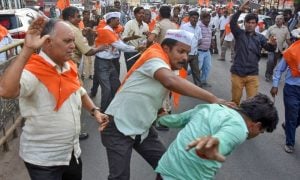
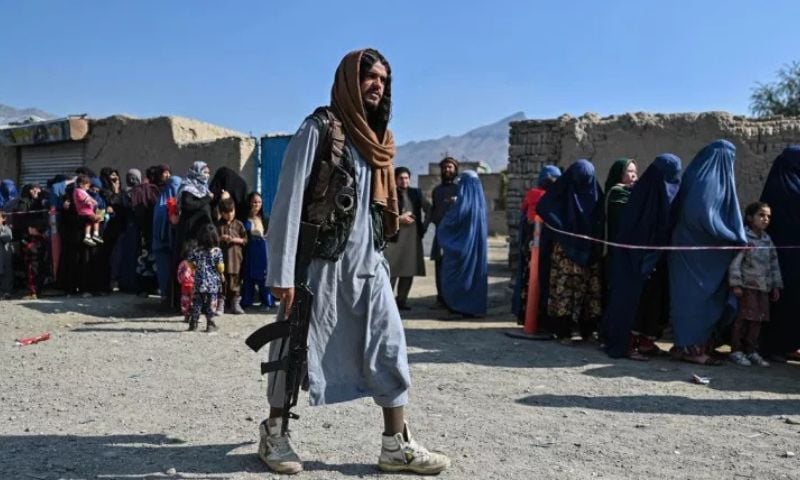
Over the past five years, the Taliban regime has suppressed protest gatherings and demonstrations, while protesters and civil society activists have faced threats, detention and violence.
In August 2026, the Taliban regime approved and published the “Shurta Law”, banning protest gatherings and demonstrations across Afghanistan.
After the law was issued, Taliban spokesperson Zabihullah Mujahid said that the concept of demonstrations did not exist within the group’s system.
Such restrictions had already existed under the Taliban rule before the law was formally adopted.
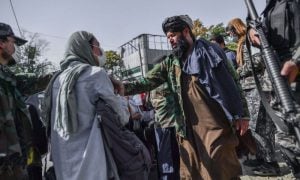
In June 2026, following the detention of several women in Herat, public protests in the city’s Jebrael area were met with violence.
The United Nations Assistance Mission in Afghanistan, UNAMA, said at least one teenager was killed and several others wounded after the Taliban regime forces opened fire and suppressed the protest.
Media Censorship and Systematic Intimidation
The media is widely considered a pillar of democracy and an important means of holding those in power accountable. But recent monitoring reports point to an unprecedented decline in freedom of expression under Taliban rule.
The Afghanistan media support organisation NAI said in a report marking five years of Taliban rule that it had documented more than 700 cases of violence against journalists and media workers during that period.
According to the report, at least six journalists were killed, and around 400 journalists and media workers were detained.
NAI also reported around 300 cases of journalists being beaten, nearly 5,000 journalists and media workers losing their jobs, and around 500 media outlets ceasing operations over the past five years.
At the same time, arbitrary detentions by the Taliban regime have continued, while a ban on filming living beings in more than 20 provinces has restricted the work of some visual media outlets.
Reports published in 2026 by UNAMA and Reporters Without Borders place Afghanistan 175th out of 180 countries in the World Press Freedom Index, among the lowest-ranked countries in the world.
Reporters Without Borders has also said that 43 percent of Afghanistan’s media outlets disappeared within the first three months after the Taliban returned to power, while more than two-thirds of the country’s 12,000 journalists left the profession.
Restrictions on the media have not been limited to news content and journalists’ work.
Female journalists and media workers have also faced widespread pressure, and many have been pushed out of the profession because of Taliban restrictions.
Systematic Exclusion of Women
Under the Taliban regime, Afghanistan has become the only country in the world where girls are formally and systematically barred from education beyond primary school and from university.
UNESCO reported in August 2026 that around 2.4 million girls are currently excluded from secondary and high school education.
Before the collapse of the former republic in 2021, nearly one million girls were enrolled at those levels. Since December 2022, universities have also been completely closed to female students.
These restrictions have created a structural crisis in the education system.
According to UNESCO figures, the number of female university lecturers across Afghanistan fell from 2,599 in 2019 to 794 in 2024.
At the same time, a field assessment of 198 women working in teaching and education found that 98.5 percent had experienced a sharp fall in income.
The exclusion of women from education has been accompanied by growing censorship and the entrenchment of restrictions through laws such as the Taliban regime’s “Promotion of Virtue and Prevention of Vice Law”.
Under the law, women’s voices and images are treated as “awrah”(parts of the human body that must be covered in public), and their appearance in media and public spaces is subject to censorship.
The Taliban judiciary has also continued to use corporal punishment and public flogging of defendants in stadiums and other public places.
Concentration of Power
Analysts say the erosion of democratic principles in Afghanistan under the Taliban regime is not limited to civil restrictions.
Critics argue that power has also become heavily concentrated along ethnic lines, with Tajiks, Hazaras, Uzbeks and other groups having only limited influence over major decisions.
Research indicates that nearly 90 percent of key leadership positions in the Taliban regime are held by Pashtuns.
According to the data, Tajiks hold 5.2 percent of key posts and Uzbeks around 3 percent, while Hazara representation in the Taliban regime’s leadership structure is close to zero.
UN reports have also pointed to the concentration of power within the Taliban and the prominent role of Pashtuns in judicial and executive structures.
At the same time, Richard Bennett, the UN special rapporteur on Afghanistan, has warned in his reports about structural discrimination and the marginalisation of ethnic and religious minorities.
His reports have raised issues including forced displacement, land disputes and restrictions on some religious practices.