WASHINGTON: Afghanistan has been ranked the second-worst country in the world in terms of the rule of law, highlighting the deteriorating state of legal institutions, judicial independence and fundamental freedoms under the Taliban regime, according to a new report by the independent World Justice Project (WJP).
Afghanistan stood at 142nd out of 143 countries in the WJP’s 2026 Rule of Law Index, published in October, placing it just above Venezuela. Denmark, Norway and Finland secured the top three positions.
Since seizing power in August 2021, the Taliban have suspended the Afghan constitution and dismantled much of the country’s existing legal framework, leaving the country without a formal constitutional system or effective institutional checks on the ruling authorities.
No Constitution
Although Taliban officials initially indicated that they would temporarily adopt the 1964 Afghan constitution, subject to removing provisions they opposed, the regime has neither reinstated that constitution nor introduced a new one after five years in power.
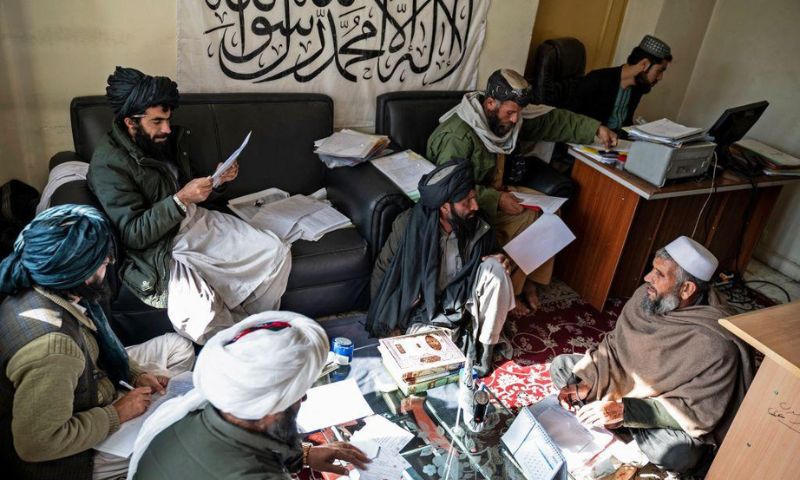
Instead, the Taliban have continued to govern through directives, decrees and regulations based on their own interpretation of Islamic Sharia, raising serious concerns over the concentration of power, judicial independence and the absence of constitutional safeguards.
According to Mohammad Amin Zia Badakhsh, a former Afghan judge, the Taliban suspended the constitution upon entering Kabul and have since operated without a legal framework defining the powers and limitations of their supreme leader, Hibatullah Akhundzada.
He said a constitution was essential to establish the legal powers and obligations of a country’s leadership and prevent the arbitrary exercise of authority.
Restrictions on Rights
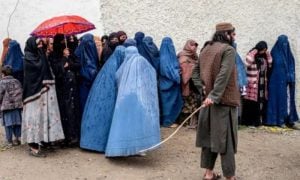
The Taliban leader has issued hundreds of decrees, including measures severely restricting women’s rights and freedoms.
In August 2024, the regime introduced the so-called Law of Propagation of Virtue and Prevention of Vice, imposing sweeping restrictions on personal freedoms, religious practices and everyday activities, including transport, music, shaving, celebrations and women’s behaviour and appearance in public.
READ ALSO: Afghanistan: World’s Highest Fertility Rate Worsens Poverty
Badakhsh said the Taliban’s system of governance lacked effective checks on power and mechanisms of accountability, while the Afghan public had no meaningful role in political decision-making.
He said the regime did not derive its legitimacy from public consent, leaving its authority virtually unconstrained.
The WJP index assesses countries against eight criteria: constraints on government powers, absence of corruption, open government, fundamental rights, order and security, regulatory enforcement, civil justice and criminal justice.
Rule of Law
Bashir Mobasher, president of the Afghanistan Law and Political Science Association in exile and a postdoctoral fellow at American University, said the Taliban’s ideological approach to governance was fundamentally incompatible with the rule of law.
He argued that the rule of law required a system of civilian governance, whereas the Taliban sought to establish an authoritarian system based on their extreme interpretation of religious law. Mobasher said meaningful restoration of the rule of law in Afghanistan would require the Taliban to relinquish power.
The latest ranking underscores the severe institutional and legal deterioration in Afghanistan since the Taliban’s return to power, with the absence of a constitution, unchecked executive authority and restrictions on basic rights continuing to undermine the country’s prospects for accountable governance.