WASHINGTON: Tesla will wind down production of its futuristic Cybertruck around the middle of 2027, as chief executive Elon Musk prepares to use the company’s Texas factory to expand production of its Cybercab robotaxi.
Musk announced the decision on Friday in a post on X, saying the move would create additional manufacturing space for the two-seat autonomous vehicle.
He did not clarify whether Cybertruck production would move to another facility or be discontinued altogether, leaving questions about outstanding orders.
Big Ambitions, Disappointing Sales
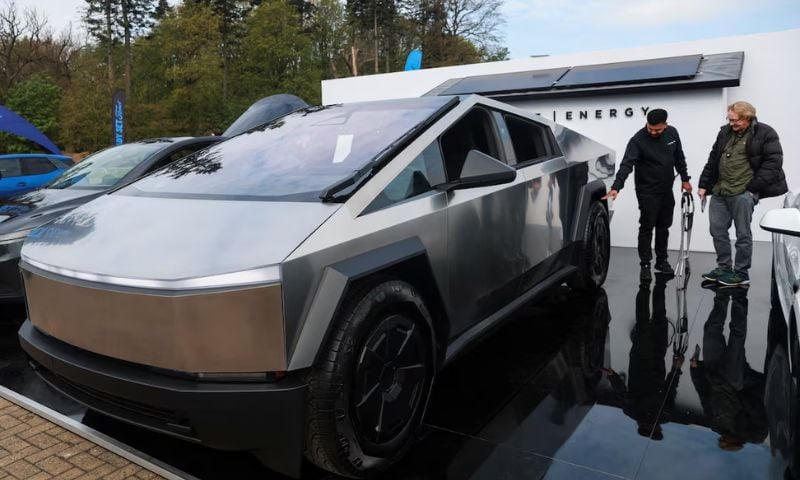
Unveiled in November 2019, the Cybertruck attracted considerable attention for its angular stainless-steel design. Musk initially said the vehicle had received 250,000 pre-orders within days of its announcement.
Production was originally scheduled to begin in 2021 but faced repeated delays, with customer deliveries eventually starting in late 2023.
ALSO READ: Pakistan to Launch National Esports Federation
Tesla designed its Texas manufacturing lines for an annual production capacity of 250,000 trucks. However, sales fell significantly short of that target.
Cox Automotive estimates that total Cybertruck sales reached just 72,702, with more than half recorded in 2024 before demand weakened.
The vehicle also faced multiple recalls and complaints over manufacturing quality.
Cybercab Takes Priority
Tesla’s decision reflects Musk’s growing focus on artificial intelligence and autonomous transport.
The Cybercab, unveiled in October 2024, is a two-seat vehicle without a steering wheel or pedals. Production began in Texas in April, while paid rides started in Austin in September through Tesla’s Robotaxi service.
Musk described the Cybertruck as a technology development platform, while lead engineer Wes Morrill said its technological legacy would continue through the Cybercab.
A Niche Product?
Stephanie Valdez Streaty of Cox Automotive said the decision highlighted the difficulty of turning strong initial enthusiasm into sustainable mainstream demand.
She described the Cybertruck as a niche product rather than a successful entry into the highly competitive American pickup market.
The production change also reflects Tesla’s broader ambition to reposition itself as an artificial intelligence and robotics company, although the commercial success of its robotaxi plans remains dependent on achieving fully driverless technology at scale.