Key Points
- It provided livelihoods for hundreds of women
- The closure highlights the uncertainty facing women’s employment
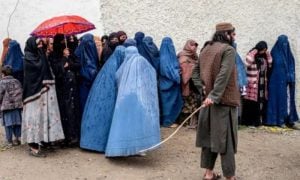
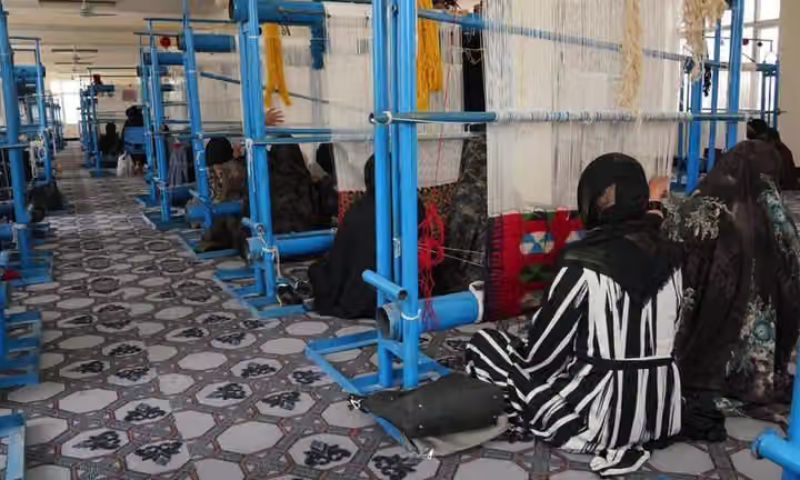
ISLAMABAD: Afghanistan’s Taliban regime has shut down a United Nations-backed carpet-weaving centre in Herat, western Afghanistan, depriving 348 women of their livelihoods despite its inauguration by the Taliban-appointed provincial governor.
The Taliban’s Ministry for the Promotion of Virtue and Prevention of Vice in Herat ordered the closure of the centre, according to Afghanistan International.
The centre was inaugurated in February 2026, with representatives of the United Nations High Commissioner for Refugees (UNHCR), including Afghanistan representative Arafat Jamal and Indrika Ratwatte, attending the ceremony alongside local elders.
READ ALSO: Taliban’s Systematic Violations of Afghan Women’s Rights Constitute Crimes Against Humanity: EU
The United Nations had described the facility as the largest carpet-weaving centre in western Afghanistan.
Supported by funding from the Islamic Development Bank, it initially offered employment and income-generating opportunities to 400 Afghan returnees, more than three-quarters of them women.
Jamal recently highlighted the difficulties of working with the Taliban in an interview with German publication MiGAZIN, saying that Taliban officials overturned the agreements reached with local authorities.
He said the United Nations had to cooperate with the Taliban to deliver humanitarian assistance to people in need. However, such cooperation should not be interpreted as an endorsement of the group’s policies.
According to Jamal, women receive 60 per cent of UNHCR assistance in Afghanistan.
He also disclosed that 29 of the agency’s 200 employees in the country were Afghan women who had been barred from entering UN offices for more than a year and were consequently working from home.
Mounting Taliban restrictions on women’s employment
The closure adds to mounting restrictions on women’s economic participation since the Taliban returned to power in August 2021.
In 2022, the Taliban prohibited women from working for non-governmental organisations and subsequently imposed restrictions on Afghan women employed by the United Nations.
The restrictions have severely reduced opportunities for women to earn an income, particularly those from vulnerable households and families returning to Afghanistan.
A UN Women report in August 2026 found that only seven per cent of Afghan women were employed, compared with 84 per cent of men.
The agency also warned that restrictions on women’s activities, coupled with declining international assistance, were threatening the survival of women-led organisations.
In Afghanistan, amid restrictions on women’s ability to travel, study and work, a UNHCR-supported carpet weaving centre will provide an economic lifeline to former refugee and displaced Afghan women. https://t.co/n6QGB3kRjK
— UNHCR, the UN Refugee Agency (@Refugees) September 3, 2023
Nearly three-quarters of the organisations surveyed had experienced funding cuts in 2025, while more than half expected to suspend operations or close within the following year.
The latest closure illustrates the vulnerability of employment initiatives for Afghan women, even when established with international support and initially approved by local Taliban authorities.