
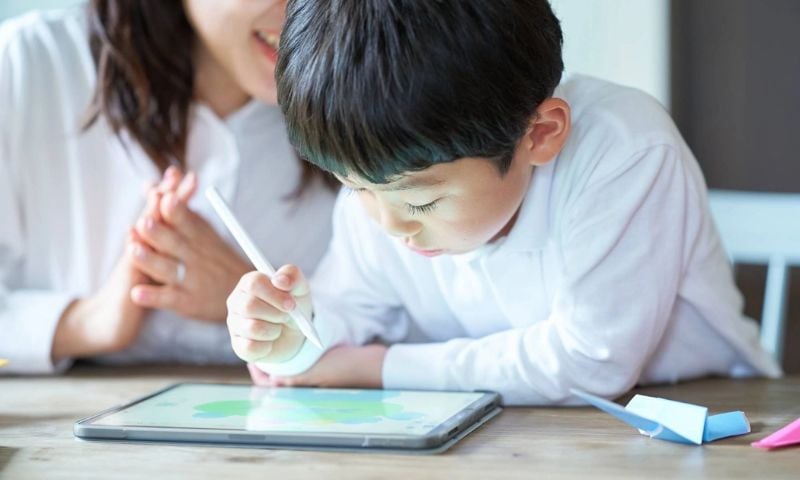
TOKYO: Japan plans to prioritise paper-based textbooks and limit the use of digital-only learning materials for schoolchildren under draft education guidelines, with the new system scheduled to be introduced from the 2030 academic year.
Under the proposed guidelines, digital-only textbooks would be prohibited for pupils in the fourth grade and below, while their use for older students would be restricted mainly to English and practical subjects such as music and art. Digital content would primarily supplement and complement printed textbooks.
The draft guidelines are expected to be presented at an expert panel meeting of Japan’s Ministry of Education, Culture, Sports, Science and Technology this week. The ministry intends to finalise the guidelines by the end of the year after inviting public comments.
Japan drafts guidelines favoring mix of paper, digital textbooks https://t.co/SI566E42ZE
— Kyodo News | Japan (@kyodo_english) October 19, 2026
The proposed policy reflects concerns raised by experts about the effects of digital learning on children’s cognitive development, academic performance and health.
The guidelines call for continued monitoring of potential health risks, including eyesight problems, and for the textbook system to be reviewed as necessary in light of evidence gathered from schools.
Under the draft, hybrid textbooks combining printed and digital content would be the standard across grades and subjects. For pupils in the fifth grade and above, textbooks would be primarily paper-based, while younger children would have even more limited digital content.
The guidelines also emphasise the importance of handwriting, requiring schools to ensure sufficient time for writing activities during lessons. The use of artificial intelligence in textbooks will be considered in light of research and other developments, while measures will be introduced to support students with disabilities.
The move follows amendments to Japan’s School Education Law and related legislation enacted in June, establishing three textbook formats from the 2030 academic year: print-digital hybrid, digital-only and paper-only. Digital materials, including video and audio, will also be subject to government certification.
A cross-party parliamentary group advocating for print culture, chaired by former foreign minister Yoko Kamikawa, has submitted a petition urging the government to preserve paper-based learning and examine the effects of digital textbooks on students’ academic performance and health.
The new textbook formats are scheduled to be introduced in stages, beginning in elementary schools in the 2030 academic year, followed by junior high schools in 2031 and high schools in 2032.