
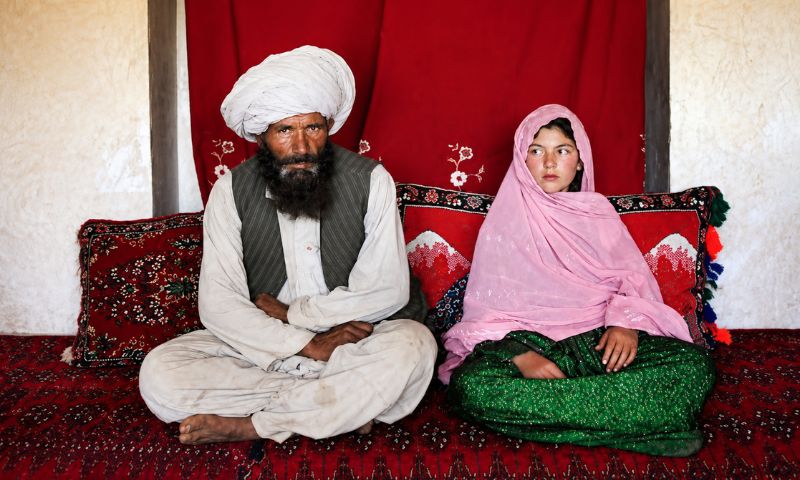
KABUL: Drought, hunger and mounting debts are forcing desperate Afghan families to sell their young daughters into marriage to secure food, repay loans and pay for medical treatment, with girls as young as two being engaged and children facing early pregnancy, domestic violence and severe psychological distress.
A report published by The Guardian on Thursday, based on photographer Elise Blanchard’s reporting from Afghanistan, documents the growing hardship facing families displaced by drought, particularly in Badghis province in the country’s north-west, where repeated crop failures and the loss of livestock have devastated livelihoods.
The report describes how families who once depended on farming and cattle rearing have been driven into extreme poverty, leaving some parents with few options beyond arranging marriages for their daughters in exchange for money or debt repayment.
In Badghis, around 95 per cent of the population depends on rain-fed agriculture and livestock for survival. However, increasingly severe droughts have destroyed harvests, dried up grazing land and forced thousands of people to abandon their ancestral villages in search of work.

Khatira, an 11-year-old girl from the provincial capital Qala-e-Naw, was engaged to a 20-year-old man to help repay her family’s debts. “I’m not happy about this,” she told the photographer, according to the report.
Her mother, Noor Bibi, said Khatira had been healthy before her engagement but had since become anxious and frequently cried.
The girl now avoids going outside because she feels ashamed of having a future husband while other girls her age remain unmarried. Other families have made similar arrangements for children far younger than Khatira.
Gul Bobo, a mother living in Tayz Nāwah village in Badghis, said her daughters, aged two and five, had both been engaged because the family could no longer afford to survive through farming.
“I know they are too young to be engaged, but we had no choice,” she said, adding that the family would otherwise have waited until the girls were at least 18. Her five-year-old daughter’s prospective husband is 15, and the child could move to her in-laws’ home within a few years.
The report says child marriage has become a means of survival for families struggling with debts, food shortages and medical expenses. In some cases, parents receive bride prices in instalments, while girls are expected to move to their husbands’ homes once the payments are completed.
Health risks and abuse
Early marriage exposes girls to serious physical and psychological harm. Those who become pregnant during adolescence face increased health risks, while maternal healthcare services in Afghanistan are under pressure as humanitarian assistance declines.
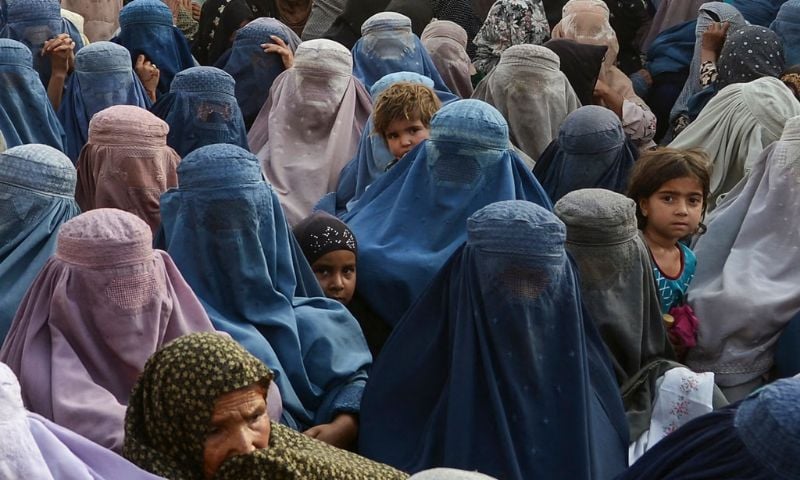
Child brides are also expected to manage households despite their young age. According to the report, girls who cannot meet the expectations of their husbands or in-laws may face domestic violence.
Bana, the mother of 11-year-old Gulalai, said her daughter had been engaged to a shopkeeper in his late 40s because her parents owed him money.
Gulalai’s family had been displaced after crop failures in their village in Badghis. Her father, Niaz Mohammad, said four of his daughters had been married as children, although he would have preferred to wait until they were 20.
“We have to sacrifice a family member to save the others,” he said. The family survives largely on homemade bread, tea and wild mallow leaves gathered from the surrounding area.
The crisis has also forced families to migrate to urban centres in search of assistance. However, many displaced people find little support after arriving in cities. In Herat, families living in the Shahrak-e-Sabz displacement camp face severe shortages of food, healthcare and transport.
Darellah, now 15, is pregnant and lives with her 30-year-old husband. Her family was displaced from their village in 2018, when Badghis experienced a historic drought. Reflecting on her marriage, she said: “I am still a child … it cannot be a good decision to be married at that age.” Her sisters, aged nine and 11, have also been engaged.
Poverty drives
The hardship extends beyond child marriage. The report documents how some families have resorted to extreme measures to feed their children or obtain medical treatment.
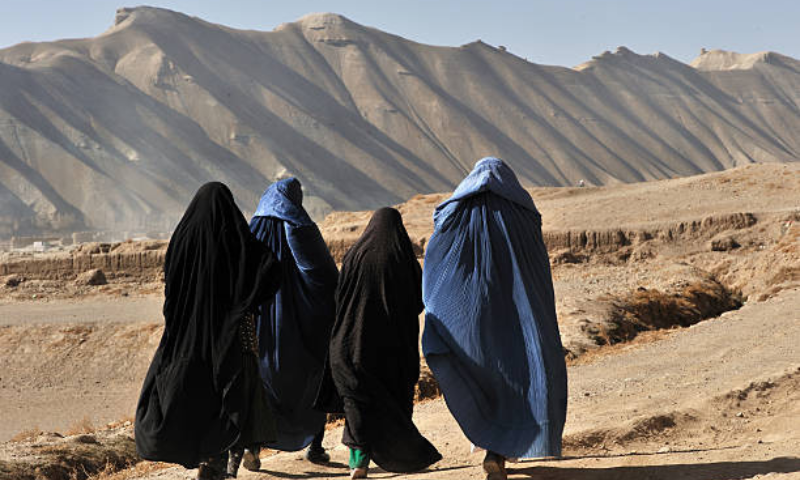
Bahahuddin, a 40-year-old displaced father, sold his 10-year-old son Ziauddin’s kidney for 100,000 afghani after losing his land and being unable to support his family through begging and collecting rubbish.
Another mother, Khomakha, said her husband had agreed to marry off their two-year-old daughter, Fatemah, when she was only three months old. The family needed money to help take their eight-year-old son, who has blood cancer, to hospital for weekly transfusions.
Khomakha fears she may never see her daughter again after the girl moves to her future in-laws’ village, which is about a 15-hour drive away.
READ ALSO: Under Taliban Rule Afghan Families Forced to Sell Their Children
In rural areas, repeated harvest failures have also pushed farmers into debt. Abdul Aziz, a farmer in Khoshkian, sold five of his daughters into marriage for between 90,000 and 150,000 afghanis each to repay loans after his wheat harvest failed seven times in eight years.
One of his daughters, Mazari, was married at about 12 or 13. Now 16 or 17, she has two children and lives with her husband, who is in his 40s. The report says the practice has spread across communities struggling with years of drought, displacement and dwindling resources.
Humanitarian aid cuts
The withdrawal of international assistance has further weakened support for vulnerable families. Aid programmes intended to protect children and provide healthcare are disappearing, leaving many with few alternatives.
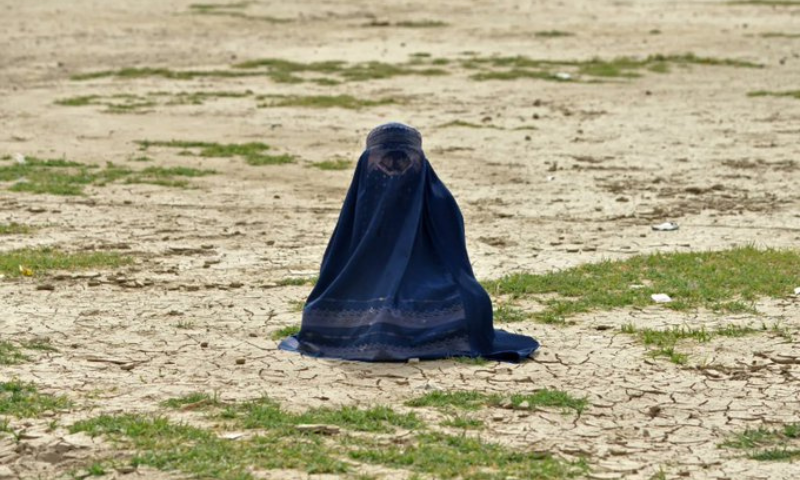
Mark Calder, advocacy director for Afghanistan at World Vision International, warned that early marriage exposes girls to potentially deadly health risks as clinics providing treatment become increasingly difficult to sustain amid aid cuts.
The report also highlights families trying to protect their daughters despite overwhelming poverty. Sara, a mother living near Qala-e-Naw, takes her 12-year-old daughter, Aisha, to primary school every morning. However, Aisha’s father has arranged her marriage to a 20-year-old man to repay family debts.
Sara hopes to delay her daughter’s departure by avoiding requests for the remaining bride-price payments. The family remains behind on rent, and Sara has previously had to walk to hospital because she could not afford transport. “I try not to contact the in-laws to ask them for the rest of the bride price, so that Aisha will not have to leave,” she said.
The report presents the experiences of these families as a stark account of the human cost of prolonged drought, displacement and poverty in Afghanistan, where the loss of livelihoods and declining humanitarian support are leaving children increasingly exposed to exploitation and early marriage.
For many parents, marrying off their daughters has become a desperate attempt to keep the rest of the family alive, while the girls themselves face the loss of their childhoods and uncertain futures.