










Key Points
- Both sides review progress towards a bilateral trade framework
- Discussions include financing options for Boeing aircraft purchases.
- Reko Diq, energy imports and critical minerals feature in talks.
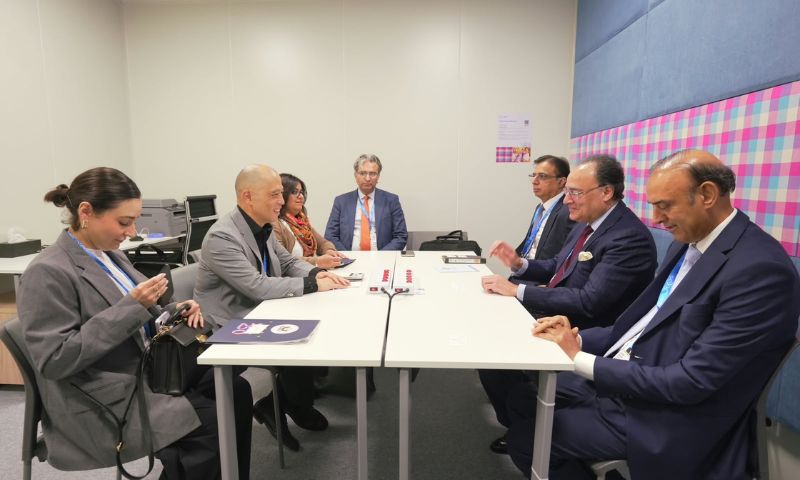
ISLAMABAD: Pakistan and the United States discussed progress towards a bilateral trade framework and possible financing for Boeing aircraft purchases at a meeting between Finance Minister Muhammad Aurangzeb and US State Department Ambassador Yon in Bangkok on Wednesday.
The meeting was held on the sidelines of the World Bank Group-International Monetary Fund (IMF) Annual Meetings.
The discussions covered US energy imports, investment in the Reko Diq copper and gold mining project, and cooperation on critical minerals, according to an official statement.
The two sides discussed potential financing through the US International Development Finance Corporation (DFC) and the Export-Import Bank of the United States (EXIM Bank).
Pakistan-US discuss FATF
The discussions also covered measures to maintain fuel supplies and support vulnerable consumers.
They also discussed anti-money laundering and counter-terrorism financing arrangements and follow-up actions linked to the Financial Action Task Force (FATF).
Other issues included aviation clearances, digital asset regulation and potential applications of tokenisation in remittances and Eurobonds.
Pakistan-US trade ties
Trade is a major component of Islamabad’s economic relationship with Washington, with Pakistani exports ranging from textiles and clothing to other manufactured goods.
The US is an important overseas market for local exporters, while US companies supply Pakistan with machinery, agricultural products, energy-related goods and other products.
US goods trade with Pakistan totalled about $8.5 billion in 2025, according to the Office of the United States Trade Representative.
US exports to Pakistan reached nearly $3.1 billion, while imports from Pakistan stood at $5.4 billion, leaving Washington with a goods trade deficit of around $2.3 billion.
Total bilateral trade in goods and services was estimated at $11.5 billion.
The two countries already have a Trade and Investment Framework Agreement, which provides a channel for discussing trade and investment issues.
The framework agreement currently under discussion is intended to advance bilateral economic engagement.
Islamabad is also seeking to diversify energy supplies, attract financing for major mineral projects and expand cooperation in emerging areas such as digital assets.













