










Key Points
- Pakistan Railways recorded 132 passenger-train derailments in five years, with 169 deaths in major accidents across the network.
- An ageing locomotive fleet and overdue maintenance add to operational risks.
- Audit findings point to weak safety oversight, delayed projects and shortages of trained staff.
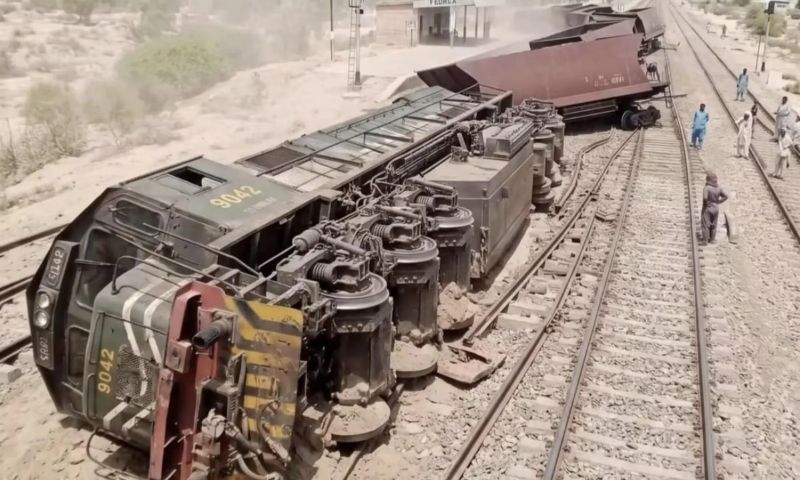
ISLAMABAD: The derailment of the Rehman Baba Express near Multan on Tuesday has renewed scrutiny of Pakistan Railways’ safety record, with official figures showing a sharp rise in passenger-train derailments.
The latest audit reports have also identified persistent weaknesses in track maintenance, rolling stock, signalling and safety management.
The authorities have yet to establish the main cause of Tuesday’s accident. However, the incident occurred against a backdrop of recurring derailments that have raised questions about the railway administration’s ability to maintain its extensive network.
It has also emphasised the need to modernise ageing equipment, ensure safety and address deficiencies before they cause further casualties.
Figures submitted to the National Assembly by the Ministry of Railways show that passenger-train derailments increased from 13 in 2021 to 47 in 2025. The railway network recorded 164 major accidents during the five years, including derailments, fires and collisions, resulting in 169 deaths.
Passengers accounted for 134 of the fatalities, while 28 road users and seven railway employees also lost their lives.
The number of major accidents rose from 22 in 2021 to 49 in 2025, following 18 in 2022, 35 in 2023 and 40 in 2024.
READ ALSO: At Least Five Killed After Passenger Train Derails in Pakistan’s Punjab
Pakistan Railways operates approximately 40,000 train movements annually, according to the ministry’s parliamentary response. The figures underline the scale of the safety challenge, although the causes and severity of individual accidents vary.
Track defects and maintenance failures
A special study by the Auditor General of Pakistan on train safety and accidental losses identified deteriorating infrastructure and rolling stock as major contributors to railway accidents. The study called for track upgrades, eliminating accident hotspots and overhauling locomotives and other railway equipment.
Track defects can arise from worn rails, damaged sleepers, inadequate ballast, drainage problems and delayed maintenance. If the defects are not detected and corrected during inspections, they can compromise track stability and increase the risk of derailment. The bridges’ condition and other structures also required regular monitoring, particularly in areas exposed to flooding and extreme weather.
The audit study found that safety-related projects had not been completed within their planned periods, preventing the railway administration from obtaining their intended benefits. It recommended that such projects be completed on schedule and that maintenance of rolling stock follow prescribed operational standards.
Ageing locomotives and equipment
The condition of railway equipment presents another challenge. At a meeting of the National Assembly’s Standing Committee on Railways in January 2026, officials said more than 63 per cent of locomotives had exceeded 20 years of service.
The committee was also informed that locomotive failures had increased slightly compared with previous years.
Pakistan Railways’ official website lists an average age of 25 years for its 465 diesel-electric locomotives, against an economic life of 20 years. It has posted that some 190 locomotives are in working condition and 275 are out of service, in the fleet position published on its website.
Locomotive failures do not automatically cause derailments, but they can disrupt services and place additional demands on the equipment still available.
An audit of Pakistan Railways’ accounts for the year of 2024–25 also identified ten locomotives held up in a Lahore workshop since May 2023, while awaiting major scheduled maintenance or overhaul. Auditors noted that some locomotives were operating beyond their scheduled maintenance intervals.
Signalling, crossings and human factors
Railway safety depends on several systems working together. Signalling and interlocking equipment help regulate train movements and prevent conflicting routes from being authorised.
Failures in these systems, inadequate operating procedures and errors by staff can create dangerous conditions.
The Auditor General’s study identified vulnerable unmanned level crossings as a major safety concern, listing 1,565 such crossings across the railway network. It also highlighted inadequate training and capacity building for operational staff, shortages of operational and maintenance personnel, and poor working conditions as factors that could increase safety risks.
These findings cover more than derailments. Collisions between trains and road vehicles at level crossings constitute a separate category of accidents and require safeguards such as barriers, warning systems, improved visibility and effective enforcement.
In July 2026, the Associated Press of Pakistan reported that inquiries into two major train accidents in March had attributed the incidents to a combination of human error and technical failures.
Nine railway employees were held responsible in the two cases, according to the reports presented to the National Assembly’s Standing Committee on Railways.
Weak finances complicate safety improvements
Pakistan Railways’ financial position adds to the challenge of modernising its infrastructure.
The Finance Ministry’s biannual report for 2026 lists the railway among the state-owned enterprises that recorded losses in the first half of fiscal year 2026. It puts Pakistan Railways’ loss at Rs 29.4 billion and describes its operating model as grant-dependent, with weaknesses in business planning and long-term strategy.
The ministry’s assessment raises questions about the railway’s capacity to finance sustained infrastructure renewal while meeting its operating expenses and public-service obligations.
Recurring losses can limit resources for preventive maintenance and capital investment, particularly when procurement delays or weak project management prevent allocated funds from producing timely results.
From inquiries to prevention
The railway administration has cited staff training, safety workshops and public-awareness campaigns as preventive measures. Parliamentary committees have also reviewed previous accidents and sought updates on corrective action.
Accident inquiries should be completed promptly, and their findings and corrective measures should be made public wherever appropriate.
The rising number of passenger-train derailments makes clear that railway safety cannot be treated as a series of isolated emergencies. Infrastructure, equipment, operating procedures, staffing and financing are closely linked, and weaknesses in one area can undermine improvements in another.













