










Key Points
- Pakistan will explore yen-denominated bonds
- The government will maintain tariff reforms to improve industrial competitiveness and attract foreign investment
- Islamabad says IMF reforms will help establish economic sustainability
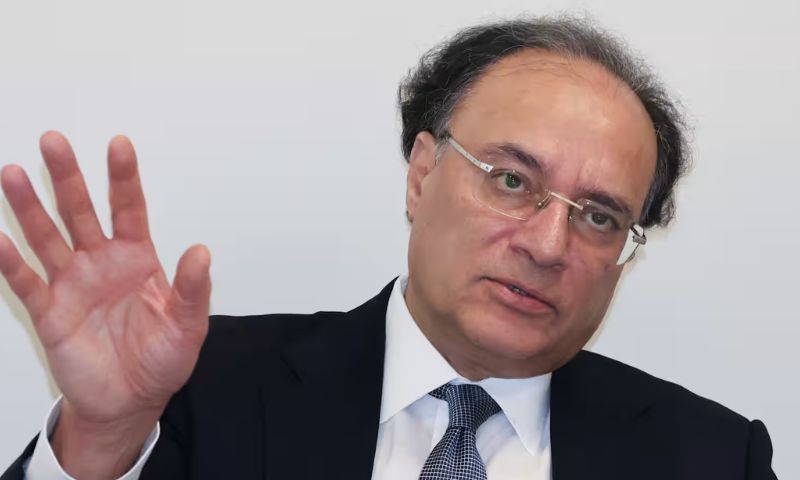
ISLAMABAD: Pakistan plans to explore yen-denominated borrowing in Japan and keep tapping China’s domestic bond market to diversify financing sources and limit overall external debt, Finance Minister Muhammad Aurangzeb has said.
Speaking to Nikkei Asia on Monday on the sidelines of the annual meetings of the International Monetary Fund (IMF) and World Bank, which opened in Bangkok, Aurangzeb said Pakistan’s first panda bond issuance would not be a one-off transaction and that the government intended to return to the Chinese market.
Pakistan issued its first panda bond in mid-May, raising 1.75 billion yuan, nearly $261 million under a 7.2 billion yuan programme.
The Asian Development Bank and the Asian Infrastructure Investment Bank provided partial guarantees to support the issuance.
A panda bond is a yuan-denominated debt instrument issued by a foreign borrower in China’s domestic bond market.
A samurai bond, in contrast, is a capital-raising yen-denominated bond a foreign buyer could issue in the Japanese market.
Aurangzeb described China as the world’s second-largest and deepest capital market, saying Pakistan intended to become a repeat issuer.
He also expressed interest in samurai bonds, saying the option made sense but required further assessment.
“We do not want to increase the quantum of our external debt,” he said, while emphasising the need to broaden the country’s financing options.
The strategy reflects Pakistan’s efforts to reach a wider range of investors and reduce dependence on traditional borrowing channels.
READ ALSO: Pakistan Finance Minister Projects Growth Above 4%
According to S&P Global figures cited by Nikkei Asia, panda bond issuance reached about 160 billion yuan, or $23.8 billion, in the first half of 2026, up 68 per cent from a year earlier. Foreign borrowers accounted for 50 per cent of the total, compared with 39 per cent in 2025.
Pakistan’s first issuance was part of a programme designed to establish a presence in China’s domestic debt market.
The use of ‘partial guarantees’ from multilateral development banks helped support the transaction, although further borrowing will depend on market conditions and financing requirements.
Pakistan tariff reforms for industrial competitiveness
Aurangzeb also defended Pakistan’s National Tariff Policy, a five-year framework introduced last year to reduce import tariffs gradually and make domestic industries more competitive.
“We will not make any compromise on the national tariff policy,” he said, stressing that the reforms would apply to all industries, and not just to automobile manufacturers.
The finance minister said previous policies had protected domestic industries without time limits, a strategy he argued had failed to deliver the desired results.
“We want to make our industry competitive,” he said, adding that lower tariffs could support exports, particularly by reducing the cost of imported raw materials and intermediate goods used by local manufacturers.
The tariff reforms form part of the government’s efforts to attract foreign direct investment and integrate domestic manufacturers into international supply chains.
However, reducing import protection also exposes local producers to greater competition, making improvements in productivity, technology and export capacity important to the policy’s objectives.
Pakistan reviews automobile policy
The government is also seeking cabinet approval for a revised automobile policy that would support electric vehicle adoption as part of its energy transition and climate strategies.
Pakistan aims for electric vehicles to account for 30 per cent of new vehicle sales by 2030.
The proposed policy includes export targets for automakers, provisions that have generated debate over their implications for existing manufacturers and new entrants.
Aurangzeb said Pakistan welcomed Chinese automakers and their participation in the domestic market.
“All of them,” he said when asked about the country’s welcome for Chinese carmakers.
China remains Pakistan’s largest bilateral lender, and the two countries marked the 75th anniversary of diplomatic relations in May. Their partnership extends beyond economic cooperation to defence and regional affairs.













