
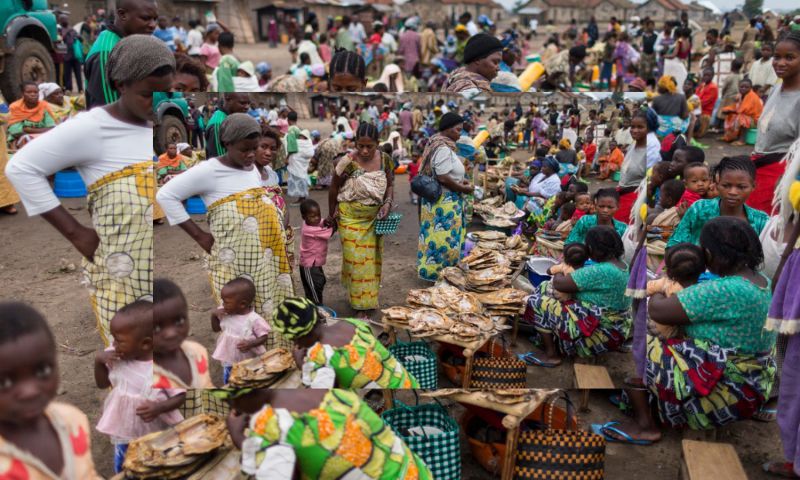
WASHINGTON: The number of people living in acute poverty worldwide has risen by 51.5 million to 1.2 billion, marking the first increase in the global Multidimensional Poverty Index (MPI) since its creation in 2010, according to a report released by the United Nations Development Programme (UNDP) on Monday.
The 2026 edition of the annual report, compiled by the UNDP and the Oxford Poverty and Human Development Initiative (OPHI), highlighted the growing challenges faced by people deprived of necessities, including adequate housing, sanitation, electricity, clean cooking fuel, food and education.
UNDP Administrator Alexander De Croo described the increase as a “wake-up call for the world”, stressing that millions of people continued to face multiple and overlapping forms of deprivation.
“Behind these figures are 1.2 billion people facing hardships that reinforce one another: hunger, missed schooling and a lack of clean water or electricity. This is unacceptable,” he said in a press release.
Children accounted for more than half of the people living in acute poverty, underlining the disproportionate burden borne by younger generations.
However, the UNDP cautioned that population growth was a major factor behind the recorded increase. It also noted that new data were available for only 13 of the 108 developing countries covered by the report, a limitation that should be considered when interpreting the findings.
Despite the overall rise in the number of people affected, the report highlighted significant progress in several countries. Over the past 15 years, 33 countries have halved the proportion of their populations living in multidimensional poverty, as measured by the index.
Six of these countries were in sub-Saharan Africa, while China and Vietnam were among the Asian countries that had made particularly rapid progress, the UNDP said.
READ ALSO: Global Poverty on the Rise Again After Decades of Decline
Sub-Saharan Africa and South Asia, particularly the Indian subcontinent, continued to account for the majority of the world’s poorest people. South Asia is one of the world’s most densely populated regions, making the scale of poverty there especially significant.
The report also identified contrasting trends among individual countries. Egypt, Nepal and Tajikistan had recorded substantial declines in both their poverty rates and the number of people experiencing multidimensional poverty.
In Angola and Zambia, poverty rates had fallen, but rapid population growth had more than offset the gains, resulting in an increase in the absolute number of people living in poverty.
The Multidimensional Poverty Index measures deprivation across several aspects of life rather than income alone. Its indicators include access to adequate housing, sanitation, electricity, clean cooking fuel, nutrition and education.
The findings underscore the complexity of tackling poverty, with progress depending not only on reducing deprivation rates but also on addressing population pressures and ensuring that improvements in essential services reach the people most in need.