NEW DELHI, India: India’s claim to being the world’s largest democracy is facing renewed scrutiny after authorities detained thousands of protesters and opposition figures in New Delhi on Saturday as young activists challenged a sweeping revision of voter lists under Prime Minister Narendra Modi’s government.
India cracks down on youth protests as anger grows against Modi and election chief https://t.co/opsvE2JGia
— CTV National News (@CTVNationalNews) October 10, 2026
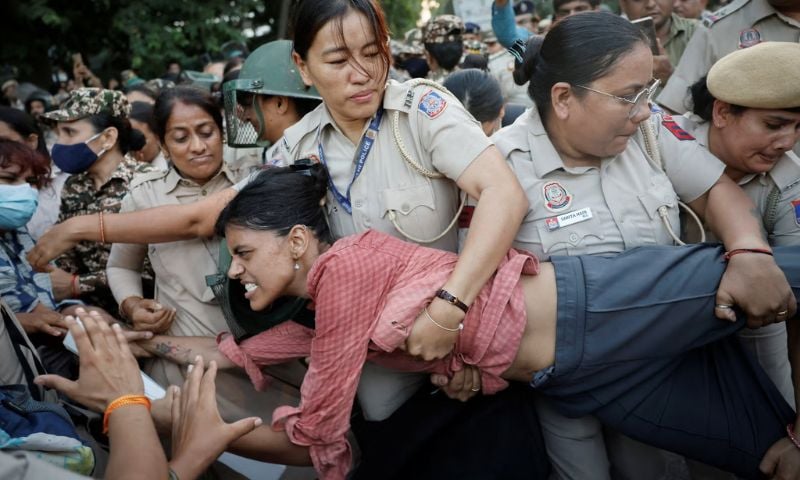
The crackdown on October 10 saw police and paramilitary forces seal off parts of the capital, restrict transport services and suspend mobile internet in areas around the planned demonstration.
Protesters attempting to reach Jantar Mantar, a designated protest site, were detained, while several opposition politicians, lawyers, student activists and journalists were also reportedly taken into custody. Reuters reported that more than 2,000 people were detained, although estimates from different sources varied.
UN urges India to immediately release thousands of people “arbitrarily detained” in protests demanding resignation of election chief accused of a controversial voter-roll revision that purges 130M people, mostly Muslims https://t.co/KUKgayubxv
— Ro Abdumonaf (@roabdumonaf) October 10, 2026
The protests have intensified pressure on Modi’s administration over allegations that changes to electoral rolls could deprive legitimate voters of their democratic rights. Critics argue that restricting peaceful demonstrations while millions of names are removed from voter lists raises serious questions about political accountability and the protection of civil liberties in the country.
Protesters accuse authorities of suppressing dissent
Protesters expressed anger over the police response and what they described as attempts to silence opposition to the electoral revision.
Yogendra Solanki, a protester detained by police, told Reuters: “This is violating the rights of the people and the country will not tolerate this anymore.”
CJP founder Abhijeet Dipke, detained alongside senior associates Saurav Das and Ashutosh Ranka after arriving in Delhi, challenged the police in a video, saying: “I have come to be arrested, arrest me … I am not afraid of you guys.” CJP leader Ajinkya Shinde said the movement would continue its protests until Kumar resigned.
Protesters gathered on Safdarjung Flyover in Delhi after facing restrictions and barricades on routes towards Jantar Mantar during the October 10 protest against the Special Intensive Revision (SIR) of electoral rolls and Chief Election Commissioner Gyanesh Kumar.
Speaking to DeKoder, demonstrators question why they are unable to protest at a designated protest site and describe the importance of public gatherings in defending democratic rights.
On the flyover, Delhi Police form a human barricade as demonstrators attempt to move forward, leading to a tense standoff.
Watch the voices and scenes from Safdarjung Flyover in this DeKoder ground report. Follow for more.
#JantarMantar #CJP #GyaneshKumar #Protest #ElectionCommission
— DeKoder (@DeKoderAI) October 10, 2026
Lawyers also criticised the crackdown. According to the account shared in the supplied footage, advocate Nanita Sharma, who said she had practised in the Supreme Court and High Court for 38 years, condemned the restrictions on protest and urged authorities to listen to young demonstrators rather than beat or detain them.
She was reportedly detained alongside other protesting lawyers. Her remarks could not be independently verified from the available reporting.
Read Also: WATCH: India Locks Down Delhi With 30,000 Security Personnel Ahead of Major Protest
Congress leader Rahul Gandhi also backed the demonstrators, saying the opposition would not retreat in the face of mass arrests. Meanwhile, the detention of Aam Aadmi Party convenor Arvind Kejriwal and other opposition figures widened the political fallout.
Why are Indians protesting?
At the centre of the unrest is the Election Commission’s Special Intensive Revision (SIR), a nationwide exercise to review and update voter lists. More than 130 million names have reportedly been removed during the process, prompting concerns that eligible voters could be excluded.
“You are the contractors of this country? We are. We vote.”
At the October 10 protest against the Election Commission in Delhi, a woman confronts police personnel as protesters are detained amid heightened security around Jantar Mantar.As a police officer tells her to “take it easy,” she challenges the officer’s authority, asserts citizens’ democratic rights and accuses the police of acting on behalf of the RSS.
Watch her response and follow DeKoder for more ground reports and updates.#JantarMantar #CJP #GyaneshKumar #Protest #ElectionCommission
— DeKoder (@DeKoderAI) October 10, 2026
The Election Commission has presented the revision as an effort to remove duplicate entries and the names of deceased or otherwise ineligible voters. However, opposition parties and civil society groups argue that the scale of the deletions and the documentation requirements risk excluding legitimate voters, particularly people who lack older official records or face difficulties proving their eligibility.
Critics have also alleged that the process could disproportionately affect communities with fewer resources to navigate administrative requirements. They contend that inaccurate deletions could undermine electoral participation and potentially influence political outcomes. The ruling Bharatiya Janata Party (BJP) and election authorities have denied allegations of political manipulation.
The controversy has prompted demands for greater transparency, independent scrutiny of the revision process and the resignation of Chief Election Commissioner Gyanesh Kumar.
MASSIVE BREAKING 🚨
Look at Connaught Place right now 👇
> Roads PACKED from end to end
> Flags in the air 🇮🇳
> Despite metro shut, trains cancelled, internet off and borders sealedThink about it for a second.
They shut 57 metro stations so people couldn’t get here.
They cancelled trains so people couldn’t travel.
They switched off the internet so people couldn’t coordinate.
They detained people from 6 AM onwards.And STILL, Connaught Place looks like this.
That tells you everything.
This isn’t a crowd that was “brought” here.
This is a crowd that FOUGHT its way here.The government doesn’t want democracy,
and it can’t even pull off a proper dictatorship 🤡When people walk past barricades just to ask one question,
the answer is already clear.Gyanesh bhai, Delhi has spoken.
Are you listening? 🗿https://t.co/Q7KYCsaqBL
— The Rebel (@TheRebel_IN) October 10, 2026
Youth activists and opposition leaders lead protests
The demonstrations have been driven by the Cockroach Janta Party (CJP), a youth-led movement that began as political satire and has developed into a platform for young Indians frustrated by governance, education-related grievances and political accountability.
Its founder, Abhijeet Dipke, and associates Saurav Das and Ashutosh Ranka were detained when their flight arrived in New Delhi, according to the movement. Other activists, student representatives, lawyers and opposition politicians also faced detention as authorities sought to prevent demonstrators from assembling.
#Watch | Heavy security and police barricades were deployed near Jantar Mantar in New Delhi as security forces detained protesters and cleared the area.
– @AroonDeep reports.
https://t.co/SvuNhmKrAk https://t.co/YIAEmYEElP
— The Hindu (@the_hindu) October 10, 2026
The protests attracted students, young professionals, lawyers and people who travelled from different parts of India to demand accountability from the Election Commission. Opposition figures, including Rahul Gandhi and other leaders, have challenged the voter-roll revision and called for the election chief’s resignation.
Read Also: India Detains ‘Cockroach’ Movement Chief Ahead of Major Protest
Despite extensive security arrangements, demonstrators attempted to reach the protest site and organised smaller gatherings at different locations across the capital. Some protesters were reportedly taken to police stations and detention facilities, while the movement said it could not immediately establish the whereabouts of several detained leaders.
India is under lockdown.
Generation Z is out in streets demanding regime change .
Situation worst than Iran 🇮🇷 https://t.co/1K1mOAB32A
— emini tic (@TicTocTick) October 10, 2026
Crackdown raises questions about democratic freedoms
The response by authorities has drawn attention to the tension between public-order restrictions and the constitutional rights to peaceful assembly and political expression.
Delhi authorities prohibited the planned gathering, citing restrictions on public assemblies and security concerns. However, the detention of protesters, journalists and political figures, alongside transport restrictions and internet disruptions, has intensified criticism of the government’s handling of dissent.
Bollywood actor Imran Khan has been detained by the Police at August Kranti Maidan in Mumbai.
Video: @EmmanualYogini
https://t.co/ZnenpSUDJU https://t.co/py3vY72Ww3— The Hindu (@the_hindu) October 10, 2026
A democracy is measured not only by the conduct of elections but also by whether citizens can question authorities, organise peacefully and seek accountability without disproportionate restrictions. The latest developments have therefore placed the Modi government under renewed scrutiny over its approach to political opposition and civil liberties.
Read Also: Indian Police Detain Thousands at ‘Cockroach’ Movement Protest in New Delhi
The government and ruling BJP have rejected accusations that the measures amount to political suppression, while protesters insist that they are exercising their democratic rights and demanding safeguards for the electoral process.
Police clash with protesters near August Kranti Marg in Mumbai.
Video: @SnehalMutha
https://t.co/SvuNhmKrAk https://t.co/T4Unom1cjj
— The Hindu (@the_hindu) October 10, 2026
As demonstrations continue to challenge the voter-roll revision, the central question remains whether the authorities can establish that the exercise protects electoral integrity without unlawfully excluding eligible voters. For India, the dispute has become a significant test of public confidence in its election institutions and its commitment to democratic participation.