
Key Points
- Pakistan’s population has grown more than sevenfold since 1951.
- Twenty-eight per cent of children aged five to 16 are out of school.
- Balochistan’s out-of-school rate is more than twice Punjab’s.
- Agricultural income taxation remains weak despite agriculture’s economic importance.
ISLAMABAD: Pakistan should consider restructuring its four-province administrative system to improve governance and public service delivery as its population continues to grow, according to a World Economic Forum (WEF) article published on Friday.
In the article titled What Pakistan reveals about administrative reform for fast-growing populations, Miroslav Zafirov argues that Pakistan could expand its first-tier administrative units from four provinces to 16, 23–25 or more than 30 units to bring decision-making, public spending and political authority closer to citizens.
Zafirov, an adviser to the director general of the Anwar Gargash Diplomatic Academy and a non-resident senior fellow at the Atlantic Council, says administrative boundaries must evolve when population growth and economic changes outpace the institutions responsible for governing them.
Pakistan’s population has grown more than sevenfold since 1951 and is estimated at approximately 260 million. The country’s four provinces, however, have vastly different population sizes, geographical characteristics and public service requirements.
“When administrative systems built for smaller societies are asked to serve vastly larger, more urban and more unequal populations, decision-making can become too distant from the citizens they are meant to serve.”
The WEF article warns, “When administrative systems built for smaller societies are asked to serve vastly larger, more urban and more unequal populations, decision-making can become too distant from the citizens they are meant to serve.”
Decentralisation remains incomplete
Pakistan has already taken significant steps towards decentralisation through the 18th Constitutional Amendment and the 7th National Finance Commission (NFC) Award.
The constitutional amendment devolved major responsibilities, including health and education, to the provinces, while the NFC Award increased the provinces’ share of federally collected taxes from 47.5 per cent to 57.5 per cent.
However, Zafirov argues that the transfer of authority from the federal government to provincial capitals has not necessarily brought decision-making close enough to citizens in remote and underserved districts.
The article illustrates these disparities by comparing Lahore district, with approximately 13 million people, with Harnai district in Balochistan, which has around 128,000 residents.
Such differences, it argues, make it difficult for centralised provincial administrations to respond equally effectively to the needs of densely populated urban centres and sparsely populated, geographically extensive areas.
“A policy designed in a provincial capital must therefore serve vastly different realities.”
“A policy designed in a provincial capital must therefore serve vastly different realities.”
Education exposes governance gaps
Unequal educational outcomes provide another indication of the challenges facing Pakistan’s governance system.
The WEF article cites estimates showing that 28 per cent of children aged five to 16 are out of school nationally, with provincial rates ranging from 21 per cent in Punjab to 45 per cent in Balochistan.
It also refers to the Planning Commission’s District Education Performance Index, which found that none of the 134 districts assessed reached the highest, “very high”, performance category.

Zafirov argues that these disparities reflect gaps between policymakers and districts, public budgets and service-delivery outcomes, as well as the authority to make decisions and the accountability for their consequences.
The article suggests that administrative restructuring could help governments plan education, healthcare, infrastructure and other services according to local population sizes and requirements rather than relying on policies designed primarily at provincial headquarters.
Lessons from other countries
Pakistan is not the only country to have reconsidered its administrative geography in response to demographic and governance challenges.
The article points to Nigeria, Indonesia and Kenya as examples of countries that have restructured their internal administrative systems as their populations and economies evolved.
Nigeria expanded from three regions at independence to 12 states in 1967 and eventually 36 states by 1996. Indonesia increased its number of provinces from 27 in 1991 to 38, while Kenya replaced its eight provinces with 47 elected county governments in 2013.
According to Zafirov, the average population of first-tier administrative units in countries such as Indonesia, Nigeria and Brazil is approximately six million to eight million, compared with around 60 million for each of Pakistan’s four provinces on average.
Kenya offers a particularly relevant example because its reforms involved more than drawing new boundaries. County governments received elected leadership, constitutionally protected responsibilities and a formula-based share of national revenue, with allocations taking account of factors including population and poverty.
The article also cites Lebanon as a cautionary example. Despite having more than 1,000 municipalities, many local bodies remain too small and financially weak to provide services effectively.
The comparison suggests that excessive fragmentation without adequate funding and administrative capacity can undermine service delivery just as excessive centralisation can.
Three restructuring options
Zafirov outlines three broad options for Pakistan, stressing that the debate should focus on alternative governance models rather than a single supposedly ideal administrative map.
The first option would divide each of the existing four provinces into four units, creating 16 first-tier governments. Under this model, the average population per unit would fall from approximately 60 million to around 15 million.
The second option would create 23 to 25 units, with boundaries determined by considerations such as population balance and geographical coherence.
A third, more ambitious approach would build on existing civil divisions to create more than 30 units, bringing their average populations closer to those found in other large federations.
Each approach carries potential benefits and costs. A smaller number of larger units could be easier to establish, legislate for and finance. A larger number of units could bring administrative headquarters, budgets and political decision-making closer to citizens but would increase transition costs and demand greater institutional capacity.
Zafirov cautions against treating boundary changes as a solution in themselves, arguing that effective reform must align the scale of government with the population it serves while ensuring that authority, resources and accountability move together.
Revenue collection remains weak
The article identifies provincial revenue generation as a major challenge that must be addressed alongside any administrative restructuring.
Although provinces have assumed substantial responsibilities for public services, their own-source tax collection remains limited.
Provincial taxes generated Rs983 billion in the 2024–25 fiscal year, equivalent to less than 0.9 per cent of gross domestic product, according to figures cited in the WEF article.
Agriculture, which accounts for approximately 24 per cent of Pakistan’s economic output, has historically generated relatively little revenue through agricultural income taxation.
The article cites an estimated effective tax rate of just 0.3 per cent for the sector, arguing that weak enforcement, limited administrative capacity and inadequate information have constrained collection.
It adds that recent reforms aimed at improving agricultural income taxation will depend on better data sharing with the Federal Board of Revenue, greater automation and stronger provincial enforcement capacity.
Climate resilience and accountability
Administrative reform could also help Pakistan respond to climate-related emergencies, rapid urbanisation, water stress and pressure to create employment for a growing population, according to Zafirov.
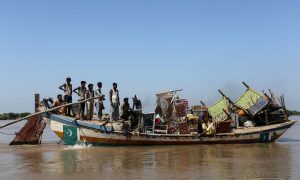
Smaller, adequately resourced administrative units could make it easier to plan infrastructure around local economic conditions, address district-level needs and respond to floods and other emergencies.
However, the article stresses that smaller units must have clear responsibilities, transparent fiscal transfers, reliable performance data and incentives to mobilise local revenue.
The broader objective, it argues, should not be to multiply administrative divisions for their own sake but to ensure that the size of government, its authority and its financial resources correspond to the needs of the people it serves.
Zafirov concludes that there is no universally correct number of provinces, states or counties. The underlying principle, he argues, is that governments must be willing to redesign institutions when population growth outpaces their ability to serve citizens effectively.