
Key Points
- Brent trades near $102 a barrel
- WTI remains around $90 a barrel
- Middle East crude exports rise above pre-war levels
ISLAMABAD: Oil prices fell on Monday as higher Middle East crude exports and a planned emergency stocks release by the Group of Seven (G7) eased supply concerns. However, repeated attacks on tanker ships kept the Strait of Hormuz a major risk to global energy markets.
Brent crude futures traded around $101.9 a barrel, while US West Texas Intermediate (WTI) crude was around $90.3 a barrel in Asian trading.
Trading Economics put Brent at $101.48 during Monday trading, down about 0.75 per cent from the previous session, while Investing.com showed Brent around $102.20 and WTI at $90.28. The variation reflects different trading times during a volatile session.
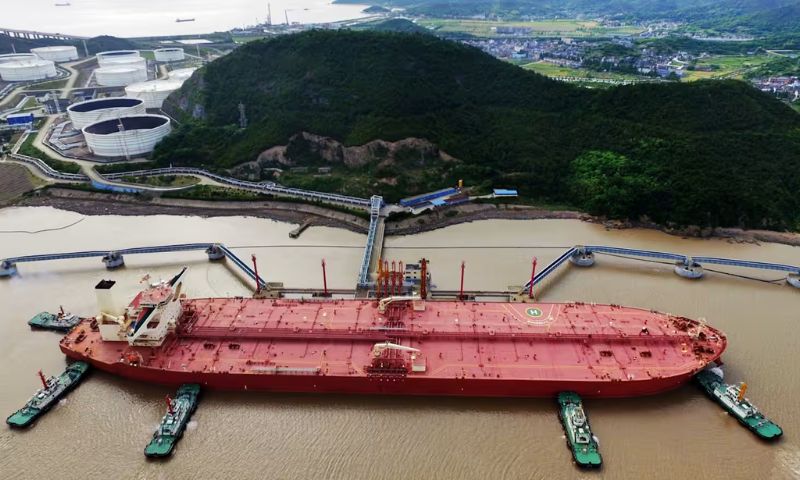
The latest decline came as physical crude flows from the Middle East showed signs of improvement despite continuing attacks on commercial shipping in and around the Strait of Hormuz.
Middle East exports rise above pre-war levels
Crude exports from the Middle East exceeded their pre-war average on several days during the final week of September. Export recovery and improvement provided some relief to a market long dominated by fears of prolonged disruption.
READ ALSO: Brent Oil Rebounds Above $102 After Midweek Fall Below $100
Shipping data showed regional crude exports ranging from 19.5 million to 22.5 million barrels per day on several days late last month. The seven-day average reached 18.5 million bpd on October 1, compared with about 18 million bpd before the US-Israeli conflict with Iran began in February.
The increase is significant because the Strait of Hormuz remains the world’s most important oil chokepoint, carrying a large share of global seaborne crude and petroleum products.
However, higher weekly exports do not mean that shipping conditions have returned to normal. Tanker movements through the waterway remain vulnerable to attacks and security warnings.
The Wall Street Journal reported on Monday that attacks on shipping had again increased after a period when oil was moving more freely through Hormuz.
The United Kingdom Maritime Trade Operations (UKMTO) has also recorded multiple recent incidents involving vessels in the waterway. Maritime reports said four vessels were struck in or around the Strait of Hormuz within 24 hours, based on UKMTO reports covering incidents on September 28 and 29.
G7 Stock Release Adds Supply Cushion
The oil market is also absorbing the impact of the G7 decision to release 100 million barrels of crude and petroleum products from emergency reserves over four months.
The market response has been relatively muted because traders are weighing the additional stocks against the possibility of further attacks on energy infrastructure and tankers.
OPEC+ keeps November output unchanged
The Organisation of the Petroleum Exporting Countries and its allies, known as OPEC+, have also chosen not to add another significant supply increase immediately.
The group agreed to keep its November production targets unchanged, leaving the market to rely heavily on actual physical flows from producing countries rather than simply higher official production quotas.
For global consumers, the current market presents a conflicting picture.
On one side, Middle East crude exports have climbed back above their pre-war average, while the planned G7 reserve release adds further barrels to the market. These developments have reduced some of the immediate pressure on prices.
On the other hand, repeated attacks on tankers and continued uncertainty over Hormuz mean that the physical supply chain remains exposed to sudden disruption.
That tension explains why Brent remains above $100 even as exports improve. Traders are pricing not only the barrels currently reaching international markets but also the possibility that a single major incident could disrupt a much larger volume of crude.
For now, rising exports and the G7 reserve release are weighing on prices, but the continuing attacks mean the market’s geopolitical risk premium has not disappeared.