Key Points
- December Brent fell below $100 a barrel early in the week, touching $97.09 before rebounding above $102
- Oil price benchmark surged more than 4 per cent on Thursday after China suspended fuel-product exports and the United States moved additional military forces toward the Middle East
- WTI ended at $91.11 a barrel, leaving both major benchmarks highly volatile despite improving crude flows through the Gulf.
ISLAMABAD: Global oil markets swung sharply during the week ended October 2, with the more-active December Brent contract falling below $100 a barrel before rebounding above $102 as traders were caught between improving Gulf crude export optimism and a Chinese refined fuel export halt.
December Brent, the international benchmark for much of the world’s seaborne crude, closed at $98.77 a barrel on September 28 and fell to $97.09 on September 29.
It recovered to $98.03 on September 30 before jumping $4.28, or 4.4 per cent, to $102.31 on October 1. It ended Friday at about $102.25.
The week’s price action therefore tells a different story from simply saying oil remained above $100. The active December Brent contract spent three sessions below $100 before making a powerful one-day rebound.
The apparent discrepancy in some market reports was the November Brent contract expiry on September 30. That contract settled at $103.53 on its final trading day, while the more-active December contract settled at $98.03.
US West Texas Intermediate (WTI), the benchmark for US crude, was similarly volatile. It fell significantly during the first three days of the week, trading around $89 on September 29, before recovering to $90.42 on September 30 and $92.87 on October 1. It then fell to $91.11 on October 2.
Gulf oil flows ease crude supply fears.
The early-week decline reflected some signs that crude exports from the Middle East were recovering despite continuing disruption around the Strait of Hormuz.
Gulf producers used alternative routes, pipelines and ship-to-ship transfers to maintain exports. Middle Eastern oil shipments reached their highest level since the Iran war began in February, with Gulf countries averaging about 15.5 million barrels per day of exports in September, more than 80 per cent of pre-war levels.
READ ALSO: 325 Million Barrels of Oil Released from Strategic Reserves: International Energy Agency
Saudi Arabia was particularly important to the recovery, increasing exports through alternative routes including its East-West pipeline and the Red Sea port of Yanbu. The improving flows reduced the immediate prospect of a global crude shortage.
That helped push the active Brent contract below $100 on September 29.
Fuel shortages reverse the market
The market turned notably higher on October 1 after reports that Chinese refiners had suspended exports of diesel, petrol and jet fuel to destinations beyond Hong Kong and Macau.
China is one of the world’s largest refining centres, making its decision significant for international fuel supplies.
The restrictions came as diesel markets were already tight because of refinery disruptions, lower inventories and restrictions on Russian diesel exports.
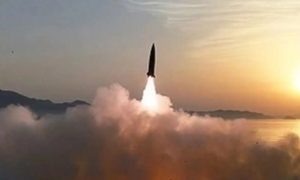
At the same time, reports that the United States was sending additional military forces, including another aircraft carrier and thousands of troops, to the Middle East revived fears that the conflict with Iran could escalate.
Brent consequently jumped $4.28 on Thursday, while WTI gained $2.45.
Oil Rollercoaster Continues
The latest week added another sharp turn to what has become an exceptionally volatile oil market in 2026.
The conflict that began in February initially raised fears of a major crude-supply shock because of the disruption around the Strait of Hormuz. Alternative export routes and the gradual return of tanker traffic have since reduced some of that pressure.
But the market remains vulnerable to sudden price spikes because shipping risks, refinery disruptions, fuel inventories and geopolitical developments are interacting at the same time.
Friday’s decline was therefore less a sign that the underlying crisis had disappeared than a pause after the previous day’s surge.