Key Points
- Corps commanders endorsed Pakistan’s right to self-defence against Afghan terrorism.
- Forum held Taliban leadership responsible for India-backed terrorism.
- Military stressed governance and policing alongside kinetic counterterrorism operations.
- Forum warned against attempts to repeat violence like May 9.
- Corps commanders condemned Houthi attacks against Saudi Arabia.
- Forum reiterated support for Kashmir’s settlement under UN Security Council resolutions.
ISLAMABAD: Pakistan’s top military commanders on Friday endorsed the country’s right to conduct targeted operations against terrorism emanating from Afghanistan, while calling for stronger governance, policing and intelligence capabilities to tackle terrorism at its roots.
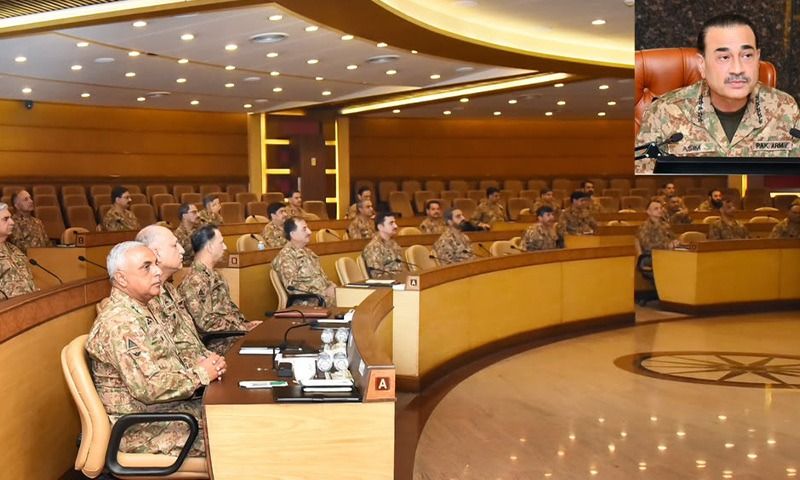
The position was taken at the 277th Corps Commanders Conference, chaired by Chief of Army Staff and Chief of Defence Forces Field Marshal Syed Asim Munir at General Headquarters in Rawalpindi.
The forum paid tribute to soldiers, law-enforcement personnel and civilians who lost their lives defending the country and observed Fateha for the martyrs.
The commanders said targeted actions against terrorism originating from Afghanistan constituted Pakistan’s right to self-defence, according to the Inter-Services Public Relations (ISPR).
The forum categorically stated that the Taliban leadership alone is responsible for the serious consequences of terrorism carried out as an instrument of India.
Pakistan’s position comes amid heightened tensions along the Pakistan-Afghanistan frontier. Pakistan firmly believes that the Taliban regime in Afghanistan allows terrorists groups, particularly the Tehreek-i-Taliban Pakistan (TTP), to operate from Afghan territory.
Countering terror networks
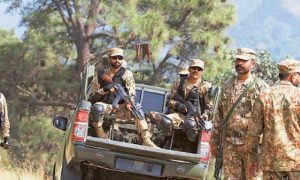
At Friday’s conference, the commanders also praised law-enforcement agencies for continuing successful intelligence-based counterterrorism operations.
The forum stressed, however, that military action alone would not be sufficient to eliminate terrorism. It said effective administrative and governance measures were essential alongside ground operations, with governance needing to be brought closer to people at the grassroots level.
The commanders also called for effective communication with the public on the causes and mechanisms of terrorism and for work on a counterterrorism narrative.
The forum said terrorism could not be defeated without dismantling the terror-crime nexus operating under the patronage of specific elements.
It also called for enhanced police capacity, reflecting the military leadership’s emphasis on giving civilian law-enforcement agencies a stronger role in countering terrorism.
The commanders also declared internal stability a critical national priority.
Warning against unrest
The forum delivered another unequivocal message, warning that any attempt, under any pretext, to create violent disorder or a situation resembling May 9 would be dealt with through decisive force and the rule of law, without hesitation or discrimination.
The warning comes as Pakistan faces both a continuing terrorism threat and heightened political tensions. The military leadership has stressed that internal stability is essential for safeguarding national security and maintaining the country’s sovereignty and territorial integrity.
The May 9 unrest followed the arrest of former prime minister Imran Khan in 2023 and involved attacks and vandalism at military and government installations in several cities.
Makkah defence pact
The conference also welcomed the Makkah Joint Defence Alliance between Pakistan, Saudi Arabia and Türkiye, describing it as an important development for the three countries’ longstanding strategic relations and defence cooperation.
The agreement was signed in Makkah on August 7 by Saudi Crown Prince Mohammed bin Salman, Turkish President Recep Tayyip Erdoğan and Prime Minister Shehbaz Sharif. It states that an armed attack against any one of the three countries would be regarded as an attack against all three.
The corps commanders also strongly condemned Houthi attacks against Saudi Arabia and expressed solidarity with Riyadh.
The forum reiterated Pakistan’s commitment to protecting the sanctity and security of the two holy mosques.
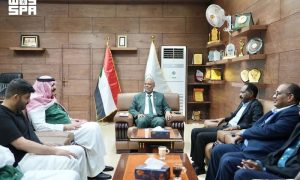
The commanders’ statement also comes shortly after the military chiefs of Pakistan, Saudi Arabia and Türkiye met in Riyadh to discuss implementation of the Makkah defence agreement and closer military coordination.
At the September 25 meeting, the three sides discussed intelligence sharing, military coordination and capability integration as part of efforts to translate the agreement into practical defence cooperation.
Kashmir and military readiness
The conference reiterated Pakistan’s position that the Kashmir dispute should be resolved in accordance with United Nations Security Council resolutions and the aspirations of the Kashmiri people.
Field Marshal Asim Munir directed formations to continue strengthening intelligence-based operations. He also instructed military formations to enhance their defence capabilities through acquisition of modern technologies, improved training and greater integration across all domains of warfare.
The army chief said Pakistan’s armed forces, with the “unwavering support” of the nation, remained fully prepared to protect the country’s sovereignty, territorial integrity and national security.