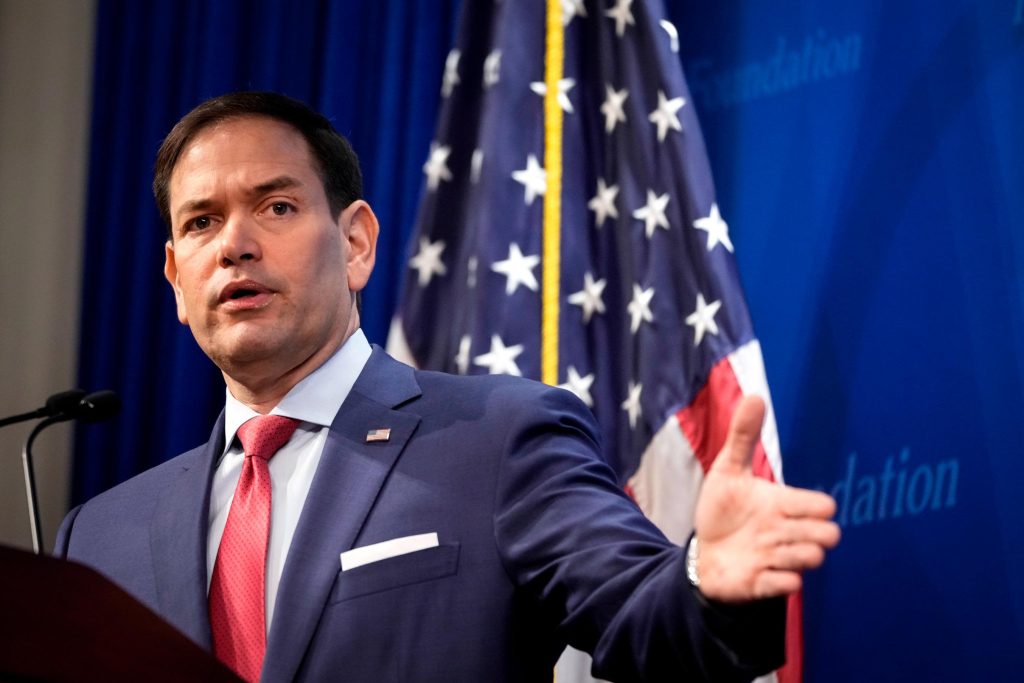
WASHINGTON: US Secretary of State Marco Rubio said on Tuesday the United States is open to speaking with Iranian officials at the UN General Assembly, but no meeting is currently scheduled.
“We’re open to that. I don’t think anything is scheduled at this point, but we’re certainly open to something like that, especially if it has the prospects of leading to something positive and ultimately achieving the goal of what this is all about,” Rubio said in an interview with NBC’s “Today” show.
“And that is the fact that Iran can never have a nuclear weapon. They just simply can’t.”
SECRETARY RUBIO: Iran can never have a nuclear weapon. pic.twitter.com/Y8IthQAn7a
— Department of State (@StateDept) September 22, 2026
Rubio’s comments come as diplomatic efforts continue amid soaring tensions between Washington and Tehran.
A senior Iranian official told Reuters on Tuesday that Iran can reopen the Strait of Hormuz within seven days if the US eases military pressure and lifts its blockade on Iranian ports.
Also Read: Door Remains Open for Iran’s Return to Talks: US Envoy
The Iranian official said details on an agreement to end hostilities with Washington can be discussed in New York via mediators, explaining that Tehran’s proposal was delivered to the US via mediators on September 16.
Trump open to meet Iranian President
US President Donald Trump said on Sunday he was “open” to meeting Iranian President Masoud Pezeshkian after Tehran sent a list of demands for terminating the war. Iranian President Pezeshkian is expected to attend the UN General Assembly in New York.
Speaking to Fox News correspondent Trey Yingst, Trump said “very big things” would happen in the “not-so-distant future” and warned Iran that it “better behave”. He said he was weighing options that included reaching a deal, allowing Iran to face further economic pressure or taking military action.
Also Read: Trump Open to Meet Iranian President After Receiving War Termination Demands
“There the choices on the table for Iran included wiping them out, letting them rot economically, or making a deal,” Trump told Fox News as Yingst said.
Iran’s top negotiator, Mohammad Bagher Ghalibaf, said on Sunday that Tehran had conveyed to Washington through mediators its conditions for reopening the strategic Strait of Hormuz, which it has attempted to blockade throughout the Middle East war, AFP reported.
Mediators continue diplomatic efforts
On Monday, Pakistan’s Interior Minister Mohsin Naqvi met his Iranian counterpart Eskandar Momeni in Tehran and discussed the latest regional developments, as Islamabad continued diplomatic efforts to revive US-Iran talks and permanently end the conflict through diplomacy.
The Iranian Interior Minister received Naqvi upon his arrival in Tehran.
Also Read: Pakistan’s Interior Minister Discusses Middle East Situation with Iranian Counterpart
During their meeting, the two ministers exchanged views on Pakistan-Iran relations and the situation in the region, Pakistan’s Interior Ministry said.
Momeni thanked Prime Minister Shehbaz Sharif and Chief of Defence Forces and Chief of Army Staff Field Marshal Syed Asim Munir for their efforts towards regional peace and stability.
“We are grateful for Pakistan’s continuous efforts to establish peace in the region,” Momeni said.
وفاقی وزیر داخلہ محسن نقوی کی ایرانی وزات داخلہ آمد، ایرانی ہم منصب اسکندر مومنی سے ملاقات
پاک ایران دوطرفہ تعلقات اور خطے کی تازہ ترین صورتحال پر تبادلہ خیالملاقات میں دونوں ممالک کی وزارت داخلہ کے درمیان مختلف شعبوں میں جاری تعاون پر پیش رفت کا جائزہ لیا گیا pic.twitter.com/bEjeAaTKj5
— Ministry of Interior GoP (@MOIofficialGoP) September 21, 2026
The US and Iran are locked in a stalemate, months into the conflict that began with US-Israeli strikes on Iran in late February. Tehran has since blocked shipping through the Strait of Hormuz, a vital shipping route for the world’s oil and gas, while Washington is pushing a campaign to choke the Islamic republic’s ports and economy.
Pakistan’s mediation efforts
Naqvi’s visit comes as Pakistan continues its mediation efforts between Washington and Tehran.
Mohsin Naqvi has frequently travelled to Iran as part of Pakistan’s mediation efforts to facilitate dialogue between the United States and Iran.
Pakistan has been the principal mediator between Iran and the United States after helping secure a ceasefire on April 8. Pakistan hosted high-level US and Iranian delegations for talks in Islamabad on April 12 and 13.
Pakistan has repeatedly urged a return to the Islamabad Memorandum of Understanding (MoU) between the US and Iran, maintaining that dialogue and diplomacy were the only way to resolve the months-long conflict.
The Pakistan-brokered Islamabad MoU, signed in June, provides the framework for ending the US-Iran conflict and pursuing a negotiated settlement.
Pakistan is making efforts to revive talks under the Islamabad MoU framework to permanently end the conflict through diplomacy and dialogue.
Under the Islamabad MoU, Iran and the United States committed to halt military operations, reopen the Strait of Hormuz to commercial shipping and negotiate a comprehensive agreement covering Iran’s nuclear programme, US sanctions and a permanent ceasefire within 60 days.
Pakistan and Qatar later co-mediated the first round of high-level talks in Lucerne, Switzerland, on June 21. The meeting was attended by Vance and Ghalibaf.
The United States and Iran have remained locked in conflict since US-Israeli strikes on Iran began on February 28.